

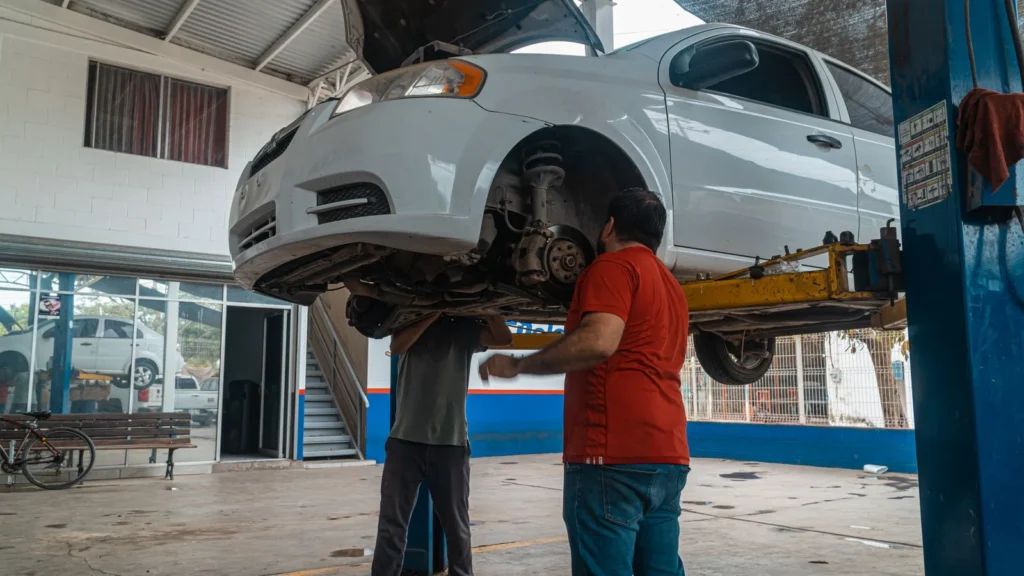
It’s one of the most common maintenance questions drivers ask, and the honest answer is that it depends on your specific car, though there are clear general guidelines worth understanding to keep your vehicle running reliably and safely.
The general UK guideline
Most manufacturers recommend servicing annually or every 10,000 to 12,000 miles, whichever comes first, though this figure varies depending on your specific make, model and engine type. This general guideline works reasonably well for most petrol and diesel cars driven under typical UK conditions, though it’s always worth checking your specific manufacturer’s recommendation rather than relying purely on this average.
Why the interval depends on both time and mileage
Service intervals are typically specified as a combination of time and mileage, whichever threshold you reach first, because some maintenance needs are driven purely by distance covered, like general mechanical wear, while others are driven by time regardless of mileage, such as oil degrading and rubber components ageing even while the car sits largely unused.
Why low mileage drivers still need regular servicing
It’s a common misconception that covering very few miles each year means servicing can be stretched out considerably, but engine oil degrades chemically over time even without much use, and rubber seals and hoses age regardless of how far the car has actually travelled. This is exactly why the time-based element of most service schedules still applies even to genuinely low mileage cars.
- Most cars need servicing annually or every 10,000-12,000 miles, whichever first
- Time-based intervals apply even to low mileage cars
- Higher mileage or older cars may benefit from more frequent interim checks
- Electric cars generally need less frequent servicing overall
- Your specific manufacturer’s schedule is the definitive guide
Why higher mileage drivers might need more frequent attention
Drivers covering significantly more than average annual mileage accumulate wear considerably faster, which is exactly why an interim service, typically recommended roughly every six months for higher mileage cars, sits alongside the annual full service, catching issues that might otherwise develop unnoticed over a longer twelve month gap.
How car age affects servicing needs
As a car ages, components naturally wear and degrade more, meaning older vehicles, even at relatively modest mileage, can benefit from somewhat more frequent checks than a newer car of the same age and mileage. This isn’t a strict rule, but it’s worth factoring in as your car gets older, particularly once it’s covered significant distance or reached ten years or more.
How electric and hybrid vehicles differ
Electric vehicles generally require less frequent traditional servicing, since they have considerably fewer moving mechanical parts, no engine oil to change, and no traditional exhaust or emissions system to maintain. That said, they still benefit from regular checks of brakes, tyres, suspension and the battery cooling and management systems, so servicing isn’t eliminated entirely, simply reduced in scope and, often, frequency.
What happens if you delay a service
Pushing a service back, whether from time pressure or cost concerns, means the interval between checks stretches longer than intended, giving any developing issue more time to worsen before it’s actually caught. On newer cars, delaying servicing beyond the manufacturer’s schedule can also affect warranty terms, since many warranties require servicing according to the specified schedule to remain valid.
How following the correct schedule protects your investment
Beyond simply avoiding breakdowns, keeping to the correct service schedule genuinely protects your car’s long-term value and reliability, since consistent, properly documented maintenance catches small issues while they’re still inexpensive to address, rather than allowing them to develop into significant, costly repairs.
Where to find your car’s exact schedule
Your owner’s handbook is the definitive source for your specific car’s recommended service interval, though many manufacturers also list this information on their website, and increasingly, modern cars include a digital service reminder system that tracks mileage and time since the last service automatically, prompting you when the next one is due.
Why service history matters beyond just knowing when it’s due
A complete, properly documented service history isn’t just useful for tracking when your next service is due, it’s also genuinely valuable for resale, for warranty claims, and for helping any mechanic quickly understand what’s already been checked and replaced, rather than starting from scratch each time you visit somewhere new.
Why service intervals differ across manufacturers
Different manufacturers arrive at their recommended intervals based on their own engineering, testing and the specific materials used in their engines, meaning a genuinely direct comparison between two different makes isn’t always straightforward. A car specified for 12,000 mile intervals isn’t necessarily better or worse maintained than one specified for 10,000 miles, simply engineered with a different schedule in mind, and both are perfectly valid provided they’re actually followed.
How driving conditions can justify more frequent servicing
Manufacturer schedules are generally based on typical driving conditions, and cars regularly used for towing, extensive short journeys, or driven in particularly dusty or extreme temperature environments may benefit from more frequent servicing than the standard schedule suggests. Some manufacturers specify a separate, more frequent “severe conditions” schedule precisely for this reason, worth checking if your usage pattern is unusual.
Why service intervals have generally lengthened over time
Modern engine oils, improved manufacturing tolerances and more sophisticated engine management have allowed manufacturers to extend recommended service intervals considerably compared to cars from a few decades ago, when six-month or 3,000 mile oil changes were standard practice. This is worth bearing in mind if you’re used to an older vehicle’s schedule and have since moved to a newer car with a genuinely different set of recommendations.
What a digital service reminder system actually tracks
Many modern cars include a digital service reminder that monitors factors like mileage, time elapsed, and sometimes even engine oil condition based on driving style, calculating a more tailored estimate of when the next service is genuinely due rather than relying on a fixed interval alone. Understanding roughly how this system works helps you trust its recommendation rather than being caught off guard by an unexpected reminder.
Why sticking rigidly to a fixed calendar date isn’t always ideal
Booking a service purely based on the same date each year, without checking actual mileage covered, can mean a car that’s covered unusually high mileage that year goes slightly too long between checks, while a car that’s barely been used might be serviced somewhat earlier than strictly necessary. Checking your actual mileage against the schedule, rather than relying purely on the calendar, gives a more accurate picture.
The cost implications of servicing on the correct schedule
Servicing on schedule, neither excessively early nor significantly overdue, generally represents the most cost-effective approach over the life of the car, since it catches developing issues while they’re still inexpensive to address without paying for unnecessary early replacement of components that still have useful life remaining.
Why servicing supports both safety and reliability together
Regular servicing isn’t purely about avoiding a breakdown, it’s also fundamentally about safety, since checks carried out during a service cover braking, steering and other genuinely safety-critical systems that you’d want confirmed as sound well before any problem became apparent through symptoms alone. This dual benefit, reliability and safety together, is exactly why the recommended schedule shouldn’t be treated as merely optional.
How a mobile mechanic fits into a regular servicing routine
A mobile mechanic visiting your home or workplace to carry out a scheduled service removes much of the inconvenience that leads some drivers to delay booking in the first place, since there’s no need to arrange time off work or alternative transport while the car’s away at a garage. This convenience genuinely makes it easier to stick to the correct schedule consistently, year after year.
Why forgetting a service is more common than people admit
Life genuinely gets busy, and it’s entirely common for a service to slip past its due date simply because there wasn’t an obvious, memorable trigger to prompt booking it in. Setting a calendar reminder, or relying on your car’s digital service system if it has one, removes this risk considerably compared to trying to remember unprompted.
How buying a used car affects your servicing baseline
If you’ve recently bought a used car, it’s particularly worth confirming exactly when it was last serviced and by whom, since inheriting an unclear or incomplete service history means starting your ownership without full confidence in the car’s maintenance baseline. A thorough check-over shortly after purchase helps establish a clear starting point going forward.
Why servicing frequency isn’t purely about avoiding faults
Beyond simply catching problems, regular servicing also supports smoother, more efficient running day to day, since fresh oil, clean filters and properly checked components all contribute to a car that drives as intended, rather than gradually degrading in ways that aren’t always dramatic enough to notice individually but add up over time.
What to do if you’ve genuinely fallen behind on servicing
If your car is significantly overdue for a service, it’s better to book one promptly rather than continuing to delay further, even if it feels like there’s little point catching up partway through the year. A mechanic can assess the car’s current condition and recommend the appropriate starting point to get back onto a sensible, regular schedule going forward.
Why a settled routine reduces stress around servicing
Once you’ve established a consistent, predictable servicing rhythm, whether that’s every six months for an interim check or annually for a full service, the whole process becomes considerably less stressful, since it’s simply part of routine car ownership rather than an occasional, anxiety-inducing decision about whether it’s really necessary right now.
Final thoughts on servicing frequency
While the specific answer to how often you should service your car depends on your exact make, model, mileage and driving conditions, the underlying principle remains consistent: following a sensible, manufacturer-informed schedule genuinely protects both your safety and your car’s long-term reliability, making it one of the more worthwhile routine investments in car ownership.
Why peace of mind is worth factoring in too
Beyond the measurable benefits of reliability and safety, there’s a genuine peace of mind that comes from knowing your car is being looked after on a sensible, consistent schedule, rather than wondering whether an overdue service might be quietly allowing a problem to develop unnoticed somewhere in the background.
Why servicing frequency can differ across a family’s vehicles
If your household runs more than one car, it’s common for each to end up on a genuinely different servicing rhythm, since a daily motorway commuter covering high annual mileage reaches its distance-based interval considerably sooner than a second car used mainly for weekend errands. Treating each vehicle according to its own actual usage, rather than assuming they should all follow an identical calendar, gives a more accurate picture of what each one genuinely needs.
Why a pre-MOT check and a service work well booked together
Since both involve inspecting many of the same underlying components, booking a service around the same time as your MOT, even if not on the exact same day, means any issue flagged by one can be cross-referenced against the other, giving a genuinely more complete picture of your car’s overall condition than treating the two as entirely unconnected events scattered through the year.
Booking your next service at the right time
If you’re unsure exactly when your car is next due, checking your mileage against your handbook’s schedule, or simply asking a mechanic to check your service history, gives you a clear answer rather than guessing. Booking an interim service at the appropriate point keeps your car properly maintained between the more comprehensive annual checks, and staying on top of this genuinely reduces the risk of an unexpected breakdown. Gov.uk’s guidance on vehicle maintenance and testing offers further useful general context on keeping your car roadworthy. Treating the schedule as a genuine plan rather than a rough suggestion is really what separates cars that stay reliable for years from those that quietly accumulate small, avoidable problems. and that small shift in mindset is genuinely what pays off over the years you own the car.
Source: gov.uk's guidance on vehicle maintenance and testing
Frequently asked questions
How often should most cars be serviced in the UK?
Most manufacturers recommend annually or every 10,000-12,000 miles, whichever comes first, though this varies by make and model.
Do electric cars need servicing as often as petrol or diesel cars?
Electric cars generally need less frequent servicing due to fewer moving parts, though they still benefit from regular checks of brakes, tyres and the battery system.
What happens if I service my car late?
A late service means longer intervals between checks, giving developing issues more time to worsen before they are caught, and can affect warranty terms on newer cars.
Does low mileage mean I can service my car less often?
Not entirely, since time-based servicing still applies even at low mileage, as some fluids and components degrade with age regardless of distance covered.
Where can I find my car's specific service schedule?
Your owner's handbook, the manufacturer's website, or your car's digital service system usually specifies the exact recommended interval for your model.