

An HPI check and a full mechanical pre-purchase inspection are often mentioned in the same breath by used car buyers, but they answer completely different questions. One tells you about the car’s history on paper, using data held in national databases. The other tells you about the physical condition of the actual metal, engine and components in front of you. Understanding exactly what each one covers, and where the gap between them lies, helps you avoid the mistake of assuming one can substitute for the other.
What an HPI-style check actually is
HPI is a brand name that has become almost generic shorthand in the UK for a vehicle history check, in the same way some people say “hoover” for any vacuum cleaner. An HPI-style check works by taking the car’s registration number and cross-referencing it against national databases, checking for things like outstanding finance registered against the vehicle, whether it has ever been recorded as an insurance write-off, whether the mileage recorded on it appears consistent across its history, and whether it is currently registered as stolen.
Several companies offer this type of check, drawing on similar underlying data sources, and the exact fields covered can vary slightly between providers. What they all have in common is that the check is entirely data-based. Nobody physically looks at the car as part of the process, since the entire check is completed by querying databases using the registration number alone.
What a full mechanical pre-purchase inspection is
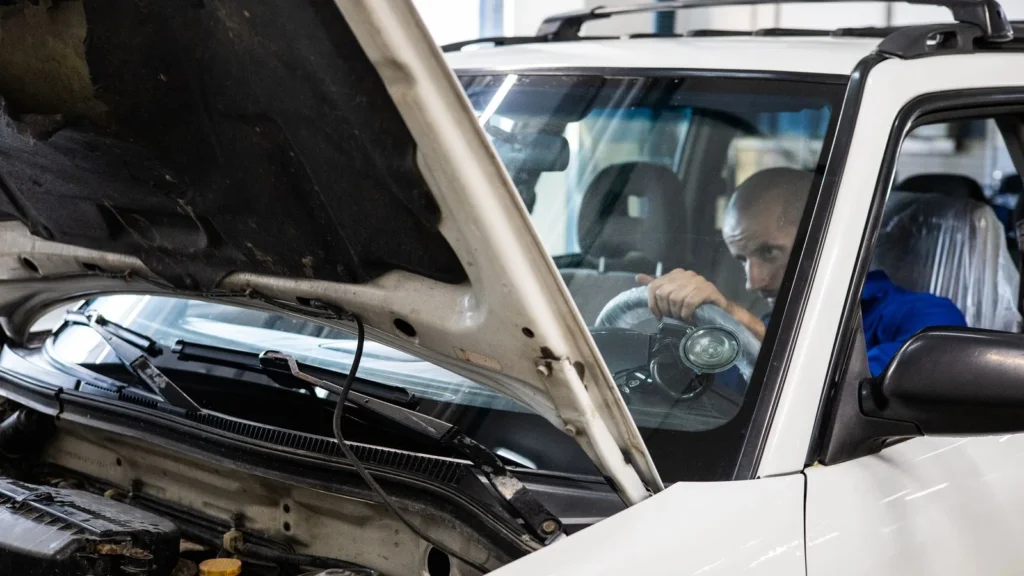
A full mechanical pre-purchase inspection is the opposite in almost every respect. Rather than querying a database, a qualified mechanic physically attends the car, wherever it is located, and examines it directly. A pre-purchase inspection from SSK Mechanics covers the engine and its ancillary components, transmission behaviour, brakes, suspension and steering, tyre condition, electrics and bodywork, along with a check for evidence of previous accident repair or corrosion, and a road test where the seller allows it.
This is a physical, hands-on assessment carried out by one of SSK Mechanics’ own directly employed technicians, covering Bradford, Leeds, Huddersfield and the surrounding West Yorkshire area within a 10 mile radius. Nothing about a mechanical inspection can be completed by looking up a registration number online, since it depends entirely on someone qualified actually being present with the car.
History data versus physical condition: the core difference
The clearest way to understand the difference is to think about what each check can and cannot tell you. An HPI-style check can tell you whether there is outstanding finance you would become liable for, whether the car has been written off and repaired, whether the mileage looks consistent with its history, and whether it has been reported stolen. None of this requires seeing the car in person, and none of it tells you anything about how well the engine currently runs, how much life is left in the clutch, or whether the brakes are in good condition.
A mechanical inspection can tell you about the car’s actual physical condition right now, including engine noises, fluid leaks, brake wear, suspension play, and evidence of accident repair the seller has not disclosed. What it cannot tell you, on its own, is whether there is a hidden finance agreement attached to the car or whether the mileage has been altered at some point in its past, since these are matters of paper record rather than physical inspection.
Why a clean history check does not mean a sound car
One of the most common misunderstandings among used car buyers is assuming that a clean HPI-style check means the car itself is in good mechanical condition. It does not, and it was never designed to. A car can have a completely clean history, no outstanding finance, no write-off record, and consistent mileage, while still having a worn clutch, a failing wheel bearing, or early stage corrosion that only a physical inspection would reveal.
Conversely, a car with a flagged history is not automatically a bad car to buy, though it does warrant closer questioning and, in many cases, a proper physical inspection to understand exactly what work was carried out if the car was previously written off and repaired. History data and physical condition are simply answering different questions, and treating one as a substitute for the other is where buyers most often come unstuck.
Why a good mechanical condition does not mean a clean history
The reverse mistake also happens. A car can drive beautifully, pass a mechanical inspection with flying colours, and still have outstanding finance registered against it from a previous owner, which under UK law can leave a buyer at risk of the finance company reclaiming the vehicle in some circumstances. No amount of physical inspection, however thorough, will reveal a finance agreement that exists purely as a paper record, which is precisely why a history check and a physical inspection are not interchangeable and both matter.
This is also why sensible advice from consumer bodies consistently recommends doing both a history check and a physical inspection before buying a used car, rather than treating either one as sufficient on its own.
Cost and what you get for it
History checks are generally inexpensive relative to the price of the car, reflecting the fact that they are an automated database query rather than a person’s time spent physically examining a vehicle. Providers publish their own current pricing directly, and it is worth checking the specific figure with whichever provider you choose since prices and the exact data fields included can vary.
A mechanical pre-purchase inspection naturally costs more, since it involves a qualified technician’s time and expertise physically attending and examining the car. SSK Mechanics quotes a fixed price before any work begins, based on an £82 per hour labour rate with a minimum visit charge of £61.50, so you know the total cost upfront. Set against the price of the car and the potential cost of a serious hidden mechanical fault, this is generally a small outlay for the reassurance it provides.
How long each check takes
A history check is essentially instant, since it is an automated database query that typically returns results within moments of entering the registration number. This makes it easy to run early on, even before you have arranged to view a specific car in person, simply to rule out an obvious problem before investing any further time.
A mechanical pre-purchase inspection takes considerably longer, since it involves a technician physically working through the car’s systems, and typically requires arranging a specific appointment time with access to the vehicle. This is not a check you can complete in the background before viewing a car; it needs to happen with the car physically present and the seller’s cooperation arranged in advance.
When to use each check in the buying process
A sensible order for most buyers is to run a history check early, ideally before arranging a viewing, since it is quick, inexpensive, and can immediately rule out cars with obvious red flags like outstanding finance or a write-off record you were not told about. This saves time by filtering out problem cars before you invest effort in viewing them.
A mechanical pre-purchase inspection makes most sense once you have found a specific car you are seriously considering, ideally after a history check has come back clean, since at that point the mechanical condition of the car becomes the main remaining question to answer before committing to buy. Booking a mobile mechanic to attend at this stage means you get a physical, professional assessment before any money changes hands.
What SSK Mechanics can add to the process
As a mobile mechanic covering Bradford and the wider West Yorkshire area, SSK Mechanics focuses specifically on the physical, mechanical side of pre-purchase due diligence, attending the car wherever it is located and giving you a clear, honest written assessment covering everything a history check by definition cannot see. The technician who attends is one of the company’s own directly employed staff, working from a mobile team and backed by qualified, insured technicians across the business.
Combining a history check with a full mechanical inspection from SSK Mechanics gives you both halves of the picture, the paper record and the physical reality, which together represent proper due diligence before buying a used car rather than relying on either check alone.
Common misconceptions worth clearing up
A surprisingly common misconception is that a history check somehow includes a mechanical assessment, perhaps because both are loosely described as checks a buyer should do before purchasing a used car. It is worth being explicit with yourself about this distinction, since assuming a history check has covered the mechanical side can leave a genuine gap in your due diligence that only becomes apparent once a fault appears after you have already bought the car.
Another misconception runs the other way, that a mechanic’s visual and physical inspection would somehow catch a finance or write-off issue simply because they are experienced and thorough. A mechanic examining the car in front of them has no way of seeing a finance agreement or a historical insurance record, since these exist purely as data held by third parties and are not visible from inspecting the vehicle itself, however carefully that inspection is carried out.
What each report actually looks like
A history check report typically presents as a structured document or on-screen summary listing each data field checked, whether outstanding finance was found, the vehicle’s recorded write-off status if any, and a mileage consistency assessment based on previous readings held on file. It is designed to be read quickly and understood without specialist knowledge.
A mechanical pre-purchase inspection report from SSK Mechanics is different in nature, typically a written summary of findings across each system checked, often including photographs of anything significant, along with the option to discuss the findings directly with the technician who carried out the inspection. Where a history check report answers yes or no questions about database records, a mechanical inspection report describes the actual observed condition of physical components.
A note on cost versus risk
Buyers sometimes weigh up whether it is worth paying for both a history check and a mechanical inspection, particularly on a lower value car. It is worth remembering that even inexpensive used cars can carry expensive hidden problems, whether that is undisclosed finance revealed by a history check or a failing clutch revealed by a physical inspection, and the combined cost of both checks is typically a small fraction of the price of the car itself, let alone the cost of an unexpected repair or a finance dispute after the fact. Treat both checks as complementary parts of the same overall due diligence process rather than alternatives to choose between, and you significantly reduce the chance of an unpleasant surprise after the sale has completed.
- An HPI-style check is a data and history check using the registration number, covering things like outstanding finance, write-off status and mileage consistency
- A full mechanical pre-purchase inspection is a physical, hands-on assessment of the car’s actual condition, carried out in person by a qualified technician
- A clean history check does not mean the car is mechanically sound, and a good mechanical inspection does not reveal a hidden finance agreement
- History checks are quick and inexpensive; a mechanical inspection takes longer and costs more, reflecting a technician’s time and expertise
- SSK Mechanics quotes a fixed price for its pre-purchase inspection, based on £82 per hour plus a £61.50 minimum visit charge
- Sensible due diligence uses both a history check and a mechanical inspection, since each answers a question the other cannot
If you have found a car you are seriously considering within Bradford, Leeds, Huddersfield or the surrounding West Yorkshire area, you can book a full mechanical pre-purchase inspection directly with SSK Mechanics to cover the physical side of your due diligence. Visit sskmechanics.com/book/ to arrange a technician to attend wherever the car is currently located, and buy with genuine confidence in both its history and its condition.
Frequently asked questions
Does an HPI-style check tell me if a car is mechanically sound?
No, an HPI-style check is a data and history check based on the registration number, covering things like outstanding finance and write-off status. It does not assess the car's physical mechanical condition.
Can a mechanical inspection reveal outstanding finance on a car?
No, a mechanical inspection assesses the car's physical condition. Outstanding finance and write-off history exist as data records and can only be revealed by a dedicated history check.
Do I need both a history check and a mechanical inspection?
Sensible due diligence uses both, since a history check and a mechanical inspection each answer a question the other cannot.
How much does a mechanical pre-purchase inspection cost with SSK Mechanics?
SSK Mechanics quotes a fixed price before any work begins, based on an u00a382 per hour labour rate with a minimum visit charge of u00a361.50.
When should I run each check during the buying process?
A history check is quick and worth running early, ideally before viewing a car. A mechanical inspection makes most sense once you have found a specific car you are seriously considering.