

Your brakes are arguably the single most safety-critical system on your car, yet many drivers only think about them once a formal service or MOT flags an issue. Learning what you can genuinely check yourself between services helps you catch developing problems considerably earlier.
Why brake awareness between services genuinely matters
Brake wear doesn’t happen on a fixed schedule that neatly aligns with your service intervals, it develops gradually based on how and where you drive, meaning a problem can genuinely develop and worsen in the months between scheduled checks. Building simple awareness into your regular driving helps catch issues considerably earlier than waiting for the next service alone.
Listening: your first and most useful diagnostic tool
Your ears are genuinely one of the most useful tools for monitoring brake condition, since many developing brake issues announce themselves audibly well before they become a serious safety concern. Paying attention to any new noise when braking, even a subtle one, is one of the simplest and most effective checks available to any driver.
- A high-pitched squeal, often indicating a built-in wear indicator
- Grinding or metallic scraping, indicating more advanced wear
- Pulling to one side under braking
- A spongy, soft or unusually low brake pedal
- Visible pad thickness through the wheel spokes, if visible
Understanding the squeal: a deliberate warning sign
Many brake pads include a small metal wear indicator specifically designed to make a high-pitched squealing noise once the pad has worn down to a certain point, essentially an intentional early warning system built into the pad itself. Hearing this squeal is a clear signal that pad replacement is approaching, though not yet a genuine emergency.
Grinding: a more serious and urgent sign
A grinding or metallic scraping noise, distinct from the higher-pitched squeal, typically indicates the pad material has worn through completely, meaning metal is now contacting metal against the brake disc. This causes considerably more damage, and often more expense, the longer it continues, and warrants prompt attention rather than being left to worsen further.
Feeling for pulling or vibration under braking
Paying attention to whether the car pulls noticeably to one side when braking, or vibrates through the pedal or steering wheel, gives useful information about potential uneven wear, a sticking caliper, or a warped brake disc. This kind of symptom is genuinely worth having checked promptly, since it can indicate a developing safety issue.
Checking pedal feel: soft, spongy or low
The brake pedal should feel firm and responsive under normal pressure, and a pedal that feels unusually soft, spongy, or sinks lower than normal before engaging can indicate air in the brake lines, a fluid leak, or worn components, all of which genuinely need professional attention rather than being monitored casually over time.
A visual check through the wheel spokes
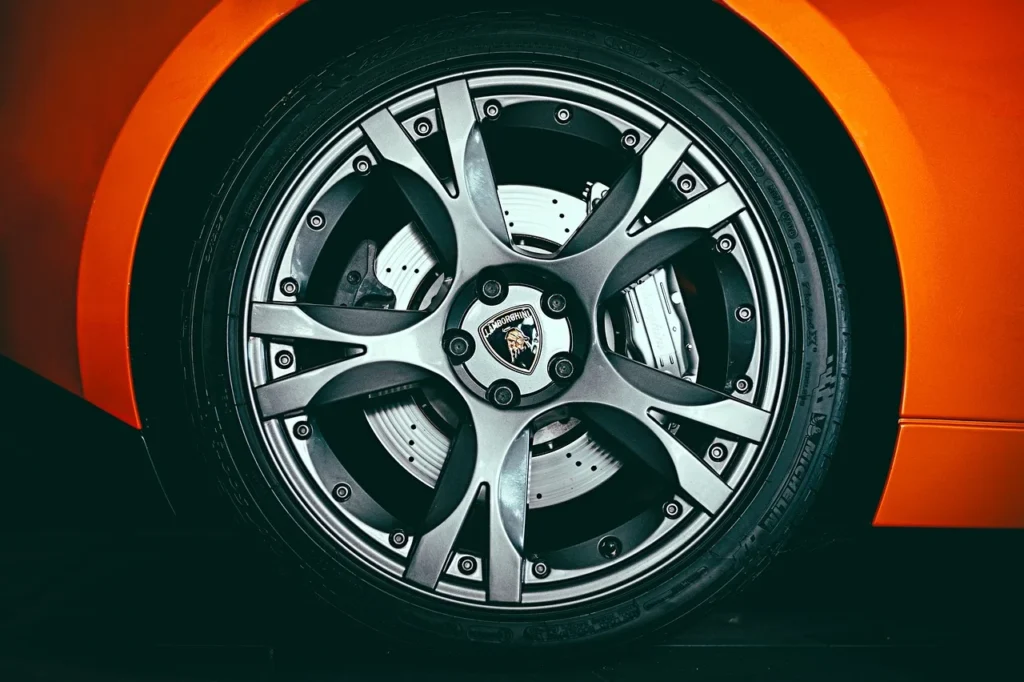
On many cars, it’s possible to see the brake pad and disc through the gaps in the wheel spokes, giving a rough visual indication of remaining pad thickness. A pad that looks noticeably thin compared to when the car was new, or compared to the other side, is worth having properly assessed rather than relying purely on this rough visual estimate.
Checking your brake fluid level
Most cars have a translucent brake fluid reservoir under the bonnet with clear minimum and maximum markings, making a quick visual check straightforward without needing to open anything. A level consistently below the minimum, or one that’s dropped noticeably since you last checked, is worth investigating, since brake fluid shouldn’t disappear without a reason.
Why brake fluid level changes can indicate wear or a leak
A gradually reducing brake fluid level can simply reflect normal pad wear, since fluid moves slightly as the pads compensate for reduced thickness, but a sudden or significant drop is more concerning and can indicate an actual leak somewhere in the system, warranting prompt professional investigation.
Checking brake fluid colour and condition
Brake fluid should be a clear, light amber colour, and fluid that’s become notably darker or cloudier has likely absorbed moisture over time, which reduces its effectiveness and can affect braking performance in ways that aren’t always immediately obvious from the driver’s seat.
Testing brakes at low speed in a safe, controlled way
Occasionally testing braking response at low speed in a safe, empty area, paying attention to whether the car stops smoothly, evenly and without unusual noise or pulling, gives useful real-world feedback beyond what a static visual check alone can reveal.
Why uneven tyre wear can sometimes point to brake issues
While more commonly linked to alignment or suspension, sometimes uneven wear concentrated on one wheel compared to its pair can be connected to a sticking caliper causing that wheel’s brake to drag slightly, generating additional heat and wear. Noticing this pattern is a useful, if indirect, clue worth mentioning to a mechanic.
How driving style affects brake wear rate
Frequent hard braking, heavy stop-start town driving, and towing all accelerate brake wear considerably compared to smoother, more anticipatory driving on faster roads. Being aware of your own driving style helps you judge whether your brakes might need checking somewhat sooner than a generic average interval would suggest.
Why front and rear brakes wear at different rates
Front brakes typically handle a greater proportion of overall braking force than rear brakes, meaning front pads generally wear faster and need replacement more often. This is a normal, expected pattern rather than a fault, though it’s worth understanding when interpreting any symptoms you notice.
What to do if you notice a genuine warning sign
If you notice grinding, a soft pedal, significant pulling, or a rapidly dropping fluid level, it’s worth booking a proper professional check promptly rather than continuing to drive and monitoring the situation yourself, since these particular symptoms indicate a genuine safety-related issue rather than simply routine wear.
Why self-checks complement, rather than replace, professional inspection
The checks covered here are genuinely useful for building awareness and catching obvious symptoms early, but they don’t replace a proper professional inspection, which measures actual pad and disc thickness precisely, checks caliper function, and assesses the whole system in a way that’s simply not possible from the driver’s seat alone.
How often to have brakes professionally checked
Beyond your own regular informal checks, having brakes professionally inspected roughly every six months, or as part of your interim and full services, ensures any gradual wear or developing issue is caught with proper measurement rather than relying purely on symptoms becoming noticeable.
Building brake awareness into everyday driving
Rather than treating brake checks as a separate task, simply paying attention to how your brakes sound and feel during ordinary daily driving, and noticing any change from what feels normal for your car, is a genuinely effective, low-effort way to catch developing issues early.
Why keeping a simple log of what you notice helps
Jotting down roughly when you first noticed a squeal, a pull, or any other symptom, even just a quick note on your phone, gives you and any mechanic a clearer timeline to work from, helping distinguish a slowly developing issue from something that appeared suddenly, which can itself be useful diagnostic information.
How brake dust build-up affects your checks
A build-up of brake dust on the wheels is normal and doesn’t itself indicate a problem, but it can make a visual inspection through the wheel spokes more difficult, since dust obscures the pad and disc surface. Giving the wheel a clean before attempting a visual check gives a clearer, more reliable view.
Why parking brake condition is worth checking too
Beyond the main footbrake, it’s worth periodically confirming your parking brake still holds the car securely on a slope, since a parking brake that’s lost its effectiveness, whether from cable stretch or worn components, is a separate but genuinely important safety check often overlooked between services.
What to do if you’re simply unsure what you’re hearing or feeling
If you’ve noticed something that doesn’t feel quite right but you’re not confident it matches any specific symptom described here, it’s always worth mentioning to a mechanic anyway, describing exactly what you noticed and when. A vague but genuine concern is worth raising rather than dismissed simply because it doesn’t fit neatly into a known category.
Why brake checks matter even more for family cars
If you regularly carry passengers, particularly children, the genuine safety importance of properly functioning brakes is amplified further, making these simple self-checks between services even more worthwhile as a straightforward way to stay proactive about a system that protects everyone travelling with you.
How towing or carrying heavy loads affects brake wear
Regularly towing a trailer or carrying particularly heavy loads places additional demand on your braking system, since more mass needs to be slowed with the same components, and this can accelerate wear noticeably compared to typical unloaded driving, worth factoring into how often you check.
Why checking after a long descent is particularly worthwhile
Following an extended downhill drive, where brakes have worked considerably harder than usual to control speed, it’s worth paying a bit more attention than normal to how they feel and sound afterward, since sustained heavy use can reveal a marginal issue that light everyday driving wouldn’t have exposed.
How new brake pads sometimes need a bedding-in period
Freshly fitted brake pads sometimes perform slightly differently during an initial bedding-in period, as the pad and disc surfaces settle against each other properly. A reputable mechanic explains what to expect during this period, so you don’t mistake normal initial behaviour for a genuine fault.
Bringing your own checks and professional inspection together
Combining your own regular, informal checks with periodic professional inspection gives genuinely the best coverage, catching obvious symptoms early through your own awareness while still benefiting from the precise measurement and thorough assessment only a proper inspection can provide.
How electronic wear sensors add another layer of warning
Many newer cars fit an electronic pad wear sensor alongside, or instead of, the traditional metal squeal indicator, triggering a dashboard warning light once pad thickness reaches a pre-set minimum. This gives a clear, unambiguous signal rather than relying purely on sound, though it’s worth remembering the light indicates the pad has already reached its replacement point, rather than warning you well in advance the way a gradually developing squeal often does.
Roughly what pad thickness looks like at different stages
A new brake pad typically starts with somewhere around 10 to 12mm of friction material, and most manufacturers consider a pad needing replacement once it wears down to somewhere around 3mm, with the specific figure varying by vehicle. Understanding this rough range helps put a visual check through the wheel spokes into context, since a pad that looks noticeably thinner than roughly a third of its original depth is worth having measured properly rather than left until it reaches the metal backing plate entirely.
Why replacing pads on one axle but not checking the other is a mistake
If you notice a symptom pointing clearly to one specific wheel, it’s still worth having the opposite side of the same axle checked at the same time, since brakes are designed to work as matched pairs and uneven replacement can leave a subtle imbalance in stopping force between the two sides, even after the more obviously worn side has been sorted.
Getting a proper brake check and replacement
If your own checks have flagged a possible issue, or it’s simply been a while since brakes were professionally assessed, booking a front brake pad replacement or inspection gives you genuine confidence in one of your car’s most safety-critical systems. The RAC’s guidance on brake care and maintenance offers further useful general context on staying on top of this essential system. Building a rough mental picture of what healthy looks and sounds like for your own car, rather than relying purely on generic descriptions, makes it considerably easier to notice the moment something genuinely changes. None of this replaces a proper measured inspection, but it does mean you walk into that inspection already knowing roughly what to expect rather than being caught entirely off guard.
Frequently asked questions
What can I genuinely check about my brakes myself?
You can listen for noise, watch for pulling or vibration, check the pedal feel, and sometimes visually inspect pad thickness through the wheel spokes.
How often should brakes be checked between services?
A quick check every month or so, alongside paying attention to how the brakes feel during everyday driving, is a sensible habit.
What does a squealing noise from the brakes usually mean?
It often indicates a built-in wear indicator making contact, signalling the pads are approaching the point where replacement is needed.
Should I be worried if the car pulls to one side when braking?
Yes, this can indicate uneven pad wear or a caliper issue and is worth having checked promptly rather than continuing to drive on it.
Can I check my own brake fluid level?
Yes, the reservoir is usually visible under the bonnet with clear minimum and maximum markings, making a quick visual check straightforward.