

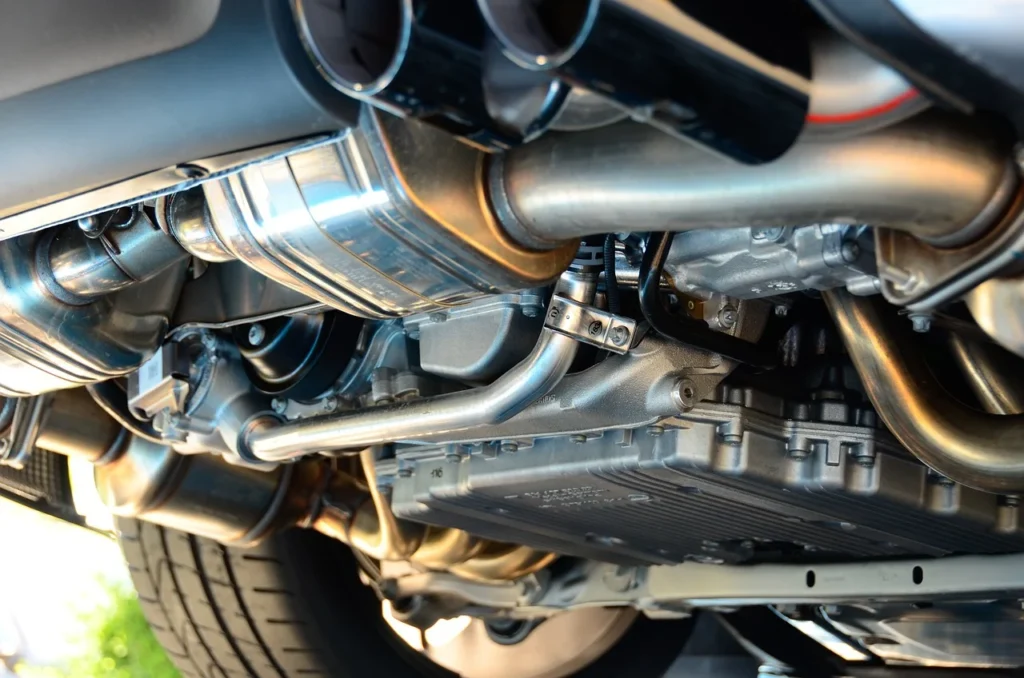
Exhaust and catalytic converter problems account for a meaningful share of MOT fails each year, and they’re a category where the underlying cause isn’t always obvious from how the car drives or sounds. A catalytic converter that’s failing internally can allow a car to run seemingly normally while still pushing emissions well above the legal limit, which is exactly the kind of fault the test is designed to catch.
What the catalytic converter actually does
The catalytic converter sits in the exhaust system and uses a chemical reaction to convert harmful pollutants, including carbon monoxide and hydrocarbons, into less harmful substances before they leave the tailpipe. It’s a passive component with no moving parts, but it relies on precise internal conditions and a healthy engine feeding it properly to work effectively. When it degrades or fails, either through age, physical damage, or being poisoned by contaminants like oil or unburnt fuel passing through the exhaust, its ability to clean up emissions drops considerably, which shows up directly in the MOT’s emissions readings.
Why catalytic converters fail
Age and general wear account for some failures, since the internal structure can degrade over very high mileage, but a considerable number of catalytic converter failures are actually caused by an unrelated problem elsewhere in the engine. A persistent misfire sends unburnt fuel into the exhaust system, which can overheat and physically damage the converter’s internal structure. An engine burning oil can coat and poison the catalyst material, reducing its effectiveness. Physical damage from a pothole impact or driving over an obstruction can also crack or dislodge the internal structure, even if the outer casing looks undamaged from the outside.
Exhaust leaks and general condition
Beyond the catalytic converter specifically, the wider exhaust system is checked for leaks, excessive noise, and secure mounting. A leak, particularly one that’s developed before the exhaust gas reaches the catalytic converter, can also affect emissions readings by allowing gas to escape before it’s been properly treated. Corrosion is a common cause of exhaust leaks, particularly on the sections of pipework most exposed to road spray and winter grit, and a leak that’s purely a noise issue rather than an emissions one can still result in a fail if it’s loud enough or if the exhaust isn’t securely mounted.
- Excessive noise from a leaking or damaged exhaust section
- Visible corrosion or holes in the exhaust pipework
- A loose or insecurely mounted exhaust affecting how it hangs beneath the car
- Reduced catalytic converter effectiveness showing up in the emissions test
- Physical damage to the catalytic converter from impact or overheating
The theft problem and what it means for testing
Catalytic converters have become a target for theft in recent years due to the small amounts of valuable precious metals they contain, and certain vehicle types with higher ground clearance have proven particularly vulnerable due to easier underbody access. If a converter has been stolen, the car will not only be extremely loud but will also fail the emissions portion of the test outright, since without the converter there’s nothing treating the exhaust gases before they leave the tailpipe. Beyond the immediate cost of replacement, a stolen catalytic converter often means a wait for parts given ongoing demand, making preventative measures like marking or fitting a protective cage worth considering for vehicles at higher risk.
What a diagnostic check can reveal before the test
A diagnostic scan can flag stored fault codes related to catalytic converter efficiency, oxygen sensor readings, or misfires, all of which give an early indication of a developing exhaust or emissions problem before it results in an outright MOT fail. Combined with a physical inspection of the exhaust for leaks, corrosion, and secure mounting, this gives a considerably clearer picture of whether a car is likely to pass the exhaust and emissions portions of the test than simply hoping for the best on the day.
Replacement costs and getting the right diagnosis
Catalytic converter replacement costs vary considerably by make and model, and it’s genuinely important to get a proper diagnosis before replacing one, since fitting a new converter without addressing an underlying cause like a persistent misfire or an oil-burning engine can simply lead to the new converter failing in the same way relatively quickly. A mechanic investigating a catalytic converter fault should be looking at the wider picture of engine health, not just swapping the failed component in isolation, to ensure the replacement actually lasts rather than becoming a repeat expense within a short period.
How to spot a developing catalytic converter problem
Certain symptoms are worth paying attention to before a test confirms a problem outright. A noticeable drop in fuel economy without an obvious explanation can indicate the engine management system is compensating for reduced converter efficiency. A rattling noise from underneath the car, particularly when cold or at idle, can suggest the internal honeycomb structure inside the converter has begun to break apart. A distinct smell, sometimes described as similar to rotten eggs, can indicate the converter isn’t processing exhaust gases properly. None of these symptoms guarantee a catalytic converter problem specifically, since other faults can produce similar signs, but they’re all worth getting properly diagnosed rather than ignored, particularly with an MOT due soon.
The environmental cost of exhaust and catalytic converter faults
Beyond the immediate legal and financial consequences of a fail, a failing catalytic converter or a leaking exhaust genuinely increases the amount of harmful pollution a car releases into the air, contributing directly to poorer local air quality in exactly the kind of built-up areas where traffic is heaviest. This is worth bearing in mind as more than just a compliance issue, since fixing these faults promptly has a real, if small, positive impact beyond simply passing the next test.
Insurance and warranty considerations
If your catalytic converter has been stolen, this is typically covered under a comprehensive insurance policy, though it’s worth checking your specific policy terms and any excess that applies, since claiming for a relatively lower-cost repair can sometimes affect your no-claims position more than it’s worth. If the converter has failed due to a manufacturing defect rather than theft or an unrelated engine fault, and the car is still within its warranty period, it may be covered, though warranties often exclude failures linked to a driver-caused issue like ignoring a persistent misfire for an extended period.
Preventing exhaust and catalytic converter problems
Keeping up with regular servicing, addressing misfires or unusual running promptly rather than ignoring them, and using the correct fuel and oil specification all help protect the catalytic converter from premature failure. Being mindful of ground clearance in areas known for converter theft, and considering additional security measures if you’re in a higher-risk category of vehicle, also helps avoid one of the more disruptive and unpredictable causes of an emissions-related MOT fail. If you’re at all concerned about your exhaust system ahead of your next test, getting it checked proactively, alongside a diagnostic scan to catch any underlying engine issues, is considerably less stressful than discovering a problem on test day itself. Gov.uk’s guide to MOT checks covers the full detail on how exhaust and emissions are specifically assessed during the test.
What happens after a catalytic converter fail
Like any other MOT fail, a car failing on emissions or exhaust condition cannot be driven except to a pre-booked repair or retest, and the specific fault needs addressing before a retest can be passed. Given how directly a catalytic converter issue affects the emissions reading, there’s little room for a partial fix or workaround, the component either needs replacing or, if the fault lies elsewhere in the engine, the root cause needs resolving first so a new converter isn’t immediately damaged again by the same underlying problem.
Choosing where to get exhaust work done
Exhaust and catalytic converter work benefits from being done by someone who can properly diagnose the underlying cause rather than simply quoting for a straight parts swap. Given the cost involved in replacing a catalytic converter, and the risk of a new one failing again quickly if the real cause isn’t addressed, it’s worth choosing a mechanic who will run a proper diagnostic check alongside any physical inspection, rather than one who jumps straight to a replacement quote based on the emissions test result alone. Getting this right the first time avoids the frustrating and costly scenario of paying for a new converter only to have it fail again within a relatively short period because the actual root cause was never resolved.
Fuel type and how it affects exhaust wear
Diesel and petrol exhaust systems face slightly different challenges. Diesel particulate filters, fitted to most modern diesels, need to periodically burn off trapped soot through a process called regeneration, and short journeys that never let the engine reach the right temperature can prevent this happening properly, leading to a blocked filter and related emissions problems. Petrol engines don’t carry this specific risk but can still suffer catalytic converter issues from misfires or oil consumption in exactly the way described above. Knowing which risks apply to your specific engine type helps you watch for the right warning signs rather than treating all exhaust problems as identical.
Why short journeys are particularly hard on this system
Cars used mainly for short trips around town, common for a lot of everyday driving in and around Bradford, often don’t get the exhaust system, and particularly the catalytic converter, up to full operating temperature for long enough to work as efficiently as it’s designed to. Occasionally taking a longer run, allowing the engine and exhaust to reach and hold a proper operating temperature, can help keep the system in better condition than a car that only ever does short, cold starts followed by a few minutes of driving before the engine’s switched off again.
What a fresh exhaust smell or discolouration can indicate
A strong fuel smell around the exhaust can suggest an unburnt fuel issue affecting the catalytic converter, while unusual discolouration on the tailpipe itself, such as a sooty black residue, can point toward the engine running rich or burning oil. Neither symptom guarantees a specific fault on its own, but both are worth mentioning to a mechanic during a routine check, since they can help narrow down whether an emerging exhaust or catalytic converter problem is developing before it results in a test failure.
Why prompt action saves money in this category
Exhaust and catalytic converter problems have a tendency to compound if left unaddressed, since a leak upstream of the converter can accelerate its degradation, and a converter that’s failing can in turn affect how the engine runs and how other components downstream cope with the changed exhaust flow. Addressing a leak or an early converter concern promptly, rather than waiting for it to show up as an outright emissions fail, is one of the more reliable ways to keep repair costs in this category from escalating unnecessarily.
How exhaust and catalytic converter issues connect to overall running costs
A poorly performing exhaust or catalytic converter doesn’t just risk an MOT fail, it can also quietly reduce fuel efficiency, since the engine management system may compensate for a degraded converter by adjusting fuelling in ways that use more fuel than necessary. Over months of driving, this can add up to a genuinely noticeable increase in running costs, on top of the eventual repair bill, which is another reason to address a developing exhaust or emissions issue sooner rather than continuing to drive on it until the next test forces the point.
Why regular servicing supports a cleaner exhaust result
Keeping up with routine servicing, including air filter changes and monitoring for early signs of a misfire, gives the engine the best chance of running cleanly, which in turn reduces the load placed on the catalytic converter over time. A well-maintained engine simply produces less of the kind of unburnt fuel and contamination that shortens a converter’s working life, making regular servicing one of the more effective, and often overlooked, ways of protecting this part of the car from premature failure.
Source: gov.uk's guide to MOT checks
Frequently asked questions
How does a tester check the catalytic converter?
Mainly through the emissions test, since a failing catalytic converter allows more pollutants through the exhaust than the legal limit permits, alongside a visual and physical check for security and leaks.
Why are catalytic converters targeted by thieves?
They contain small amounts of precious metals that have significant resale value, making them a target for theft, particularly on cars with easy underbody access.
Can an exhaust leak fail the MOT even if emissions are fine?
Yes, excessive noise or a leak affecting the exhaust system's security and function can be flagged independently of the emissions reading itself.
How long do catalytic converters typically last?
Many last the life of the car with normal use, though they can fail prematurely due to engine problems like misfires, oil contamination, or physical damage.
Is a replacement catalytic converter expensive?
Costs vary considerably by make and model, and it is worth getting a proper diagnosis first, since sometimes an underlying engine issue causing the failure needs addressing too.