

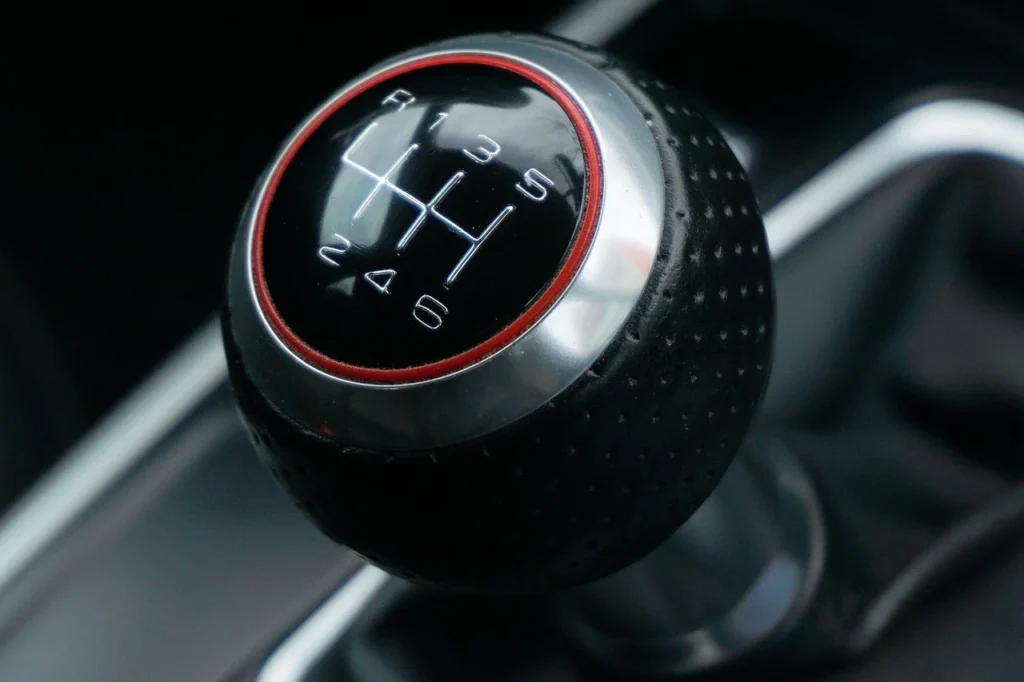
If you’re having to force the gear lever, or a particular gear won’t go in cleanly no matter how you try, the fault is often outside the gearbox itself. Worn or stretched gear linkage cables, or perished bushings where the linkage connects, are among the most common causes. These parts translate the movement of your gear lever into the actual selection mechanism inside the gearbox, and when they wear out, that movement becomes imprecise or sloppy.
It’s easy to assume a stiff or stuck gear means expensive internal gearbox damage, but a linkage or bushing fault is a much more common and far cheaper explanation, and it’s worth ruling out first.
Likely causes
A gear that’s stuck, notchy or hard to select usually points to one of these areas.
- Worn or stretched gear linkage cables losing their precision over time
- Perished or worn bushings at the linkage pivot points, introducing play
- Low or degraded gearbox oil, making synchros work harder than they should
- Worn synchromesh rings inside the gearbox, particularly on higher-mileage cars
- A clutch not fully disengaging, which can make gears feel stuck even when the linkage is fine
- A selector fork or internal gearbox component wearing down with age
Why it’s worth sorting properly
Forcing a gear that won’t select cleanly can accelerate wear on the synchros and selector mechanism inside the gearbox, turning a relatively cheap linkage repair into a much more expensive gearbox rebuild. There’s also a safety angle: struggling to select a gear at a junction, roundabout or when you need to react quickly isn’t just frustrating, it can put you in a genuinely risky position on the road.
Note whether the difficulty is with one specific gear or all of them, whether it’s worse when cold, and whether there’s any grinding or crunching alongside it. These details matter for an accurate diagnosis.
What a mechanic checks
A mechanic will start by checking the gear linkage and any cables for wear, play or damage, along with the bushings at each pivot point, since these are the most common and most straightforward faults to fix. They’ll also check gearbox oil level and condition, assess clutch operation to rule out incomplete disengagement, and only consider internal gearbox wear once the simpler, external causes have been ruled out.
What it typically costs to fix
Low or degraded gearbox oil is the cheapest fix, usually £60-120 for a drain and refill with the correct spec fluid. A worn clutch or release bearing causing selection problems on a manual falls in the £350-650 range since it’s tied to the same job as a clutch replacement. Linkage or cable adjustment is often under £100. If the synchros inside the gearbox itself are worn, that’s a bigger repair, and your mechanic should confirm the cause with a proper inspection before quoting for parts.
What happens if you leave it
Forcing a gear that doesn’t want to go in causes more wear to the synchros and selector forks, which turns a minor adjustment into an internal gearbox repair. It also increases the risk of selecting the wrong gear under pressure, which is more of a problem in traffic or when pulling out of a junction than most drivers expect.
What you can check yourself first
Note whether the problem happens more when the gearbox is cold, which points toward gearbox oil, or happens consistently regardless of temperature, which points more toward wear inside the box or the clutch. On a manual, check whether the clutch pedal feels normal, since a clutch that isn’t fully disengaging will make every gear feel harder to select.
It’s worth noting which specific gears are affected, since difficulty with just one or two gears, particularly reverse or first, often points toward a linkage or cable adjustment issue, while difficulty across all gears more often points toward the gearbox oil or clutch. That detail is genuinely useful information to pass on when booking the car in.
How gear linkage actually connects lever to gearbox
On most manual cars, moving the gear lever doesn’t directly move anything inside the gearbox itself, instead it operates a system of cables or rods, called the linkage, that translates your hand movement into the selector mechanism inside the gearbox actually engaging the right gear. This linkage typically passes through rubber bushings at various pivot points, which allow smooth movement while damping vibration. As these bushings wear and perish over years of use, they develop play, and that play means the precise movement you’re making with the lever doesn’t translate as precisely into the gearbox, producing the vague, imprecise or occasionally stuck feeling covered here.
Why cold weather makes gear selection harder
Gearbox oil, like engine oil, thickens in cold temperatures, and a gearbox that’s otherwise in good condition can feel noticeably stiffer to select gears in when the oil hasn’t warmed through yet, particularly on the first few minutes of a cold morning drive. This is genuinely normal to some degree, but if the stiffness is severe, doesn’t ease off once the car’s been driven for ten minutes or so, or is limited to specific gears rather than a general stiffness across the board, that pattern points more toward a genuine fault than simply cold oil.
Synchromesh explained properly
Synchromesh rings inside a manual gearbox exist to match the speed of the gear you’re selecting with the speed of the shaft it needs to engage with, allowing smooth, quiet gear changes without needing to double-declutch the way older, non-synchromesh gearboxes required. As synchro rings wear, that speed-matching becomes less effective, and you’ll typically notice this first as a grinding or crunching sound when selecting a specific gear, most commonly second gear on many gearbox designs since it tends to see more wear from frequent use. Worn synchros are a genuine internal gearbox fault rather than an external linkage issue, and they’re a more involved and expensive repair.
Why a clutch that’s not fully disengaging mimics gearbox problems
It’s worth understanding that a clutch failing to fully disengage, sometimes called a clutch that’s not releasing properly, can make gear selection difficult in a way that feels remarkably similar to a genuine gearbox or linkage fault, even though the gearbox itself is perfectly healthy. This can happen due to worn clutch hydraulics, a warped clutch plate, or incorrect adjustment on cable-operated clutches, and it’s exactly why a thorough diagnosis checks clutch operation as a matter of course before assuming the fault lies inside the gearbox itself.
What to expect during a mobile inspection
A mobile gear selection diagnosis starts with checking the linkage and any accessible cables for visible wear, play or damage, along with assessing bushing condition at each pivot point. Gearbox oil level and condition get checked, and clutch operation gets assessed to rule out a fault there mimicking a gearbox issue. Because much of this diagnostic work is straightforward with hand tools, it’s well suited to being carried out at your home or workplace rather than needing a workshop visit for the initial assessment.
What you can check yourself before booking
Note which specific gear or gears are affected, and whether the difficulty is worse when the gearbox is cold. Check whether the clutch pedal feels normal in its travel and biting point, since a clutch that’s not fully disengaging can make every gear feel harder to select even when the gearbox itself is fine.
Prevention through routine maintenance
Sticking to the recommended gearbox oil change interval, where the manufacturer specifies one, and having linkage and bushings inspected as part of a major service, catches wear before it progresses to genuinely difficult gear selection. Avoiding forcing a gear that doesn’t want to go in, even under pressure at a junction, reduces the accelerated wear that repeated forcing causes to synchros and selector mechanisms over time.
Why reverse gear often shows problems first
Reverse gear on many manual gearboxes lacks synchromesh entirely, relying instead on the car being fully stopped before selection, which is why forcing reverse while the car is still moving even slightly, or before the clutch has fully disengaged, is a particularly common cause of grinding. If your difficulty is specifically with reverse rather than the forward gears, that is a useful detail that often points toward technique or clutch adjustment rather than a genuine internal fault.
Why linkage problems tend to develop gradually
Bushing wear rarely happens overnight, it is a gradual process that most drivers adapt to without fully noticing, adjusting their technique slightly to compensate for the growing play, until the difference becomes significant enough to consciously register as a problem. This gradual adaptation is part of why owners sometimes struggle to say exactly when the issue started, and it is worth simply acknowledging that uncertainty to a mechanic rather than guessing at a specific date.
A quick final thought: unusual noises accompanying difficult gear selection, beyond a simple grinding sound, such as a clunk or knock, are worth describing as precisely as possible, since different sounds point toward quite different components inside or around the gearbox.
Why some owners mistake gearbox stiffness for a bigger fault than it is
A gearbox that simply needs an oil change can feel alarmingly stiff and notchy, leading some owners to assume the worst before a mechanic has even had a chance to look at it. It is worth remembering that the cheapest possible cause, degraded oil, is also one of the most common, and it is always worth ruling this out before assuming a costly internal repair is inevitable.
A gearbox that is difficult to use confidently affects your driving every single time you change gear, which makes this a fault worth addressing properly rather than developing workarounds for indefinitely.
Booking a check as soon as gear selection becomes noticeably harder, rather than continuing to force it and hoping it improves, remains the more sensible approach given how quickly forced gear changes can accelerate wear inside the gearbox itself.
Many owners are surprised at how much smoother gear changes feel once a simple linkage adjustment or oil change has been carried out, having grown so used to the notchy, imprecise feel that they had stopped noticing quite how much it had changed from new.
A gearbox that selects gears cleanly again makes every drive noticeably less stressful, particularly in traffic where quick, confident gear changes genuinely matter for keeping pace safely.
Smooth gear selection is one of those everyday comforts that is easy to take for granted until it starts to slip away gradually.
Do not let a stiff or notchy gearbox become the new normal, since a proper fix genuinely restores the confident, precise feel a well maintained manual gearbox should have.
A short diagnostic visit is a small investment compared with the frustration of a gearbox that never quite feels right to use.
Booking early genuinely pays off in this case as well.
Getting it sorted properly makes every drive noticeably better.
It genuinely makes a difference.
Worth doing sooner rather than later.
Well worth it.
Definitely worth it.
SSK Mechanics carries out this diagnosis and repair at your home or workplace across Bradford and West Yorkshire, working through the likely causes in the right order so you’re not paying for gearbox work you don’t need.
SSK Mechanics carries out this diagnosis and repair at your home or workplace across Bradford and West Yorkshire, working through the likely causes in the right order so you’re not paying for gearbox work you don’t need.
When to book vs when it can wait
If it’s just one gear that occasionally feels notchy, book a check soon before it worsens or you’re tempted to keep forcing it. If multiple gears are affected, or you’re hearing grinding or crunching, treat it as more urgent, since that can indicate wear progressing inside the gearbox itself.
The RAC’s drive advice on gearbox faults notes that linkage and cable wear is a far more frequent cause of gear selection problems than people assume, and it’s worth ruling out before assuming the worst. Once confirmed, our transmission system service covers a Gear Linkage Cable or Bushing replacement.
Frequently asked questions
Does a stuck gear always mean the gearbox is failing?
No, it's often a worn linkage cable or bushing outside the gearbox itself, which is a much simpler and cheaper fix than internal gearbox wear.
Is it bad to force a gear that won't go in?
Yes, forcing it can accelerate wear on the synchros and selector mechanism inside the gearbox, so it's better to have the cause diagnosed before continuing to drive normally.
Can worn gearbox oil cause gears to feel stiff?
Yes, low or degraded gearbox oil makes it harder for the synchros to do their job smoothly, which can feel similar to a linkage fault, so it's worth checking as part of the diagnosis.