

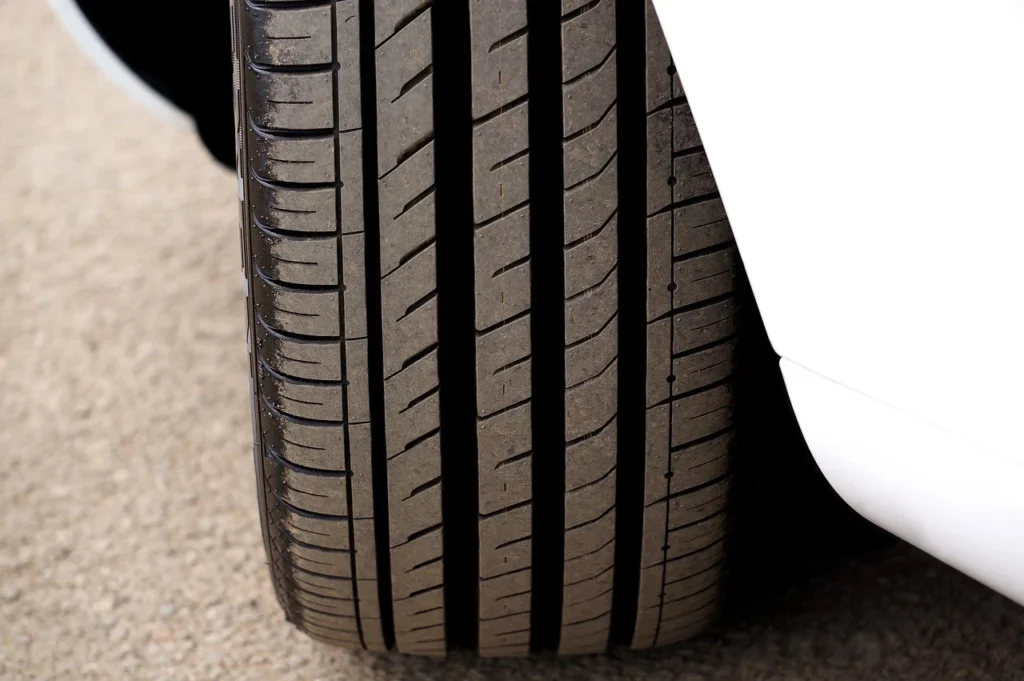
Why tyres deserve more attention than most drivers give them
Tyres are the only part of your car actually in contact with the road, yet they’re often the most neglected part of routine maintenance, checked only when something feels obviously wrong or when an MOT is due. Tread depth and pressure both affect grip, braking distance and fuel economy, and both are genuinely quick to check yourself with basic tools you probably already have or can buy cheaply.
Unlike more involved maintenance jobs, checking tread and pressure carries essentially no risk of doing something wrong. You’re not disturbing any mechanical system, just observing and measuring, which makes this one of the safest and most valuable checks any driver can build into a regular routine, ideally monthly and always before a longer journey.
This guide covers how to check tread depth properly, how to check and correct pressure, what uneven wear patterns are telling you, and why getting into the habit matters more than most drivers realise, particularly with an MOT in mind.
Checking tread depth properly
The legal minimum tread depth in the UK is 1.6mm across the central three-quarters of the tyre’s width, around its entire circumference, not just at one point. The simplest way to check is with a 20p coin, insert it into the main tread grooves at several points around the tyre, and if the outer rim of the coin is obscured by the tread, you’re above the legal minimum at that point. If the rim is visible, the tyre may be at or below the legal limit and needs proper measurement.
The 20p test is a useful quick check but isn’t as precise as a proper tread depth gauge, which is inexpensive and gives you an exact figure in millimetres. Check at several points across the width and around the circumference of each tyre, since wear isn’t always even, and a tyre that passes in one spot can be below the limit in another.
Don’t wait until you’re right at the legal minimum before considering replacement. Grip, particularly in wet conditions, drops off noticeably as tread wears down even before reaching 1.6mm, so many safety experts and tyre manufacturers recommend replacing well before the legal limit, particularly for tyres used through a UK winter.
Checking and correcting tyre pressure
Tyre pressure should be checked when tyres are cold, ideally before you’ve driven more than a couple of miles, since driving heats the tyres and temporarily raises the pressure reading, giving a falsely high figure. Find your car’s recommended pressures, usually on a sticker inside the driver’s door frame, in the fuel filler flap, or in the handbook, and note that many cars specify different pressures for front and rear, and sometimes a different figure again when the car is heavily loaded.
Use a pressure gauge, either a standalone tool or the one built into most petrol station air pumps, to check each tyre, including the spare if you carry a full-size one. Top up or release air as needed to match the recommended figure, checking again after adjusting since it’s easy to slightly overshoot.
Check pressures roughly monthly and always before a longer journey or when the car is going to be more heavily loaded than usual, since correct pressure changes how the tyre wears, how the car handles, and how much fuel you use, all noticeably affected by running even moderately under or over the recommended figure.
What uneven wear patterns are telling you
Even, gradual wear across a tyre’s width is normal and expected. Wear that’s concentrated on one edge, either the inner or outer, often points to a wheel alignment issue, the tyre isn’t sitting quite square with the road, which wears one side faster than the rest and won’t correct itself without a proper alignment check. Wear concentrated in the centre of the tyre, with more tread remaining at the edges, typically points to consistently overinflated tyres, while wear concentrated at both edges with more tread in the centre suggests underinflation.
Cupping or scalloping, an uneven, wavy wear pattern around the tyre’s circumference, can point to worn suspension components, particularly shock absorbers or struts that aren’t controlling the tyre’s contact with the road evenly. This is worth having checked properly rather than simply replacing the tyre and expecting the new one to wear differently, since the underlying cause will likely cause the same pattern again.
Checking wear patterns during your regular tread depth check costs no extra time and can flag a developing alignment or suspension issue well before it becomes a bigger, more expensive problem, or before it affects handling and safety noticeably.
Sidewall damage: what to look for
Beyond tread and pressure, it’s worth a visual check of the tyre sidewalls for cuts, bulges, or cracking, since any of these can be an automatic MOT fail and, more importantly, a genuine safety hazard regardless of how much tread depth remains. A bulge in particular indicates internal damage to the tyre’s structure and can lead to a sudden blowout, especially at higher speeds or under load, so a tyre showing this should be replaced rather than monitored.
Cracking, sometimes called sidewall crazing, tends to appear on older tyres even if they haven’t done much mileage, since rubber degrades with age and UV exposure regardless of use. If your tyres are more than five or six years old, even with plenty of tread remaining, it’s worth having their overall condition assessed rather than judging purely on tread depth.
Kerbing damage, scuffs and scrapes from contact with kerbs while parking, is common and usually cosmetic, but a harder impact can cause internal damage that isn’t visible from the outside, so if you’ve had a significant knock against a kerb, it’s worth having the tyre checked properly rather than assuming it’s fine because it looks okay.
Checking your spare tyre too
It’s easy to check your four road tyres regularly and completely forget the spare, which then sits neglected until the one moment you actually need it, often to discover it’s flat or perished. If your car has a full-size or space-saver spare, check its pressure and general condition as part of your regular routine, not just when something’s already gone wrong with another tyre.
Space-saver spares are designed for temporary use only, at reduced speed and for a limited distance, and it’s worth knowing your specific car’s guidance for this rather than assuming it can be used exactly like a normal tyre. Many newer cars don’t carry a spare at all, relying instead on a repair kit or run-flat tyres, so it’s worth knowing which category your car falls into before you actually need it.
If you rely on a repair kit rather than a spare wheel, check the sealant canister’s expiry date periodically, since these do have a shelf life and an expired kit may not work properly when you actually need it.
Winter tyres and seasonal considerations
UK winters don’t typically justify dedicated winter tyres the way harsher European climates do, but tread depth matters even more through winter, since wet and cold conditions reduce grip further on tyres that are already getting close to the legal minimum. If your tyres are borderline on tread depth heading into autumn, it’s worth replacing before winter fully sets in rather than pushing them right to the legal limit through the wettest, coldest months.
Cold weather also affects tyre pressure directly, since air contracts as temperature drops, meaning tyres that were correctly inflated in summer can read noticeably lower once temperatures fall. Check pressures more frequently through the colder months for this reason, rather than assuming a check from a few months earlier is still accurate.
If you regularly drive in genuinely challenging winter conditions, rural routes, hills, exposed areas, it’s worth researching whether winter or all-season tyres would suit your specific driving pattern, though for most UK drivers doing typical road journeys, well-maintained standard tyres with good tread depth are sufficient.
Why this matters so much for your MOT
Tyre condition is one of the most straightforward items checked at MOT time, and also one of the most commonly failed, largely because tread depth and sidewall condition are easy to overlook until the test flags them. A regular tread and pressure check catches this well ahead of test day, giving you time to budget for and arrange replacement tyres on your own schedule rather than facing an unexpected fail and needing tyres sorted urgently before a retest.
Checking tyres regularly, rather than only around MOT time, also means you’re driving safely between tests, not just meeting the legal minimum on the one day a year the car is formally checked. Given how directly tyres affect braking distance and grip, this is one area where staying ahead of the legal minimum genuinely matters for everyday safety, not just for passing a test.
Building tyre checks into the same routine as fluid checks, a quick monthly walk-around, means the whole thing takes only a few extra minutes and becomes a genuinely useful habit rather than a chore you keep meaning to get around to.
Getting a proper check if you’re unsure
If you’re ever unsure whether a tyre is safe, borderline tread depth, a wear pattern you don’t recognise, sidewall damage you’re not sure how serious it is, it’s always worth getting a professional opinion rather than guessing and continuing to drive on it. This is a genuinely safety-critical area, and the cost of a proper check is small compared with the risk of continuing to drive on a tyre that’s actually unsafe.
SSK Mechanics offers a mobile MOT Pre-Inspection across West Yorkshire and Bradford that includes a full tyre check as standard, catching tread, pressure and condition issues well before your actual MOT test date. We come to you, so there’s no need for a separate trip just to have your tyres properly assessed.
Book an MOT Pre-Inspection with SSK Mechanics in Bradford if you’d like a proper professional check of your tyres, and the rest of your car, ahead of your next test, giving you time to sort anything that’s flagged rather than discovering it on the day.
Tools worth keeping in the car
A proper tread depth gauge costs very little and gives a far more precise reading than the coin test alone, so it’s worth keeping one in the glovebox rather than relying purely on visual estimation. A digital or analogue tyre pressure gauge is equally cheap and means you’re not dependent on finding a working petrol station air pump with an accurate gauge attached, since these can vary in reliability more than people expect.
Keeping a note of your car’s correct tyre pressures somewhere handy, a photo of the door sticker on your phone works well, means you’re not searching for the figure every time you check, particularly useful if you drive more than one car regularly and the figures differ between them.
Fuel economy and handling benefits of correct pressure
Beyond safety, correctly inflated tyres genuinely improve fuel economy, since underinflated tyres create more rolling resistance and make the engine work harder to maintain the same speed. Over a year of typical driving, running consistently underinflated tyres can add a noticeable amount to your fuel costs, on top of the extra, uneven wear that shortens the tyres’ overall lifespan and brings replacement costs forward.
Handling also improves with correct pressure, since an underinflated tyre flexes more under cornering and braking, changing how predictably the car responds compared with how it was designed to behave. This is a genuine, if often overlooked, safety benefit alongside the more obvious tread depth considerations, and it costs nothing beyond a few minutes with a pressure gauge to get right.
Making tread and pressure checks a genuine monthly habit, rather than something done only when a problem’s already suspected, keeps you ahead of both the safety and the cost side of tyre maintenance.
It’s a small routine that costs a few minutes but pays off in fewer surprises at MOT time, better fuel economy, and tyres that last as long as they’re capable of lasting.
Source: GOV.UK vehicle safety checks