

A humming noise that steadily gets louder the faster you drive is one of the more predictable car noise patterns, and in the great majority of cases it points directly to a wheel bearing. This guide explains why wheel bearings fail, how the noise develops, and why acting on it promptly genuinely matters for your safety.
What a wheel bearing actually does
A wheel bearing is a set of precision steel balls or rollers housed within a hub assembly, allowing the wheel to spin freely with minimal friction while still supporting the considerable weight and load the vehicle places on it, including the forces generated during braking, cornering, and simply carrying the car’s weight over every mile driven. Bearings are sealed units packed with grease to reduce friction and protect the internal components from water, dirt and road grime, and while they are built to last a long time, they are still a wear item that will eventually degrade, particularly given the constant load and rotational stress they experience every single time the car moves.
Why the noise gets louder with speed
As a wheel bearing wears, tiny imperfections develop on the surfaces the steel balls or rollers run against, and these imperfections create vibration and noise every time the bearing rotates. Because the bearing spins faster as road speed increases, the frequency and intensity of this noise increases correspondingly, which is exactly why a failing bearing produces a hum that clearly gets louder and often higher pitched the faster you drive, then quietens noticeably as you slow down again. This speed dependent pattern is one of the most reliable clues in vehicle noise diagnosis, and distinguishes bearing wear clearly from noises tied to engine speed, steering input, or braking instead.
How the noise changes when turning
A genuinely useful diagnostic clue with wheel bearing noise is how it often changes slightly when turning, since weight shifts across the car during a turn, placing more load on the bearing on the outside of the turn and less on the inside one. A humming noise that gets noticeably louder when turning left, for example, often points toward a worn bearing on the right side of the car, since weight has shifted onto that side during the turn, while the opposite pattern points toward the left side. This is not always a perfectly reliable test on its own, but combined with the general speed related pattern, it gives a useful head start before a physical inspection confirms exactly which corner is affected.
Why wheel bearings fail in the first place
Simple age and mileage account for the majority of bearing wear, since even a well built bearing has a finite service life under constant load and rotation. Water ingress through a damaged seal, often caused by driving through deep water, a pothole strike, or simply age related seal deterioration, allows contamination in and washes out the protective grease, dramatically accelerating wear from that point onward. Impact damage from hitting a kerb hard or a particularly severe pothole can also damage a bearing suddenly rather than through gradual wear, and this kind of impact related failure can sometimes develop noise relatively quickly after the specific incident that caused it, rather than building up gradually over months as typical age related wear does.
Why a failing bearing is a genuine safety concern
Unlike some noises that are primarily an annoyance, a failing wheel bearing genuinely threatens vehicle safety if left unaddressed for too long, since a bearing that fails completely can allow significant play or wobble in the wheel, affecting steering control and, in the most extreme and thankfully rare cases, can cause the wheel to seize or even separate from the hub while driving. This is exactly why a humming noise that gets louder with speed should be treated as worth investigating promptly rather than something to live with until it becomes unbearably loud, since the progression from early noise to genuine safety risk, while it can take time, is not something to gamble on.
How a mechanic confirms a wheel bearing diagnosis
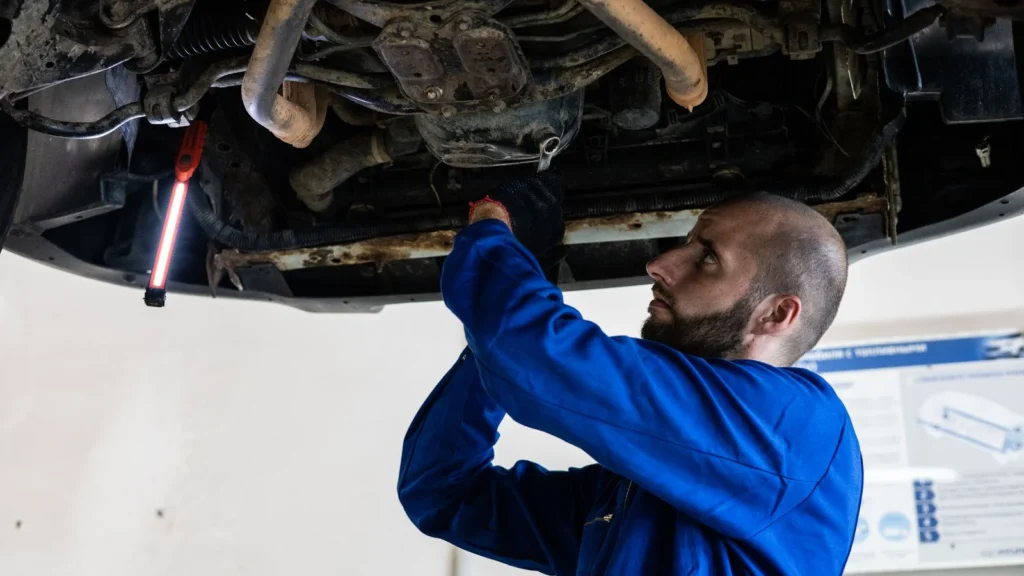
With the car safely raised, a mechanic can check each wheel bearing directly by hand, feeling for play by rocking the wheel at the top and bottom, and spinning it to feel and listen for roughness that should not be present in a healthy bearing. A road test, paying close attention to how the noise changes with speed and with turning in each direction, helps confirm which corner is affected before the wheel is even removed, and combining both the physical check and the road test observations gives a confident diagnosis before committing to any specific repair.
What a wheel bearing replacement typically involves
On most modern cars, the wheel bearing is part of a sealed hub assembly that is replaced as a complete unit rather than the bearing being serviced or repacked individually as older designs sometimes allowed, which makes the repair itself relatively straightforward for an experienced mechanic, involving removing the wheel, disconnecting the hub assembly, fitting the new unit, and torquing everything back to the manufacturer’s specification. This is generally one of the more affordable and quicker repairs among the various noise related faults covered across this series, and a job well suited to being carried out at your home or workplace with the right equipment.
Getting a wheel bearing checked with SSK Mechanics
If your car has developed a humming noise that gets louder with speed, do not wait for it to become impossible to ignore. SSK Mechanics offers mobile bolt-on hub bearing replacement across West Yorkshire and Bradford, coming to your home or workplace to properly check each wheel bearing, confirm exactly which corner is affected, and carry out the replacement on site, keeping you safely on the road.
Front versus rear wheel bearing failure patterns
Front wheel bearings generally experience greater load and stress than rear ones on most cars, particularly front wheel drive vehicles where the front bearings also handle the additional forces from driven wheels transmitting power alongside steering and braking loads, which is why front bearing failure tends to be somewhat more common statistically. That said, rear bearings are certainly not immune, and on rear wheel drive or all wheel drive vehicles the load distribution differs considerably, sometimes making rear bearing wear just as likely depending on the specific vehicle and how it is driven. Knowing which end of the car a noise seems to originate from, even roughly, helps a mechanic focus their initial inspection more efficiently before working through every wheel systematically to confirm the exact source.
Why regular checks catch this early and cheaply
A wheel bearing check is a genuinely quick and inexpensive thing for a mechanic to include during routine servicing, simply rocking each wheel by hand and spinning it to feel for play or roughness, and catching early stage wear this way, before it has progressed to an audible hum, avoids any risk at all rather than simply catching the problem slightly earlier once it has already started making noise. This is particularly worth requesting specifically on higher mileage vehicles, or any car that has recently been driven through significant flooding, deep standing water, or has taken a hard hit to a wheel from a pothole or kerb, since these are exactly the situations most likely to accelerate bearing wear beyond what normal mileage alone would suggest.
Confusing bearing noise with tyre noise
Uneven or unusual tyre wear, particularly cupping, a scalloped wear pattern that develops when a tyre bounces slightly due to a suspension or alignment issue, can produce a humming or droning noise that also increases with speed, and it is genuinely easy to confuse with wheel bearing noise if you are relying purely on how it sounds from inside the cabin. A useful distinguishing test is whether the noise changes noticeably when turning, which points more toward a bearing, versus a fairly constant drone regardless of steering input, which points more toward tyre wear or an alignment issue instead. A visual check of tyre tread for uneven wear patterns, alongside the standard bearing checks, helps rule this alternative cause in or out during a proper inspection rather than assuming based on sound alone.
What happens during the actual replacement visit
A typical wheel bearing replacement visit starts with confirming the diagnosis through both a physical check and a short road test if needed, then raising the affected corner of the car, removing the wheel, and replacing the hub assembly as a complete unit on most modern vehicles. Once fitted, the wheel is torqued back on correctly and a final check confirms the play and roughness that prompted the repair has been fully resolved. SSK Mechanics focuses on West Yorkshire; appointment and completion timing depend on the live diary, vehicle, job, location and safe working conditions, and are confirmed during booking.
Why this fault tends to worsen faster than owners expect
Wheel bearing wear, once it begins in earnest, often progresses more quickly than the earlier stages of gradual, barely noticeable wear might suggest, since the small imperfections causing initial noise create additional friction and heat that accelerates further wear in something of a feedback loop. Many owners describe the noise going from a barely noticeable hum to a genuinely loud and unmistakable growl within a relatively short number of weeks once it has properly started, which is quite different from the slower, more gradual progression typical of some other wear related noises covered elsewhere. This faster than expected progression is exactly why treating an early, subtle wheel bearing hum with appropriate urgency, rather than assuming there is plenty of time to deal with it later, is genuinely the sensible approach here.
Final thoughts on bearing noise
A humming noise that builds with speed is one of the clearer, more reliably diagnosable car noises, and the fix, once confirmed, is usually straightforward and affordable. Given the genuine safety implications of a wheel bearing left too long, this is a fault worth acting on promptly rather than one to postpone.
A mobile inspection settles the question quickly and without fuss, and if a replacement is needed, in most cases it can be carried out during the very same visit, getting the noise resolved and your car back to its normal, quiet self without the disruption of a garage booking.
Trust the pattern of the noise, get it checked, and treat a growing hum as the early warning it genuinely is rather than background road noise to simply live with.
One last practical tip
If you are ever unsure whether a noise is a wheel bearing or something else entirely, find a quiet, safe stretch of road, ideally free of traffic, and gently vary your speed while paying close attention to how the sound changes, then try a few gentle, safe turns in each direction to see whether the noise shifts. Doing this once with full attention, rather than half noticing it during a normal, distracted commute, often gives you enough information to describe the fault clearly and accurately when you do call to book an inspection.
That small bit of effort can genuinely save time and get you to the right repair faster, keeping both the cost and the disruption to a minimum.
How long can you actually keep driving on a noisy bearing
This is one of the most common questions asked once a wheel bearing has been identified, and the honest answer is that there is no safe fixed number of miles or weeks, since the rate of failure depends heavily on how badly worn the bearing already is, how it is loaded during normal driving, and pure chance in terms of exactly when the internal wear crosses from noisy but stable into genuinely dangerous play. A bearing making a mild, occasional hum at motorway speed only is generally at an earlier stage than one producing a constant growl audible even at low speed around town, and the second scenario deserves considerably more urgency than the first. As a general rule, once a bearing is noisy enough that a passenger comments on it unprompted, or once you can feel any vibration through the steering wheel or floor alongside the noise, treat that as the point where continuing to drive normally, particularly at motorway speed or on longer journeys, carries a real and rising risk rather than a theoretical one worth putting off.
Cost to fix and what affects the price
Wheel bearing replacement cost depends mainly on the vehicle itself, since some hub assemblies are simple bolt-on units that take relatively little labour time, while others, particularly on certain four wheel drive or premium vehicles, involve more disassembly to access and can include additional components such as ABS sensors integrated into the hub that need careful handling during the swap. Front bearings on a typical family hatchback or saloon tend to sit toward the more affordable end of the scale, while rear bearings on certain designs, or bearings on larger SUVs and vans carrying greater load, can cost a bit more given the larger components involved and the additional labour some designs require. Getting a specific quote after a proper inspection, rather than assuming a generic figure applies to every car, is always the more accurate approach, since the exact hub design on your particular make and model genuinely does make a real difference to both parts cost and labour time required.
Wheel bearing noise compared with CV joint noise
Since both faults live in roughly the same area of the car and can both be affected by turning, it is worth being clear on how to tell them apart. A CV joint click is a sharp, rhythmic clicking sound specifically at full lock, most noticeable during low speed manoeuvres like parking, and largely silent during normal straight line driving regardless of speed. A wheel bearing hum, by contrast, is present across a much wider speed range, gets steadily louder the faster you go regardless of steering angle, and only shifts subtly rather than dramatically when turning. If you are hearing a noise mainly while parking or manoeuvring at low speed with the wheel turned right over, a CV joint is the more likely explanation, whereas a noise that builds steadily as you accelerate on an open road points far more strongly toward a bearing, and knowing this distinction before you call helps set the right expectations for what the inspection is likely to find.
Source: GOV.UK vehicle safety checks