

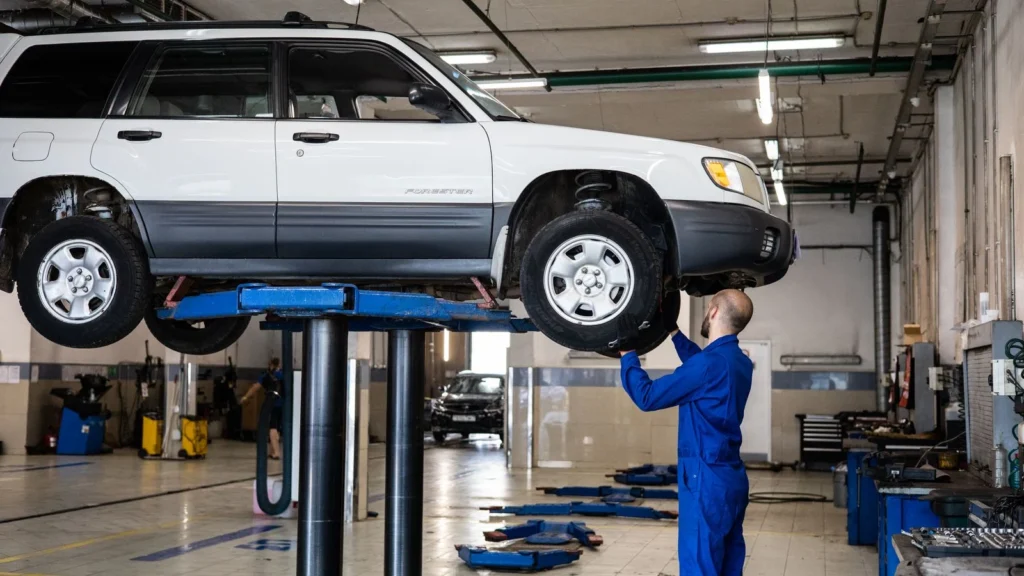
Hybrid cars have become a common sight on Bradford’s roads, and plenty of owners are surprised to learn that a hybrid MOT is, in almost every respect, the same test their previous petrol or diesel car went through. The core checklist doesn’t change simply because there’s a battery and an electric motor working alongside the engine, but there are a handful of genuine differences worth understanding before you book your test.
The basic schedule stays the same
A hybrid car needs its first MOT at three years old, exactly like any other vehicle, and then annually from that point onward. There’s no special exemption or extended interval simply because part of the drivetrain is electric, and the legal requirement to keep the car taxed and tested applies identically regardless of what’s under the bonnet. If you’ve come from years of running a conventional petrol or diesel car, the administrative side of hybrid ownership should feel entirely familiar.
What actually changes during the test
The vast majority of the MOT checklist, covering brakes, tyres, suspension, steering, lights, structure and bodywork, is assessed identically regardless of whether the car is petrol, diesel, hybrid or fully electric. Where things differ is mainly around the engine and emissions side of the test, since a hybrid’s petrol engine doesn’t run continuously the way a conventional car’s does, and around a small number of hybrid-specific safety checks that testers are trained to carry out.
Emissions testing on a hybrid
Because a hybrid’s combustion engine can switch off and rely purely on the electric motor at low speeds or when stationary, testers need a way to keep the engine running long enough to take an accurate emissions reading. Testers are trained on the specific procedure for the make and model in front of them, often involving putting the car into a mode that forces the engine to run continuously during the test. This isn’t a workaround or a loophole, it’s simply the correct, DVSA-approved method for getting a valid reading from a car that’s designed to switch its engine off during normal driving.
High-voltage safety and why it matters
Hybrid and electric vehicles carry a high-voltage battery system that requires specific safety awareness to work on or around safely. Testers examining a hybrid need appropriate training to recognise orange high-voltage cabling, understand which components should never be touched without proper isolation procedures, and know how to safely carry out checks without putting themselves or the car at risk. This is one of the more meaningful differences behind the scenes, even though it doesn’t change what’s being assessed on the certificate itself.
The high-voltage battery isn’t directly tested
It’s a common misconception that the MOT includes some kind of formal health check on the hybrid battery’s capacity or remaining life, but this isn’t currently part of the standard test. Testers will check for obvious physical damage, secure mounting, and whether any battery-related warning lights are illuminated on the dashboard, but there’s no dedicated capacity or degradation test built into the MOT checklist itself. This means a battery that’s gradually losing capacity, reducing the car’s electric-only range or fuel efficiency, can pass an MOT without that decline being formally flagged anywhere on the certificate.
Why a separate battery health check is worth booking
Because the MOT doesn’t specifically assess hybrid battery health, it’s genuinely worth booking a dedicated check separately, particularly as the car gets older or if you’ve noticed the electric-only range or fuel economy gradually declining. A proper hybrid battery health check looks at the battery’s actual condition and remaining capacity in a way the standard MOT simply isn’t designed to cover, giving you a much clearer picture of what to expect from the car going forward and whether a costly battery replacement might be on the horizon.
- The standard MOT does not include a dedicated hybrid battery capacity test
- Testers check for warning lights, damage and secure mounting only
- Gradual battery degradation can go unflagged on a passing certificate
- A separate health check gives a genuine picture of remaining battery life
- Booking this proactively avoids being caught out by an unexpected replacement cost
Regenerative braking and brake wear
Most hybrids use regenerative braking, capturing energy during deceleration and feeding it back into the battery rather than relying purely on friction from the brake pads and discs. This tends to mean hybrid brakes wear more slowly than an equivalent conventional car, since the mechanical friction brakes are doing less of the overall work in everyday driving. It’s a genuine benefit, but it comes with a slightly less obvious downside worth knowing about.
Why hybrid brakes can seize or corrode more easily
Because the friction brakes are used less often on a hybrid, particularly in stop-start urban driving where regenerative braking does most of the work, there’s a real possibility of calipers, pads and discs corroding or partially seizing simply through lack of regular use, rather than through normal wear. A disc that’s rarely worked hard can develop surface rust that doesn’t get properly cleaned off by the pads the way it would on a conventional car braking normally. This is a genuinely hybrid-specific consideration that’s worth mentioning to whoever services your car, since the fix often involves simply using the brakes more deliberately from time to time, or having a mechanic check for early signs of corrosion rather than just pad thickness.
Warning lights specific to hybrid systems
Hybrid dashboards include warning lights that don’t exist on a conventional car, covering the hybrid system generally, the high-voltage battery specifically, and sometimes the electric motor or inverter. Any of these illuminated on the dashboard is treated with the same seriousness as a conventional engine warning light during the MOT and can result in a fail, since an illuminated warning light generally indicates the car’s own systems have detected a genuine fault that needs investigating. Getting these lights checked and diagnosed promptly, rather than driving on with a warning light and hoping it resolves itself, is worth treating as seriously as you would any other dashboard warning.
Structure and bodywork around the battery
The high-voltage battery on most hybrids is mounted in a location, often under the boot floor or beneath the rear seats, that needs to remain structurally protected. Testers checking structure and bodywork will pay attention to whether this area shows signs of damage or corrosion that could compromise the battery’s protection, since a damaged or corroded structure around a high-voltage component is a more serious concern on a hybrid than the equivalent damage might be on a conventional car with no similar system to protect.
Servicing a hybrid: what’s different
Beyond the MOT itself, hybrid servicing involves some genuinely different considerations compared to a conventional car. The combustion engine still needs oil changes and standard maintenance on broadly the same schedule as a conventional car, but the wider system benefits from a mechanic who understands the hybrid drivetrain specifically, including how to safely work around high-voltage components and how to properly assess the health of the electric side of the car. Choosing a garage with genuine hybrid experience, rather than one purely used to conventional petrol and diesel work, makes a real difference to how thoroughly your car is actually checked.
Common myths about hybrid MOTs worth clearing up
A few misconceptions come up regularly among hybrid owners. Some assume the battery is fully tested as standard, which as covered above isn’t currently the case. Others assume hybrids are exempt from certain checks because of their electric component, which also isn’t true, since the full conventional checklist still applies alongside the hybrid-specific considerations. And some assume any hybrid warning light is minor and can wait, when in practice these lights deserve the same prompt attention as a conventional engine warning light, if not more given the systems involved.
Preparing your hybrid for its MOT
Preparation for a hybrid MOT looks broadly similar to preparing any other car for its test: checking tyres, lights, screen wash and washers, and making sure there’s no dashboard warning light illuminated before you take it in. The one genuinely hybrid-specific addition worth considering is a battery health check beforehand, particularly if the car is a few years old or you’ve noticed any change in how it drives or its fuel economy, since this gives you a fuller picture that the standard test alone won’t provide.
Getting your hybrid checked properly
Given how much of the hybrid-specific detail sits outside the standard MOT checklist, from battery health to brake corrosion risk to warning light diagnosis, it’s worth having these areas looked at by someone genuinely familiar with hybrid systems rather than assuming a standard service covers everything relevant. A hybrid battery health check is the most direct way to understand exactly where your car’s battery stands, giving you confidence heading into your MOT and a much clearer sense of what to expect from the car over the coming years. You can read the DVSA’s full breakdown of standard MOT checks, which apply equally to hybrids alongside the additional considerations covered here, in gov.uk’s guide to MOT checks.
Why hybrid ownership rewards a bit of extra attention
None of this is meant to suggest hybrid ownership is complicated or high-maintenance, in most respects it’s straightforward and the annual MOT process feels entirely familiar to anyone who’s owned a conventional car before. But the handful of genuine differences, particularly around battery health and brake corrosion risk, are worth understanding rather than assuming a hybrid simply behaves exactly like a petrol or diesel car in every respect. A little extra attention in these specific areas goes a long way toward keeping a hybrid running efficiently and avoiding surprises, whether that’s an unexpected battery replacement cost or a brake issue that developed simply through underuse rather than conventional wear.
Plug-in hybrids and the additional charging component
Plug-in hybrids add an extra layer worth understanding, since they carry a larger battery and a charging port that a standard hybrid doesn’t have. While the charging equipment itself isn’t part of the MOT checklist, the larger battery pack follows the same principle as a standard hybrid’s, with no dedicated capacity test built into the standard MOT. Owners of plug-in hybrids arguably have even more reason to book a separate battery health check, given the bigger investment tied up in that battery and the more noticeable impact a decline in capacity has on genuine electric-only range.
What to ask when booking a hybrid MOT
It’s reasonable to ask a test centre directly whether they have experience testing hybrid vehicles and the specific procedures your make and model requires for an accurate emissions reading. Most modern, well-equipped test centres handle hybrids routinely without any issue, but a smaller or less experienced centre may occasionally need to look up manufacturer-specific guidance for a less common hybrid model, and knowing this in advance avoids any unexpected delay on the day.
The takeaway for hybrid owners
A hybrid MOT is, at heart, the same legal requirement and largely the same checklist as any other car’s, and there’s no need to approach it with any extra anxiety purely because of the hybrid drivetrain. The genuine points worth remembering are that the battery itself isn’t formally tested, brake corrosion is a slightly higher risk given how little the friction brakes are used, and any hybrid-specific warning light deserves prompt attention rather than being dismissed. Booking a hybrid battery health check alongside your MOT preparation is the single most useful extra step a hybrid owner can take that a conventional car owner simply doesn’t need to think about.
Choosing a mechanic who understands hybrids
As hybrids have become more common on Bradford’s roads, more local garages have built up genuine experience working on them, but it’s still worth asking directly about a mechanic’s hybrid background before booking anything beyond routine servicing. A mechanic genuinely comfortable with high-voltage systems and hybrid-specific diagnostics will give you a more accurate picture of your car’s condition than one only used to conventional drivetrains, and that difference in experience is particularly valuable when it comes to properly assessing battery health ahead of an MOT.
Source: gov.uk's guide to MOT checks
Frequently asked questions
Does a hybrid car need an MOT like any other car?
Yes, a hybrid needs an MOT from three years old and every year after that, exactly the same schedule that applies to petrol and diesel cars.
Is the hybrid battery itself tested during the MOT?
The high-voltage battery is not directly tested as part of the standard MOT checklist, though testers do check for obvious damage, warning lights and secure mounting.
Do hybrid brakes wear differently, and does that affect the MOT?
Regenerative braking means hybrid brake pads and discs often wear more slowly, but they are still tested using the same roller brake tester and the same pass standard.
Can a hybrid warning light cause an MOT fail?
Yes, a hybrid or battery-related warning light illuminated on the dashboard is treated the same way as any other significant warning light and can result in a fail.
Do testers need special training to test hybrid cars?
Yes, testers working on hybrid and electric vehicles need specific awareness training around high-voltage safety before working on or around these systems.