

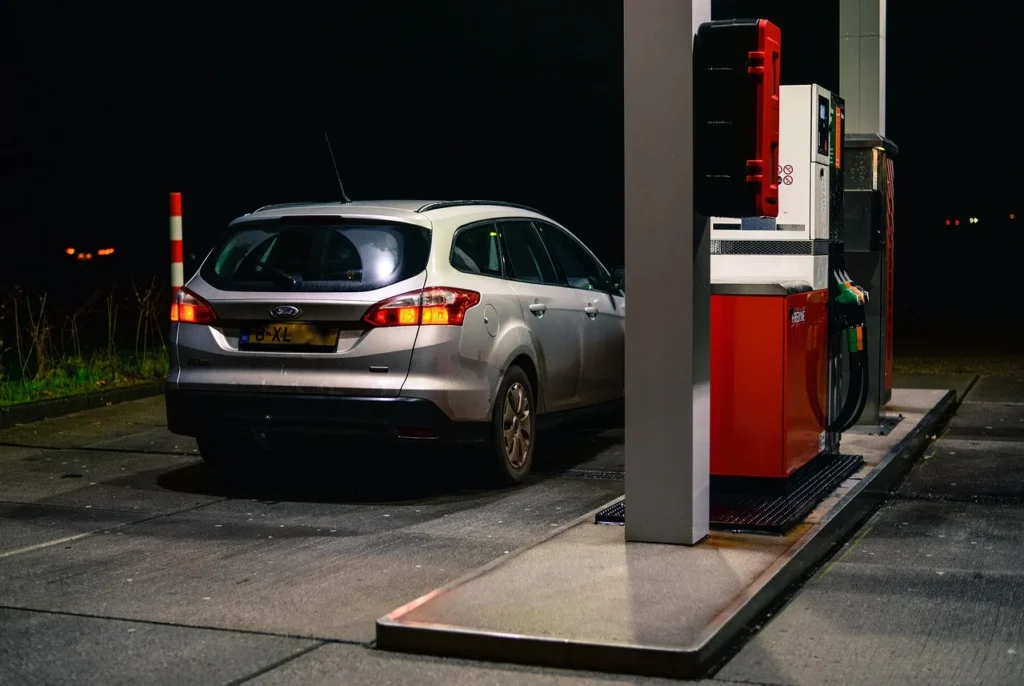
The single most important thing: don’t start the engine
Misfuelling, putting petrol in a diesel car or diesel in a petrol car, is genuinely one of the most common fuel station mistakes, and it happens to careful, experienced drivers as much as anyone else, particularly with a fuel pump that’s unfamiliar, a distraction, or simply a moment’s lapse in concentration while your mind’s on something else entirely. If it’s happened to you, the very first and most important thing to know is: do not start the engine, and if you’ve already started it, don’t drive the car any further.
The reason this matters so much is that the damage caused by misfuelling largely comes from the wrong fuel actually circulating through the fuel system, not simply sitting in the tank. If you haven’t started the engine, the wrong fuel is contained in the tank and hasn’t yet reached the fuel pump, injectors or engine itself, which makes the fix considerably simpler, cheaper and faster than if the engine’s been running on the wrong fuel for any length of time.
This guide walks through exactly what to do if you’ve misfuelled, why the two directions, petrol in diesel versus diesel in petrol, carry different levels of risk, and what the realistic process and cost looks like for getting it properly sorted.
Why petrol in a diesel engine is particularly damaging
Diesel engines rely on diesel fuel’s lubricating properties to protect the high-pressure fuel pump and injectors, precision components that operate at very tight tolerances. Petrol lacks this lubricating quality and also has different combustion characteristics entirely, meaning that even a relatively small amount of petrol mixed into diesel fuel circulating through the system can cause serious damage to the fuel pump and injectors if the engine is run on the contaminated mixture, potentially resulting in a very expensive repair bill running into thousands of pounds for a modern common-rail diesel system.
This is exactly why the “don’t start the engine” rule is so critical for a misfuelled diesel specifically, the risk of expensive component damage is genuinely significant and develops quickly once the engine is running, unlike some other fluid mistakes where a short delay before addressing it makes little practical difference to the outcome.
If you’ve put petrol in a diesel tank and haven’t started the engine, this is a straightforward, if inconvenient, situation to resolve: the tank needs professionally draining and flushing before the correct fuel goes back in, but genuine engine damage is avoided entirely provided the engine genuinely hasn’t run on the contaminated fuel.
Why diesel in a petrol engine is generally less severe
The reverse situation, diesel accidentally put into a petrol car, is generally less immediately damaging, though still worth taking seriously and addressing properly rather than ignoring. Diesel doesn’t ignite as readily as petrol under the conditions a petrol engine’s ignition system is designed for, so a petrol engine running on diesel-contaminated fuel is more likely to run very poorly, misfire, or fail to start at all, rather than suffering the kind of significant internal component damage that petrol-in-diesel causes.
This doesn’t mean it’s fine to simply carry on driving if you’ve put diesel in a petrol car and the engine seems to be running, even roughly. Continued running on contaminated fuel can still cause problems, fouled spark plugs, catalytic converter issues from incomplete combustion, and general poor running that’s worth addressing properly rather than hoping it clears itself over time.
Even with the generally lower risk of severe damage compared with petrol-in-diesel, the same basic advice applies: if you realise the mistake before starting the engine, don’t start it, and get the tank properly drained and flushed before adding correct fuel and attempting to run the engine normally again.
What to do immediately at the fuel station
If you realise the mistake while still at the pump, before you’ve even attempted to start the car, don’t panic, this is genuinely the best-case scenario and is straightforward to resolve. Don’t start the engine, put your hazard lights on if you’re blocking a pump, and let fuel station staff know what’s happened, most stations are familiar with this situation and can advise or assist with next steps, sometimes having a relationship with a local recovery or drainage service they can point you toward.
Call a specialist fuel drainage service, or your breakdown provider if they offer this service, rather than attempting to drain the tank yourself, since this requires proper equipment to safely and completely remove the contaminated fuel without risk of spillage, fire hazard, or leaving residual contamination that continues to cause problems even after a partial drain.
While waiting for help, avoid unnecessary attempts to start the engine “just to check” or move the car a short distance, since even a brief attempt to start can be enough to circulate contaminated fuel into the system, worsening the situation you’re trying to avoid entirely.
What if you’ve already started driving before realising?
If you’ve already started the engine and driven some distance before realising the mistake, stop the car safely as soon as possible and switch off the engine immediately rather than continuing to your original destination. The longer the engine runs on contaminated fuel, the more opportunity there is for damage, particularly with petrol-in-diesel, so minimising further running time genuinely limits the extent of any damage.
Once stopped safely, call for professional help rather than attempting to restart the engine again, even briefly, to move the car somewhere more convenient. It’s worth explaining clearly to whoever you call that the engine has already run on the wrong fuel and for roughly how long or how far, since this affects the assessment of what damage might have occurred and what checks are needed beyond simply draining and flushing the tank.
If you noticed unusual symptoms while driving before you realised the issue, rough running, unusual noises, reduced power, mention these too, since they help a mechanic assess whether there’s been any damage beyond straightforward fuel contamination that needs addressing as part of the fix.
What a professional fuel drain and flush actually involves
A proper fuel drain and flush service removes the contaminated fuel from the tank completely, rather than simply topping up with correct fuel and hoping the contamination becomes diluted enough not to matter, and flushes the fuel lines to remove any contaminated fuel that may have already begun moving through the system even before the engine was started, since fuel pumps can sometimes prime the system slightly even without a full engine start.
Once drained and flushed, the tank is refilled with the correct fuel, and depending on the specific situation, particularly if the engine did run for any period on the wrong fuel, further checks may be needed, inspecting the fuel filter, checking injector function, and generally assessing whether any components show signs of damage from the contamination before confirming the car is safe to run normally again.
This process typically takes a few hours depending on the specific vehicle and the extent of contamination, and mobile drainage services exist specifically to carry this out at the roadside or fuel station rather than needing the car towed elsewhere first, which is genuinely useful given that misfuelling often happens somewhere inconvenient rather than conveniently close to a garage.
What it costs and what affects the price
The cost of dealing with misfuelling varies considerably depending on several factors: whether the engine was started (a drain-only job without engine involvement is considerably cheaper than one requiring assessment of potential component damage), how much fuel was involved (a small amount of wrong fuel added before catching the mistake is less to remove than a full or near-full tank), and the specific vehicle, since some fuel systems are more complex and expensive to properly flush and check than others.
A straightforward drain and flush, caught before starting the engine, is a relatively modest, predictable cost. A situation where the engine has run for some distance on contaminated fuel, particularly petrol in a diesel with its high-pressure injection system, can escalate considerably if component damage has occurred, potentially running into a genuinely significant repair bill for fuel pump or injector replacement on top of the drain and flush itself.
This cost difference is exactly why acting immediately, the moment you realise the mistake, rather than continuing to drive even a short distance “just to get somewhere more convenient,” makes such a meaningful financial difference on top of the safety and reliability considerations already covered.
Preventing misfuelling in the first place
Most misfuelling happens through a moment of distraction or unfamiliarity, a hire car, a partner’s car you don’t usually drive, or simply autopilot at a familiar station reaching for the wrong nozzle without properly checking. A simple habit worth building: always glance at the nozzle colour and label before inserting it, rather than relying purely on muscle memory, particularly with any car that isn’t your usual daily driver.
Some drivers find it helpful to place a small reminder note or sticker near the fuel filler cap, particularly useful for households with mixed petrol and diesel vehicles, or if you regularly drive a hire or company car that differs from your own. This sounds like a small thing, but it directly addresses the most common cause of misfuelling, a moment’s lapse in an otherwise routine, familiar task.
If you’re filling up a car you don’t usually drive, take that extra couple of seconds to double check before you start filling, rather than assuming you’ll remember correctly, since it’s precisely this kind of routine, low-attention task where mistakes most commonly happen.
Getting fast, professional help if it happens to you
If you’ve misfuelled and need help urgently, the single most important thing is getting professional assistance quickly and not starting or continuing to run the engine in the meantime. SSK Mechanics offers a fast fuel drain and flush service across West Yorkshire, coming to you wherever the mistake happened rather than requiring the car to be towed somewhere first.
Don’t panic, and don’t start the engine. Call SSK Mechanics for a fast fuel drain and flush, and we’ll get your car properly sorted with minimal fuss and, provided the engine genuinely hasn’t run on the contaminated fuel, minimal cost and disruption too. Misfuelling is a genuinely common mistake, and with the right prompt response, it’s usually a straightforward, resolvable situation rather than the disaster it can feel like in the moment.
What about a small amount of the wrong fuel mixed in?
Sometimes the mistake is caught quickly, only a small amount of the wrong fuel has gone in before you realise, rather than a substantial quantity. It is tempting to assume a small amount is harmless and can simply be diluted by topping up with plenty of the correct fuel instead of paying for a proper drain. This is not a reliable approach, particularly for diesel engines, since even a relatively small percentage of petrol mixed into diesel fuel can be enough to compromise the lubrication the high-pressure system depends on if the engine is run on it.
The safest approach regardless of quantity is the same: do not start the engine, and get the tank properly assessed by a professional who can advise whether a full drain is needed or whether, in genuinely marginal cases with a very small amount involved, a different approach might be reasonable for your specific situation. This is a judgement call worth leaving to someone with the right experience rather than guessing yourself and hoping for the best.
What feels like an obvious shortcut in the moment can end up costing considerably more than the proper fix if it turns out the small amount was enough to cause damage after all.
Getting a proper professional opinion first is almost always the more sensible route, whatever quantity of the wrong fuel has actually gone into the tank.
A quick phone call to a specialist costs nothing and gives you the reassurance of an informed decision rather than a guess made under stress at the pump.
Source: GOV.UK vehicle safety checks