

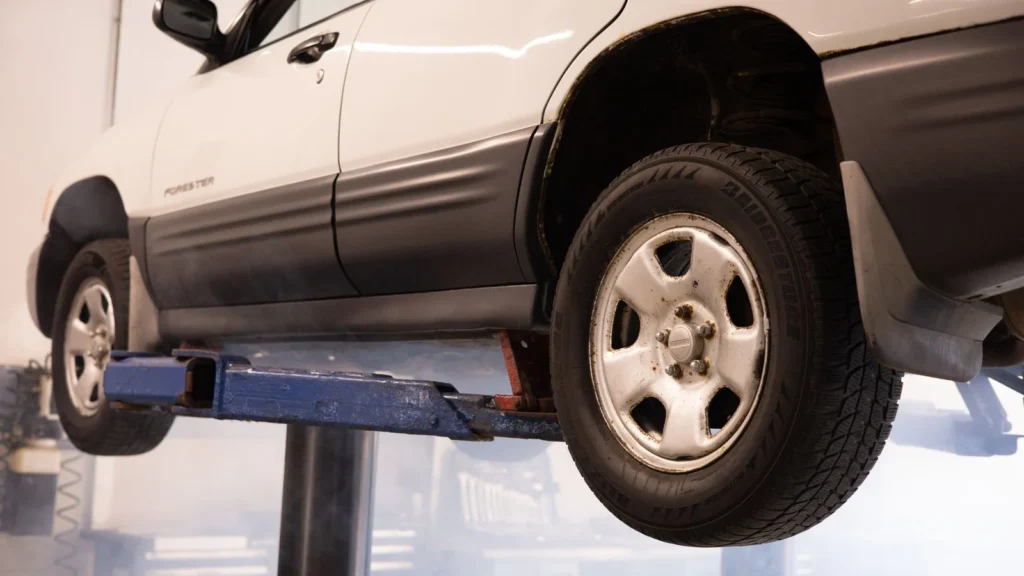
A rattling noise coming from underneath the car, particularly at idle or during gentle acceleration, is one of the more common noise complaints mechanics hear, and thankfully one of the less alarming ones in most cases. That said, a rattle should never simply be ignored indefinitely, since even a relatively minor cause can worsen over time. This guide explains the usual sources of an underneath rattle and how to tell which one applies to your car.
Loose exhaust hangers: the most common cause
The exhaust system is suspended beneath the car using a series of rubber mounts, often called hangers, that hold the pipework securely in place while absorbing vibration and allowing for the natural expansion and contraction the exhaust experiences as it heats and cools. Over time these rubber hangers perish, crack, or occasionally tear completely, allowing the exhaust to hang more loosely than intended and rattle against the underside of the car or against nearby components as the vehicle moves over bumps and during acceleration. This is generally one of the more affordable and straightforward rattles to fix, since replacing a perished hanger is a quick job that does not require removing the exhaust system entirely in most cases.
Loose or damaged heat shields
Heat shields, thin metal panels fitted to protect nearby components and the underside of the car from the considerable heat generated by the exhaust system, are another extremely common source of rattling, particularly as the thin metal corrodes over time and the small clips or bolts holding them in place work loose or rust away entirely. A rattling heat shield often produces a noise that seems to vary with engine speed or vibration frequency, sometimes appearing and disappearing depending on exactly how the shield is currently sitting against its mounting points. While not a safety critical component in the way brakes or suspension are, a loose heat shield can eventually fall away entirely if left unaddressed, which is both noisy and potentially hazardous to other road users if it detaches while driving.
Debris and foreign objects trapped underneath
Sometimes the cause is refreshingly simple: a stone lodged in a wheel arch liner, a loose piece of trim, or debris caught somewhere in the underside of the car can produce a rattle that clears itself entirely once the offending object works its way free or is physically removed. This kind of rattle often appears suddenly after driving over a particularly rough section of road or through debris on the carriageway, and disappears just as suddenly once the object dislodges, which is a useful clue distinguishing it from a genuine mechanical fault that tends to persist consistently rather than resolving itself on its own.
Suspension and drivetrain related rattles
While exhaust and heat shield issues account for the majority of underneath rattles, worn suspension components can occasionally produce a rattling rather than knocking sound, particularly loose anti-roll bar links or worn bushes with a specific type of wear pattern. A rattling noise that changes character or intensity depending on steering input, rather than remaining consistent regardless of how the car is being driven, points more toward a suspension or steering related component than the exhaust system, and is worth mentioning specifically when describing the noise to a mechanic, since it helps direct the inspection toward the right area of the car more quickly.
Catalytic converter rattles: a noise worth taking seriously
A rattling noise that seems to come specifically from the area of the catalytic converter, often accompanied by reduced performance or a check engine light, can indicate the ceramic honeycomb structure inside the converter has begun crumbling or breaking apart internally, a genuinely more serious and expensive fault than a simple loose hanger or heat shield. This type of rattle is usually more pronounced and metallic sounding than a typical loose hanger rattle, and tends to be accompanied by other symptoms such as reduced power or a distinct smell from the exhaust, rather than occurring in isolation as a purely mechanical noise with no other symptoms present alongside it.
How a mechanic identifies exactly what is rattling
Diagnosing an underneath rattle typically starts with the car raised safely on a ramp, allowing a physical inspection of the exhaust hangers, heat shields, and general underside for anything loose, corroded, or obviously out of place. Gently shaking or tapping suspected components while the car is raised can often reproduce the rattle directly, confirming the specific source rather than relying on guesswork from how the noise sounds from inside the cabin. A road test, ideally over the same type of surface where the rattle was originally noticed, helps confirm the fix has actually worked once the suspected component has been repaired or secured properly.
Why leaving a rattle unaddressed can cost more later
A loose heat shield or exhaust hanger left unaddressed can eventually cause the affected component to detach entirely, potentially damaging other nearby parts as it falls or drags along the road surface, turning a simple, cheap fix into a more involved repair. Persistent vibration from a loose component can also accelerate wear on nearby connections and fixings that were never designed to bear that additional movement, gradually spreading the problem to areas that were originally perfectly sound. Addressing a rattle while it remains a simple, isolated issue avoids this kind of gradual spread and keeps the eventual repair cost as low as possible.
What a typical rattle repair involves and costs
Fixing a loose exhaust hanger or heat shield is generally one of the more affordable repairs a car can need, often involving simply refitting a rubber mount, replacing a perished one, or securing a heat shield with new clips or fasteners, all of which are relatively quick jobs for an experienced mechanic. A catalytic converter rattle, by contrast, points toward a more significant repair, potentially requiring a full converter replacement, and it is worth having any rattle properly assessed rather than assuming the cheapest possible explanation until confirmed, since correctly identifying which category your particular rattle falls into saves both time and unnecessary worry.
Getting your rattle diagnosed with SSK Mechanics
If your car has developed a rattle from underneath, SSK Mechanics offers a mobile exhaust rubber hanger refresh and general underside inspection across West Yorkshire and Bradford, coming to your home or workplace to identify exactly what is causing the noise and fix it on site in most cases, giving you a quieter, more confident drive without the hassle of a garage visit.
Why the rattle often gets worse in cold weather
Many drivers notice a rattle becomes more pronounced during cold weather, and there is a genuine mechanical reason for this. Rubber components, including exhaust hangers and various clips, stiffen slightly in low temperatures, changing how they absorb vibration compared with when they are warm and more pliable. A hanger that is borderline worn might stay just about quiet enough through a mild summer but rattle noticeably on cold winter mornings before the whole system has warmed through and everything has settled into its normal running position. This seasonal pattern is a useful diagnostic clue in itself, and mentioning whether a rattle is worse in cold weather when booking an inspection can help point a mechanic toward hanger or mounting related causes specifically.
Rattles that appear only under acceleration or load
A rattle that appears specifically under acceleration, rather than at a constant idle, often points toward a component that is only placed under sufficient stress or vibration during that particular driving condition, such as a heat shield that only makes contact with a nearby part once engine movement under load shifts it slightly closer than it sits at rest. Similarly, a rattle that appears only when going over bumps at a specific speed can indicate a resonance issue, where a loose component happens to vibrate at a frequency that matches a particular speed or engine RPM, disappearing again once you move past that specific point. These conditional patterns, while sometimes tricky to describe accurately, give a mechanic valuable clues about where to focus attention first.
A quick self check you can safely do at home
While a full inspection with the car raised is always the most reliable way to confirm the source, a careful visual check with the car safely parked and the engine off can sometimes spot an obvious loose hanger or hanging piece of trim, particularly if you know roughly where the noise seems to be coming from. Looking underneath from the side, checking that the exhaust pipe sits at a consistent, even height along its length without any obviously sagging sections, can reveal a failed hanger without needing to get underneath the car at all. Never attempt to reach underneath a car that is not properly and safely supported, and if nothing is obviously visible from a safe distance, that is the point to book a proper inspection rather than attempting to investigate further yourself.
Why fixing small rattles protects resale value too
Beyond the immediate annoyance, a persistent rattle is exactly the kind of thing a prospective buyer notices during a test drive and uses as a bargaining point, even when the underlying cause is genuinely minor and inexpensive to fix. Addressing rattles and small underside issues before selling or trading in a car, rather than leaving them for the next owner to discover, tends to present the vehicle in a noticeably better light and can help avoid an unnecessary reduction in offered price purely because of a noise that would have cost very little to resolve beforehand.
How rattles fit into your wider service schedule
Underside rattles are a good example of why a full visual inspection during routine servicing genuinely earns its keep, since a mechanic working underneath the car for an oil change or general check will often spot a perishing hanger or loosening heat shield before it becomes noisy enough for the driver to notice from inside the cabin. Mentioning any noise, however minor or intermittent, when booking a routine service gives the mechanic a specific area to focus extra attention on, rather than relying purely on a general visual sweep to catch everything. This kind of proactive communication between owner and mechanic tends to catch small issues considerably earlier than waiting for symptoms to become obvious enough to prompt a dedicated separate visit.
Bringing it all together
Most rattles from underneath the car turn out to be a straightforward, inexpensive fix once properly identified, whether that is a perished hanger, a loose heat shield, or occasionally simple road debris that clears itself. Treating the noise as worth a proper look rather than something to permanently tune out protects against the small chance it represents something more serious, and in the vast majority of cases gives genuine peace of mind at a modest cost.
If you have been putting off looking into a rattle simply because the car still drives fine otherwise, it is worth remembering that the cheapest time to fix almost any fault is the moment it is first noticed, before vibration and continued driving have a chance to spread wear to nearby components that were originally perfectly sound.
< SSK Mechanics focuses on West Yorkshire; appointment and completion timing depend on the live diary, vehicle, job, location and safe working conditions, and are confirmed during booking.
Whatever the cause turns out to be, a quiet, rattle free drive is a small thing that makes a noticeable difference to how much you enjoy simply being behind the wheel every day.
Get it looked at properly and enjoy the peace and quiet again.
Plastic undertrays and splash guards: an easily overlooked cause
Modern cars carry far more plastic underneath than older vehicles ever did, with engine undertrays, wheel arch liners and various splash guards fitted primarily to improve aerodynamics and protect components from water and road spray. These plastic panels are held on with a mix of push clips, small bolts and occasionally rivets, and any one of these fixings can work loose over time, particularly after a speed bump taken slightly too fast or a kerb clipped while parking. A dragging or flapping undertray produces a distinctive rattling or scraping noise that often gets noticeably worse at speed as more air pushes against the loose panel, and in more advanced cases a corner of the tray can start dragging along the road surface, which is both noisy and a genuine hazard if it eventually detaches while driving.
This is one of the quickest and cheapest rattles to fix once identified, often needing nothing more than a replacement clip or two, but it is also one of the easier causes to miss during a quick glance underneath, since a loose tray can look perfectly normal until the car is actually moving and airflow starts working on it.
How an underside rattle can affect your MOT
A loose exhaust hanger, dragging undertray or insecurely fitted heat shield is not just an annoyance, it is also something an MOT tester is required to check for as part of the standard test, since anything hanging insecurely or at risk of detaching while driving is treated as a genuine safety concern rather than a cosmetic issue. A heat shield rattling loudly enough to be obviously insecure, or an exhaust section held only by a perished hanger with visible excessive movement, can result in a fail or at minimum an advisory noted on the certificate, even where the underlying fault is genuinely minor and inexpensive to put right. Getting a persistent rattle looked at and resolved before your MOT is due, rather than waiting for the test itself to flag it, avoids the inconvenience of a failed test purely over what usually turns out to be a straightforward fixing or clip.
Rattles unique to vans and heavier vehicles
Vans and larger vehicles carry their own particular rattle sources worth mentioning, since the additional underside protection, spare wheel carriers, and heavier duty exhaust systems fitted to commercial vehicles introduce extra components that can work loose over the higher mileages many vans cover. A spare wheel carrier with a worn or loosely adjusted retaining mechanism can produce a rhythmic clanking that varies with road surface, easily mistaken for an exhaust rattle until specifically checked. Load area fittings, tie down points and internal racking can also transmit rattles down through the vehicle’s structure that sound like they are coming from underneath when the actual source is inside the load area itself, which is worth bearing in mind if you drive a van for work and hear a new rattle that seems to defy the usual underside explanations.
Source: GOV.UK vehicle safety checks