

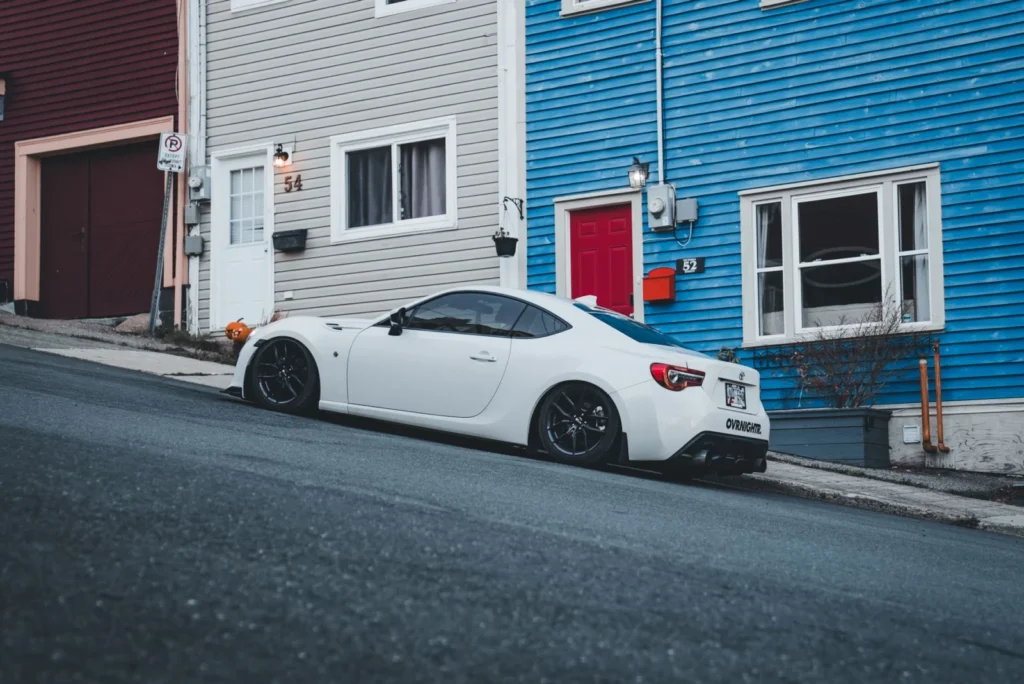
Eccleshill and Bowling sit on some of Bradford’s more steeply graded ground, with residential streets that rise and fall sharply between junctions and a driving pattern shaped by constant stopping, turning and pulling away on an incline. This combination puts a particular kind of load on wheel bearings that flatter, more consistent roads simply do not produce, and local garages regularly see bearing wear appearing sooner on cars from these areas than the manufacturer’s expected service life would suggest.
What a wheel bearing actually does and why load matters
A wheel bearing allows the wheel to rotate smoothly while supporting the full weight of the car at that corner, and it is designed to cope with a predictable range of loads under normal driving conditions. Steady, straight-line driving on flat roads puts relatively even, consistent load through the bearing, but sharp turns combined with an incline change that load significantly, particularly when cornering while climbing or descending, since the bearing then has to manage both the rotational load of the wheel and an uneven side-to-side loading pattern at the same time.
Streets around Eccleshill and Bowling frequently combine tight turns with noticeable gradient changes within a very short distance, meaning wheel bearings on cars used regularly in this area experience a less forgiving pattern of loading than bearings on cars driven mainly on flatter, straighter routes elsewhere in the district.
How stop-start hill driving accelerates wear specifically
Repeatedly slowing to a stop on an incline, then pulling away again, forces the wheel bearing to manage a change in load direction each time, since braking on a hill shifts weight forward while accelerating away shifts it back, all while the bearing is also handling the steering angle needed to navigate a typical residential junction. This repeated cycle, happening dozens of times on a short local journey through these streets, adds up to considerably more cumulative stress than the same distance covered on a flatter, more consistent route.
Over months and years of this pattern, the small clearances inside a wheel bearing that allow smooth rotation begin to wear unevenly, eventually producing play and noise that indicate the bearing is approaching the end of its useful life sooner than its mileage alone would suggest.
Recognising the early warning signs of bearing wear
A wearing wheel bearing rarely fails silently, and there are usually clear audible and physical signs available well before the point of complete failure. A humming or grinding noise that changes pitch with road speed, often more noticeable on a particular corner or while turning in one direction, is one of the most common early indicators, along with a subtle vibration felt through the steering wheel or seat that increases with speed.
- A humming, growling or grinding noise that changes with vehicle speed
- A vibration through the steering wheel or seat that worsens at higher speeds
- Uneven or increased tyre wear on the affected wheel
- A clunking noise specifically when cornering, particularly on tight local junctions
- The car pulling slightly to one side under braking
Why the noise can be hard to diagnose without experience
Wheel bearing noise is often mistaken for tyre noise, a wheel alignment issue or even a problem with the exhaust, since the sound can seem to come from a general area of the car rather than a specific, easily located point. A technician with experience of the local driving conditions around Eccleshill and Bowling is often quicker to correctly identify bearing wear as the likely cause, since they see this particular pattern of failure more often than a garage working mainly with cars from flatter parts of the district.
Road testing a car on a similar combination of turns and gradients to those found locally, rather than relying solely on a flat, straight test route, can help confirm a bearing diagnosis more reliably, since the noise and vibration associated with bearing wear often become most apparent under exactly this kind of load.
What happens if a worn bearing is left unaddressed
A wheel bearing that continues to wear without attention will eventually develop enough play to affect handling noticeably, and in a worst-case scenario, a bearing can seize or fail catastrophically while driving, which can cause a serious loss of control. Long before reaching that point, however, a worn bearing typically causes increased and uneven tyre wear, reduced fuel efficiency from the extra rolling resistance, and a generally less precise, less confident feel to the car’s handling.
Replacing a bearing as a planned repair, once early symptoms are noticed, is a straightforward and relatively predictable job, whereas waiting until the bearing fails more seriously can turn a single component replacement into a more involved repair if other parts have been affected by the resulting play and vibration.
Why this issue is more common on certain streets than others
Not every street in Eccleshill and Bowling has the same combination of gradient and tight cornering, and drivers who regularly use the steepest, most junction-heavy routes tend to see bearing wear appear sooner than those on slightly gentler streets nearby. Local knowledge of which specific roads produce the harshest combination of hill and turn helps explain why two cars of similar age and mileage from slightly different parts of the same district can show quite different bearing condition on inspection.
This variation is one reason a generic assumption about bearing life based purely on mileage does not always hold true locally, and it is worth a driver mentioning their specific regular routes to a garage when discussing any noise or vibration they have noticed.
How driving style can reduce the strain on bearings
Taking tight local corners a little more gently, particularly where they combine with a gradient change, reduces some of the peak loading a bearing experiences on each individual turn. Avoiding unnecessary sharp direction changes at low speed, such as tight three-point turns on a slope where space allows a wider, gentler manoeuvre instead, also helps reduce cumulative wear over time.
None of this eliminates the extra demands these streets place on a car entirely, since the road layout itself is the primary factor, but small adjustments in driving style can meaningfully extend the useful life of wheel bearings for drivers who cover this kind of ground regularly.
Bolt-on hub bearings and why replacement matters
Many modern cars use a bolt-on hub bearing assembly, which combines the bearing and hub into a single replaceable unit rather than a separate bearing that needs pressing in and out of a hub. This design generally makes replacement more straightforward and predictable in terms of cost and time, which is useful to know for anyone budgeting for this kind of repair after noticing the warning signs described above.
Replacing a bearing as a complete hub assembly also reduces the risk of introducing new wear from an imperfect fit, which was more of a concern with older-style pressed bearings that required precise fitting to avoid premature failure of the replacement part itself.
Comparing Eccleshill and Bowling with flatter parts of Bradford
A useful way to understand the extra demand these areas place on a car is to compare them with flatter, more consistent routes elsewhere in the district, such as some of the newer estate roads or dual carriageway approaches into the city centre. A car covering identical annual mileage almost entirely on flat, straight roads will typically show far less bearing wear at a given point than one covering the same mileage predominantly on the steep, junction-heavy streets found in Eccleshill and Bowling, even where both cars are otherwise similar in age, model and general condition.
This difference is rarely obvious from a service history alone, since mileage figures do not capture the nature of the roads driven, which is why an honest conversation with a garage about typical local routes gives a much more accurate picture of what to expect from a car’s wearing components at any given service interval.
How weather adds to the strain in this area
Wet or icy conditions on these steep, tightly turning streets increase the demands on a wheel bearing further still, since a driver may need to apply more steering input or braking force to maintain control on a slippery incline, both of which increase the loading passed through to the bearing at that moment. Winter months, when frost and standing water are more common on these exposed hillside streets, can see a noticeable uptick in bearing-related noise complaints reported to local garages, reflecting the extra strain these conditions place on components already working harder than average.
Drivers who notice new or worsening bearing symptoms specifically after a spell of poor weather should treat this as a reasonable prompt to have the car checked sooner rather than waiting for the symptom to become more pronounced over subsequent weeks.
Why tyre choice and condition also play a role
Tyres in good condition, correctly inflated and reasonably matched in tread depth across an axle, help distribute load more evenly through the wheel and bearing assembly than worn or mismatched tyres do. On streets that already place uneven demands on bearings through tight cornering and gradient changes, starting with tyres in poor condition compounds the problem, since uneven tyre wear itself can introduce additional vibration and loading that accelerates bearing wear further.
Checking tyre condition alongside any bearing inspection makes sense for drivers in this area, since the two components interact closely and addressing one without considering the other can leave part of the underlying problem unresolved.
What replacement typically involves
Replacing a wheel bearing on a car fitted with a bolt-on hub assembly is generally a well-understood, predictable job for a competent garage, involving removing the wheel, disconnecting the relevant components, unbolting the old hub assembly and fitting the new one before reassembling and checking the work. The straightforward nature of this job on most modern cars means it can usually be scheduled and completed within a single visit, minimising disruption for drivers who rely on their car daily to navigate the demanding local road network.
Because this repair is well within the routine capability of a proper garage, there is rarely a need for extended waiting times once a bearing has been correctly diagnosed, which is one reason catching the issue early through routine inspection is preferable to waiting for a more urgent, less convenient failure.
Getting a proper inspection if you drive these streets regularly
For anyone whose daily routine regularly takes in the steeper, more junction-heavy streets around Eccleshill and Bowling, having wheel bearings checked as part of a routine inspection, rather than only after noticing a specific noise, is a sensible precaution against the particular pattern of wear this kind of driving causes. Catching bearing wear early keeps the repair straightforward and predictable, and avoids the more serious handling concerns that can develop if a bearing is allowed to wear significantly before being addressed. Mentioning the specific streets and driving pattern involved, rather than assuming a standard check covers it, helps a technician focus the inspection where wear is genuinely most likely to be found.
Why regular checks matter more than a fixed mileage interval here
Because bearing wear in this area is driven more by the pattern of driving than by raw mileage alone, relying purely on a fixed interval based on distance covered can mean a developing problem goes unnoticed for longer than it should. A driver covering a modest annual mileage entirely on the steepest, most junction-heavy streets in Eccleshill or Bowling may need bearing attention sooner than a driver covering considerably more miles on flatter routes elsewhere, which runs counter to the assumption that lower mileage always means less wear.
For this reason, periodic physical inspection, rather than reliance on mileage alone, is the more reliable approach for drivers whose daily routine regularly includes this specific combination of hills and tight cornering.
Why a proper diagnostic road test matters for confirmation
Before committing to a bearing replacement, a competent garage will usually confirm the diagnosis with a proper road test involving cornering and, where practical, an incline, since this replicates the exact conditions under which bearing noise is most pronounced. This step avoids the risk of misdiagnosing a similar-sounding issue, such as a tyre defect or a minor exhaust rattle, as bearing wear when it is not, which would mean paying for a repair that does not actually address the underlying noise.
Confirming the diagnosis properly before ordering parts also avoids unnecessary cost and delay, giving both the garage and the driver confidence that the repair being planned will genuinely resolve the symptoms that prompted the visit in the first place.
Frequently asked questions
Why do wheel bearings wear out faster in Eccleshill and Bowling?
The combination of tight cornering and steep gradients on these streets places uneven, repeated loading on wheel bearings that flatter routes rarely produce.
What does a failing wheel bearing sound like?
A humming, growling or grinding noise that changes with road speed is the most common symptom, often more noticeable while turning in one particular direction.
Is it safe to keep driving with a noisy wheel bearing?
It is not advisable for long, since a bearing can eventually seize or fail, so having it checked and replaced promptly once symptoms appear is the safer approach.
Does driving style really make a difference to bearing wear?
Yes, taking tight local corners a little more gently, particularly where they combine with a gradient change, can meaningfully reduce peak loading on the bearing.
How is a bolt-on hub bearing replaced?
The wheel is removed, the hub assembly unbolted and the new unit fitted in its place, making it a relatively straightforward and predictable repair for most modern cars.