

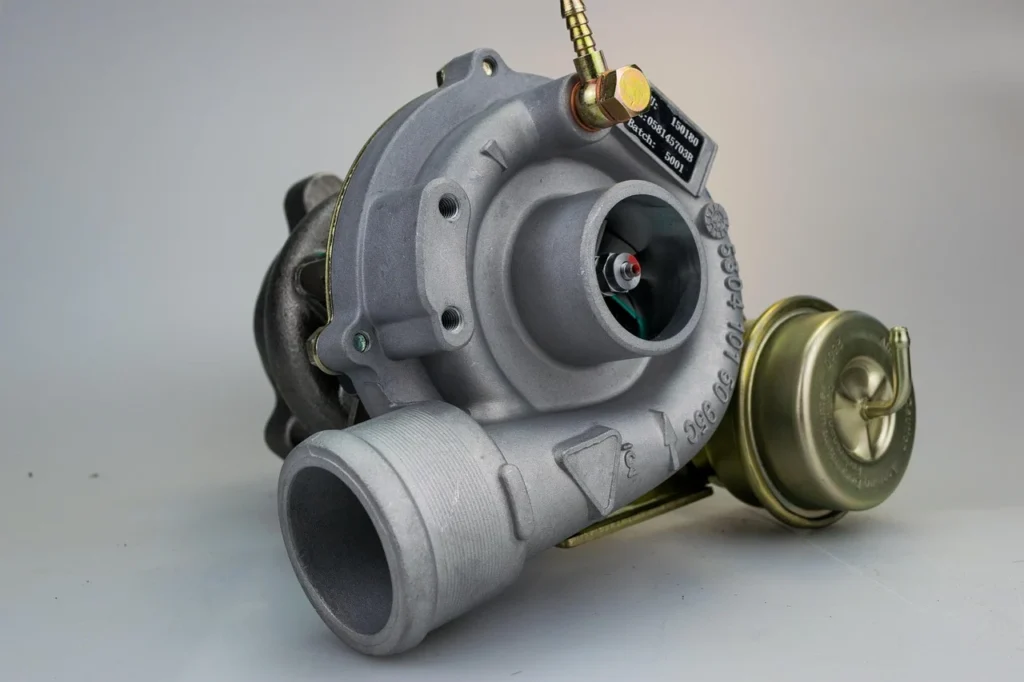
A turbocharged engine that suddenly feels flat, hesitant, or noticeably down on power is one of the more unsettling things a driver can experience, especially when it happens gradually enough that you are not quite sure whether it is your imagination at first. More often than not, the culprit is the boost control system, specifically the solenoid or actuator that governs how much boost pressure the turbo actually delivers. This guide explains what these components do, how they fail, and what to expect from getting one fixed.
What boost pressure actually is and why it needs controlling
A turbocharger works by using exhaust gas energy to spin a turbine, which in turn drives a compressor forcing extra air into the engine beyond what it could draw in naturally, allowing more fuel to be burned and more power produced from the same size engine. This extra air pressure is boost, and it needs careful control, since too little boost leaves power on the table, while too much can risk damaging the engine through excessive cylinder pressure. The boost control system, built around a solenoid valve and an actuator connected to the turbo’s wastegate, manages this by bleeding off excess exhaust gas around the turbine when boost reaches its target level, keeping pressure within the safe, designed range the engine control unit is expecting at any given point in the rev range.
How the boost solenoid actually works
The boost control solenoid is an electrically operated valve that regulates how much vacuum or pressure signal reaches the wastegate actuator, effectively acting as the middleman between the engine control unit’s commands and the physical mechanism that opens or closes the wastegate. The ECU pulses the solenoid rapidly, adjusting its duty cycle to fine tune exactly how much boost pressure builds at any given moment, allowing for far more precise and responsive boost control than a simple mechanical wastegate alone could achieve. When the solenoid fails, whether through a stuck valve, a broken internal diaphragm, or a wiring fault, the ECU loses its ability to properly regulate boost, which can result in too little boost causing sluggish performance, or in rarer cases too much boost triggering the engine’s protective safety systems.
Common symptoms of a boost solenoid or actuator fault
A noticeable loss of power, particularly under acceleration where the turbo would normally be building boost, is the most common complaint, often described by drivers as the car feeling flat or lacking the usual punch it used to have. The check engine light will typically illuminate, frequently alongside the car entering a limp or reduced power mode as a protective measure once the engine control unit detects boost pressure outside its expected range. Some drivers notice a whistling or hissing sound suggesting a boost leak related to the actuator mechanism itself, while others report inconsistent power delivery, where boost seems to come and go unpredictably rather than failing completely, making the fault trickier to pin down without a proper diagnostic check.
What actually causes these components to fail
Heat and vibration take a steady toll on boost solenoids and actuators over the years, since they sit close to the turbo and exhaust system where temperatures run high and components are subjected to constant engine vibration. Carbon build up and general contamination inside the solenoid valve can cause it to stick or respond sluggishly, while the actuator’s diaphragm, a thin flexible membrane that moves in response to pressure changes, can develop small cracks or splits over time that prevent it from holding vacuum or pressure properly. Electrical connectors and wiring running to the solenoid are also exposed to engine bay heat and moisture, and a corroded connection or chafed wire can produce symptoms that look identical to a mechanically failed solenoid, which is exactly why a proper diagnostic check matters before assuming which specific part needs replacing.
How a diagnostic actually pins down the fault
Reading stored fault codes from the engine control unit is the starting point, since a code specifically referencing boost pressure control, wastegate position, or turbo underboost and overboost points the diagnosis in a clear direction rather than leaving the mechanic guessing. From there, live data monitoring while the engine runs allows a mechanic to compare commanded boost pressure against actual measured boost pressure, revealing whether the system is failing to respond to commands at all, responding too slowly, or overshooting its target. A physical inspection of the solenoid, its vacuum or electrical connections, and the actuator itself, sometimes involving a hand pump to manually test whether the actuator holds pressure properly, helps confirm exactly which component is at fault before any parts are ordered or replaced.
Why guessing at this repair rarely works out well
Because boost control faults can stem from several different components, the solenoid, the actuator, vacuum hoses, or even a genuine mechanical turbo fault, simply replacing parts based on a guess is a common and expensive mistake. A solenoid replaced when the actual fault lay in a perished vacuum hose, for example, will not resolve the symptoms, leaving the owner having spent money without fixing the underlying problem and often more frustrated than before. Proper diagnostic testing before ordering parts, comparing commanded and actual boost readings and physically checking the mechanical components, genuinely pays for itself by avoiding this trial and error approach, particularly on turbocharged engines where parts are not always cheap and getting the diagnosis right the first time matters.
Boost leaks versus boost control faults
It is worth distinguishing a genuine boost control solenoid or actuator fault from a simple boost leak, since the symptoms can overlap considerably but the fix is entirely different. A boost leak, caused by a split intercooler hose, a loose jubilee clip, or a cracked intake pipe, allows pressurised air to escape before it reaches the engine, causing reduced power in a similar way to a control system fault, but is generally a cheaper and more straightforward repair once located. A smoke test, where the intake system is filled with a visible smoke under low pressure, is a quick and effective way to spot a physical leak, and ruling this out early in the diagnostic process avoids wasting time investigating the boost control system when the actual problem is a simple loose or damaged hose elsewhere in the intake path.
What repair or replacement typically involves
Depending on the exact fault found, the fix might be as straightforward as replacing a single solenoid valve, a relatively quick and affordable job on many vehicles, through to replacing the actuator itself, which on some turbo designs is integrated into the turbocharger unit and cannot be replaced separately, making that particular fault considerably more expensive to resolve. Vacuum or electrical wiring repairs, where the fault lies in a connector or a chafed wire rather than the solenoid or actuator itself, are often the cheapest fix of all once correctly identified. Whatever the specific repair, clearing the stored fault codes and confirming boost pressure is now tracking correctly against commanded targets during a test drive is an essential final step to make sure the fix has actually resolved the underlying problem rather than just clearing the warning light temporarily.
Preventing boost control problems before they start
Regular servicing that includes a visual check of vacuum hoses, electrical connectors, and the general condition of components around the turbo helps catch developing problems before they cause a full failure and loss of power. Avoiding aggressive, repeated hard acceleration on a cold engine before the turbo and its associated components have properly warmed through also reduces thermal stress on these parts over time. If your car has ever shown early signs, such as occasional flat spots in power delivery or a brief warning light that cleared itself, treating that as worth investigating rather than dismissing it as a one off glitch can catch a developing solenoid or actuator fault before it progresses to a full, more disruptive failure.
Getting a boost fault diagnosed with SSK Mechanics
If your turbocharged car is feeling flat, hesitant, or has thrown up a check engine light related to boost pressure, SSK Mechanics carries out mobile diagnostics and solenoid or actuator repairs across West Yorkshire and Bradford, coming to your home or workplace with the equipment needed to properly test commanded versus actual boost pressure and confirm exactly what needs fixing, rather than guessing and hoping a parts swap resolves the issue.
Electric versus vacuum operated actuators
Older turbo systems typically use a purely vacuum operated wastegate actuator, controlled indirectly through the boost solenoid regulating vacuum signal strength, while many newer engines use a fully electronic actuator that receives direct electrical commands from the engine control unit rather than relying on a vacuum signal at all. Electronic actuators generally offer faster, more precise control and fewer failure points related to perished vacuum hoses, but when they do fail, the fault often lies in the actuator motor itself or its internal position sensor rather than a simple hose or diaphragm issue, and diagnosis leans more heavily on reading electronic fault codes and live position data than on physical vacuum testing. Knowing which type your specific car uses helps narrow down the likely fault before any diagnostic work even begins, since the failure patterns and repair approaches differ meaningfully between the two designs.
Why cost varies so much between different cars
The cost of fixing a boost control fault varies enormously depending on the vehicle and the exact component at fault, from a modestly priced standalone solenoid on an accessible older design, through to a considerably more expensive integrated electronic actuator on a newer performance focused engine where the part cannot be sourced separately from a larger turbo assembly. Labour time also varies significantly based on how accessible the turbo and its associated components are on a given engine layout, with some transverse engine bays requiring considerably more dismantling to reach the relevant parts than others. Getting a proper diagnosis before assuming a worst case cost scenario is worthwhile, since plenty of boost control faults turn out to be a straightforward, relatively affordable fix once correctly identified rather than the expensive turbo replacement some owners initially fear.
What to check before assuming the worst
Before assuming a boost control fault means an expensive repair, it is worth ruling out the simpler possibilities first, since a loose vacuum hose, a corroded electrical connector, or even a partially blocked air filter restricting airflow can all produce symptoms that feel remarkably similar to a genuine solenoid or actuator failure. A quick visual inspection under the bonnet, checking that all visible vacuum lines are properly connected and undamaged, and that the air filter is not heavily clogged, costs nothing and occasionally reveals the entire problem without needing any parts at all. If the fault persists after these basic checks, that is the point at which a proper diagnostic scan becomes genuinely worthwhile, narrowing the search down to the specific component actually responsible rather than continuing to guess.
Turbo related faults tend to make owners nervous given the reputation turbo repairs have for high costs, but a boost control issue caught and diagnosed properly is very often a far more manageable repair than owners initially fear, and putting off the diagnostic step out of worry rarely makes the eventual fix any cheaper.
A quick word on driving style with turbo faults
If you suspect a boost control problem, it is worth easing off aggressive driving until it has been checked, since repeatedly demanding full boost from a system that is not regulating pressure correctly can, in rare cases, place unusual stress on the turbo or engine that a properly functioning system would normally manage safely. This does not mean avoiding the car entirely, most boost faults are entirely safe to drive with in the short term at moderate throttle, but treating hard acceleration and motorway sprints as something to hold off on until a proper diagnosis has confirmed exactly what is happening is a sensible, low cost precaution while you arrange to have it looked at.
Source: GOV.UK vehicle safety checks