

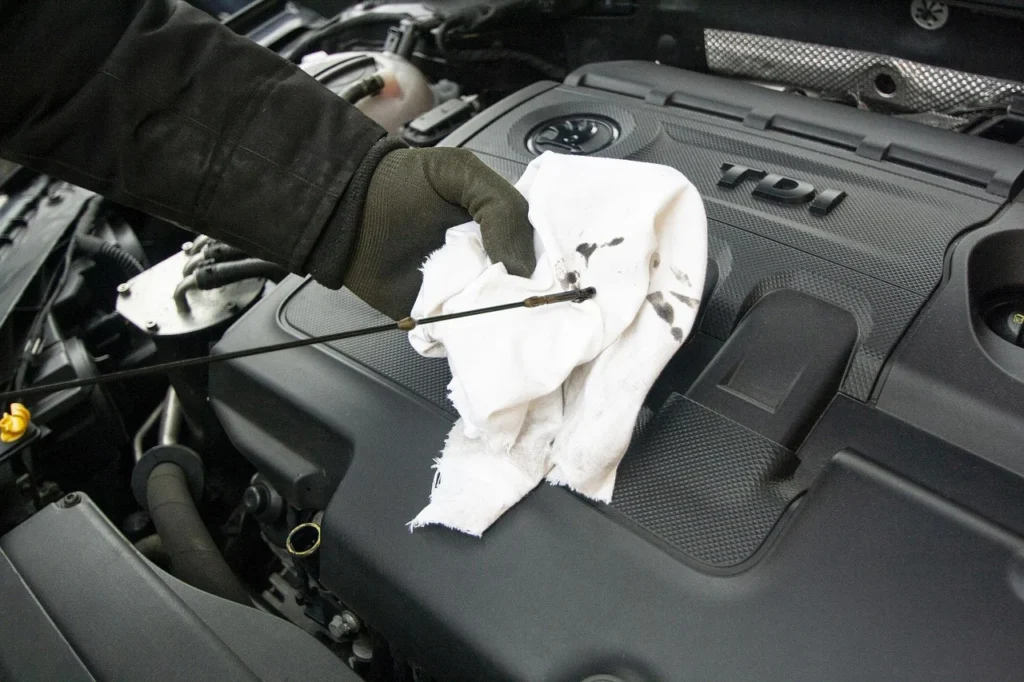
One of the most common questions before a first booking is simple: can a mobile mechanic actually fix my car, or is this only for small jobs like a bulb or a battery? The honest answer is that the range of roadside repairs covers far more than most people expect, but there is a real, if smaller, category of jobs that genuinely need a ramp. Knowing the difference helps you book the right kind of visit the first time.
Servicing: fully suited to mobile work
Full and interim services, oil and filter changes, spark plugs, air and cabin filters, brake fluid, and coolant, are all routine roadside jobs. None of this requires the car raised off the ground for an extended period, and the parts and consumables needed are standard stock carried on the van. This makes servicing one of the most popular mobile bookings, since it’s predictable, quick, and doesn’t need a workshop environment at all. Full details of what’s included at each level are on our servicing page.
Brakes: pads, discs, and calipers, done properly at the roadside
Brake pad and disc replacement is one of the most common mobile jobs, and it’s done to the same standard as a garage using axle stands rather than a jack alone, with the car secured safely before any wheel comes off. Caliper replacement and brake fluid flushes fall into the same category. This is core roadside work, not a compromise version of a garage job.
Batteries, starters, and alternators
Battery replacement is quick and entirely suited to the roadside, including coding modern batteries to the car’s electrical system where required, which many people don’t realise is necessary on newer vehicles. Starter motor and alternator replacement are also regularly done at the roadside, since these components are accessible without needing the car raised for long periods, though access varies by make and model.
Diagnostics and warning lights
Fault-finding using a professional OBD scanner is a core roadside service. Whether it’s an engine management light, ABS warning, or an intermittent electrical fault, diagnostic work generally doesn’t need a ramp at all, since it’s about reading data and testing components rather than major disassembly. This is often the first visit for anyone unsure what’s actually wrong with their car, with further repair work quoted once the cause is confirmed.
Clutches, timing belts, and bigger jobs
This is where it gets more nuanced. Many clutch and timing belt replacements can be done at the roadside using axle stands, and experienced mobile mechanics carry out this work regularly. However, the complexity varies significantly by vehicle, some engine layouts make timing belt access straightforward from above and the front, while others need more extensive disassembly that’s safer and quicker on a ramp. A good mobile mechanic will assess your specific make and model before confirming whether it’s a roadside job or one better suited to a workshop visit.
Suspension and steering components
Shock absorbers, springs, and many suspension arm and bush jobs can be done at the roadside with the right tools and axle stands. Wheel alignment, however, needs specialist ramp-mounted equipment to measure and adjust angles accurately, so this is one job that genuinely can’t be replicated on a driveway. If your visit involves suspension work, it’s worth asking directly whether an alignment check is needed afterwards and how that gets arranged.
Exhaust and full undertray work
Partial exhaust repairs, a section replacement or a loose heat shield, are often manageable at the roadside. A full system replacement, particularly on cars with tight underbody packaging, is usually more efficient and safer on a ramp, purely because of the sustained access needed and the weight involved in manoeuvring a full system into place.
MOT-related work and pre-MOT checks
Most of the common MOT failure points, bulbs, wiper blades, brake components, tyres, and many suspension and steering checks, can be assessed and fixed at the roadside ahead of a test. The MOT test itself, however, has to happen at an authorised test centre with the required equipment, so a mobile mechanic can prepare your car and fix likely fail points, but not issue the certificate itself.
Why the distinction matters for your booking
Being upfront about what suits a driveway and what suits a ramp protects you from two bad outcomes: a mechanic attempting a job that isn’t safe or practical outdoors, or you unnecessarily booking a garage slot for something that could easily have been done at home. According to general RAC maintenance guidance, matching the right kind of repair to the right setting is part of getting good value and a safe outcome from any car repair, mobile or otherwise.
How access and vehicle layout change the answer
The same job can sit on either side of the roadside-versus-ramp line depending on the vehicle. A timing belt on one engine layout might be accessible from the front of the car with the wheel and liner removed, making it a realistic roadside job with axle stands. On a different engine, the same job might require removing the engine mount and supporting the unit from above, which is far more practical on a ramp with proper lifting equipment. This is why generic advice found online about “can a mobile mechanic do X” is less useful than getting a specific answer for your actual make, model, and engine code.
Ride height and ground clearance also play a part. Lower, sportier vehicles can be more awkward to get axle stands under safely on an uneven driveway, while a higher-riding car or van often has more usable clearance. None of this makes roadside work unsafe when done properly, it simply means an experienced engineer assesses each vehicle individually rather than applying a blanket rule.
How engineers decide what tools to bring on the day
Because a mobile engineer cannot simply walk to a parts shelf mid-job the way a garage technician can, planning ahead matters more. A clear description of the fault and vehicle at booking lets the engineer stock the van with the specific tools and likely parts needed, reducing the chance of a job stalling because something was left behind. This is another reason accurate information at the point of booking pays off, not just for pricing but for making sure the visit itself runs smoothly from the first job to the last.
What a responsible mechanic does when a job is borderline
For jobs that could reasonably go either way, a responsible mobile mechanic errs on the side of caution and honesty. That might mean starting the job at the roadside and being upfront that if it turns out more involved than expected, it will need finishing at a partner workshop. It might mean recommending a ramp booking from the outset for a job with a track record of complications on your particular model. Either way, the goal is a safe, properly finished repair, not forcing every job into a driveway visit purely for convenience.
If you are ever told a job will be attempted at the roadside and something about the explanation does not add up, given how involved the job sounds, it is entirely reasonable to ask directly how the car will be supported and what happens if it turns out to need more access than expected. A mechanic confident in their approach will answer this without hesitation.
Weather, ground conditions, and how they affect roadside jobs
Beyond the vehicle itself, the practical conditions of the day play a part in deciding whether a job goes ahead outdoors. A flat, solid driveway is ideal. A sloped drive, loose gravel, or a soft grass verge makes it harder to set axle stands safely and level, and a careful engineer will either find a better spot nearby or reschedule rather than compromise on safety. Heavy rain and low temperatures can also affect certain jobs, particularly anything involving electrical connections or paint and bodywork, and it is entirely normal for a visit to be moved a day or two if conditions genuinely are not suitable.
None of this is unique to mobile mechanics. Garages deal with similar constraints indoors far less often simply because their environment is controlled, but the same principle, do not compromise safety for convenience, applies everywhere good work is being done.
Getting the most accurate answer for your specific car
Because the roadside-versus-ramp line depends so heavily on the individual vehicle, the most useful thing you can do before booking is describe the exact job along with your registration. This lets an experienced engineer give you a specific answer rather than a general rule of thumb, and it means the visit that gets booked is the right type from the outset rather than needing to be rearranged partway through.
Tools that make roadside work possible
Part of what makes the roadside category so much wider than people assume comes down to the equipment carried as standard on a properly kitted mobile mechanic’s van. Beyond axle stands and a trolley jack, this typically includes an impact wrench for wheel nuts, a torque wrench for correct refitting, a professional OBD scanner, and a range of specialist tools for common jobs like brake bleeding and battery coding. Portable lighting extends the working day into darker mornings and evenings, and a proper first-aid kit and PPE cover the basics of working safely outdoors. None of this is improvised; it mirrors what would be found in a well-run garage’s toolroom, just carried on wheels.
This matters because the quality of a roadside repair depends as much on having the right tool for the job as it does on the mechanic’s skill. A worn brake caliper bolt needing precise torque, for example, is done correctly with a calibrated torque wrench whether that happens on a driveway or a ramp, and a properly equipped mobile mechanic carries exactly what is needed to do it right first time.
When to simply ask before booking
If you are ever unsure whether your job falls into the roadside or ramp category, the simplest approach is to ask directly when you get in touch. Describing the symptom, the vehicle, and roughly what you think might be wrong lets an experienced engineer tell you honestly what to expect, including whether a ramp booking would be more sensible from the outset. There is no benefit to either side in forcing a job into the wrong setting, and a good mobile mechanic would rather have that conversation upfront than risk a job that cannot be finished properly on the day.
Common jobs people are surprised can be done at the roadside
Beyond the obvious servicing and brake work, several jobs regularly surprise first-time customers by how routinely they are handled without a ramp. Wheel bearing replacement, for instance, is a standard driveway job on most vehicles using the correct press tools and axle stands. Water pump replacement is frequently manageable roadside depending on engine layout. Even certain head gasket investigations can begin at the roadside with diagnostic testing before a decision is made about where the repair itself should happen. The key theme across all of these is that access, not job complexity alone, determines what suits a driveway.
Conversely, some jobs that sound minor are genuinely better suited to a workshop. Air conditioning regas and repair, for example, involves refrigerant handling that needs specific recovery and recycling equipment under environmental regulations, which most mobile setups are not equipped for. Knowing these specific exceptions, rather than guessing based on how big a job sounds, is what separates a genuinely useful answer from a generic one.
- Servicing, oil changes, filters: fully roadside
- Brakes, pads, discs, calipers: fully roadside using axle stands
- Batteries, starters, alternators: fully roadside
- Diagnostics and warning lights: fully roadside
- Clutches, timing belts: usually roadside, assessed per vehicle
- Wheel alignment, major exhaust and some engine work: usually needs a ramp
If you’re not sure which category your job falls into, describe the fault or service you need when you book and we’ll tell you honestly whether it’s suited to your driveway or better done on a ramp. You can check availability and book at sskmechanics.com/book/.
Source: RAC: car maintenance advice
Frequently asked questions
What can a mobile mechanic fix at the roadside?
Servicing, brakes, batteries, starters, alternators, diagnostics, and most clutch and timing belt jobs can all be done at the roadside using axle stands and standard tools.
What jobs need a ramp instead?
Wheel alignment always needs specialist ramp-mounted equipment. Some full exhaust replacements and certain engine layouts with limited access are also better suited to a workshop.
Is it safe to work under a car on a driveway?
Yes, when done properly. A trustworthy mobile mechanic uses axle stands to secure the car rather than relying on a jack alone for anything requiring the wheels off the ground.
Can a mobile mechanic prepare my car for its MOT?
Yes, most common fail points can be checked and fixed at the roadside, though the test itself has to take place at an authorised MOT centre.
How do I know if my job needs a ramp?
Describe the fault or job when you book and you'll be told honestly whether it suits a driveway visit or needs a workshop.