

It’s a fair question. If you’ve only ever used a bricks-and-mortar garage, the idea of a mechanic turning up to your driveway can feel like a step down, as if you’re trading proper equipment and qualifications for convenience. The reality is closer to the opposite of that assumption. A good mobile mechanic operates to the same standards as a good garage, and in several respects the mobile model removes some of the compromises that come with a traditional workshop visit. The comparison is worth doing properly rather than assuming one is automatically better.
Qualifications: there’s no separate standard for mobile work
There isn’t a lower qualification bar for mobile mechanics. The same City & Guilds and IMI (Institute of the Motor Industry) qualifications that garage technicians hold apply here too, and reputable mobile mechanics have typically spent years working in dealerships or independent garages before going mobile. The engineer who arrives at your door has generally done the same apprenticeship and gained the same hands-on experience as the technician you’d meet at a franchise dealer, just without the overhead of a fixed premises.
What differs is accountability. In a large garage, you rarely know exactly who worked on your car. With a mobile mechanic, you meet the person doing the job, see their approach directly, and can ask questions face to face. For many customers, that visibility is worth more than a waiting room and a corporate logo.
Diagnostic tools: modern vans carry proper kit
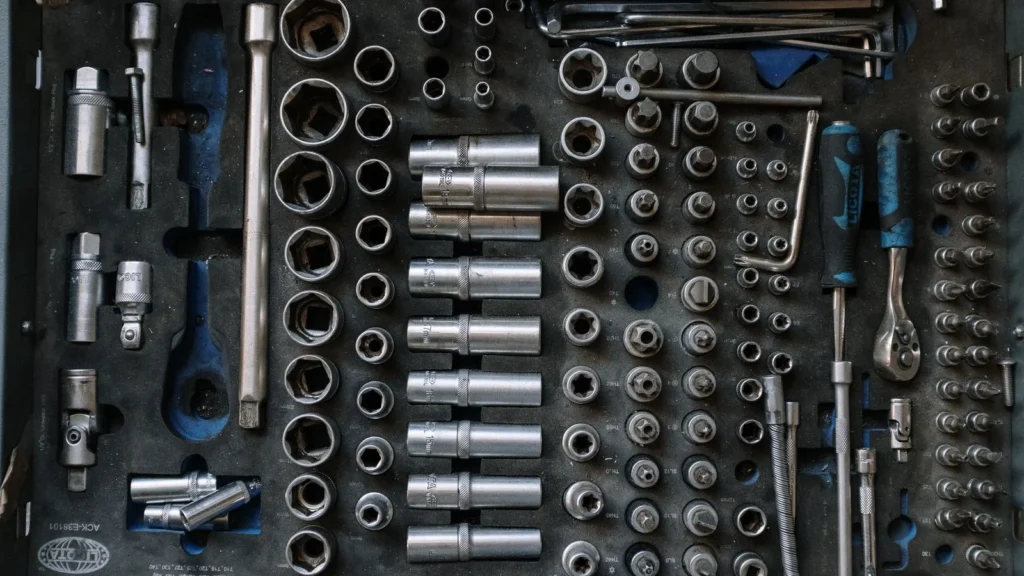
One of the biggest outdated assumptions is that mobile mechanics work with a spanner and not much else. In reality, a properly equipped mobile mechanic’s van carries the same OBD diagnostic scanners used in main dealer workshops, capable of reading fault codes, live sensor data, and manufacturer-specific systems on modern petrol, diesel, and hybrid vehicles. This equipment plugs into your car exactly as it would on a ramp in a garage, and it reads the same data.
Where a mobile visit can’t fully replicate a dealer workshop is highly specialised manufacturer software for certain reprogramming tasks, which some brands restrict to their own network. For the vast majority of servicing, diagnostics, and repair work, standard diagnostic tools cover what’s needed comfortably.
Ramp access: the honest limitation
This is the one area where a mobile mechanic genuinely can’t match a garage, and it’s worth being upfront about it. A ramp lifts the whole car and gives full access underneath, which matters for certain jobs, full exhaust system replacement, some suspension work, or anything needing the car raised for an extended period at height. Mobile mechanics use proper axle stands and jacks for work requiring the car off the ground, which is safe and standard practice for most jobs, but it isn’t a substitute for a ramp on every task.
A trustworthy mobile mechanic will tell you honestly when a job needs a ramp and either recommend a workshop for that specific element or, where the business has an affiliated ramp facility, arrange it as part of the service. What you want to avoid is a mechanic who quietly attempts ramp-dependent work at the roadside because it’s more convenient for them, not you. You can see what typically gets done at the roadside versus what needs a ramp on our diagnostic services page.
Parts quality: no reason for it to differ
Parts used by a mobile mechanic should be exactly the same as those used in a garage: OEM or reputable OEM-equivalent brands, sourced against your specific registration to make sure fitment is correct. There’s no operational reason for a mobile operator to use inferior parts, and reputable providers quote for named brands so you know what’s going on your car before it arrives. If a quote doesn’t specify the parts brand, it’s worth asking, whether you’re booking mobile or garage-based work.
Environment: driveway versus workshop
A garage workshop is climate-controlled, well lit, and purpose-built. A driveway is outdoors, subject to weather, and less predictable. Good mobile mechanics work around this with portable lighting for darker mornings, weatherproof clothing, and simply not attempting certain jobs in genuinely unsafe conditions like heavy rain or ice. It’s a real difference, but it rarely affects the quality of work itself; it affects when the work can safely be scheduled.
Time and convenience: where mobile clearly wins
This is the trade-off most people are actually weighing. A garage visit usually means arranging a lift, waiting around, or losing use of your car for a day, sometimes longer if they’re busy. A mobile mechanic works around your day rather than the other way round, arriving at your home or workplace while you get on with things. For many people, especially those juggling work and family commitments, this convenience is not a minor bonus, it’s the deciding factor.
Cost: often comparable, sometimes better
Because mobile mechanics don’t carry the overhead of a large premises, reception staff, and showroom space, labour rates are frequently lower than a franchise dealer and comparable to a good independent garage. Parts pricing should be similar either way, since it’s based on the same supply chains. The genuine saving for many customers is less about the invoice total and more about not losing a day’s pay or paying for a courtesy car.
Warranty and accountability
Warranty cover on parts and labour should be standard with any reputable mobile mechanic, matching what you’d expect from a garage. The difference, again, comes back to accountability: you have a direct line to the person who did the work, rather than navigating a service desk or head office to raise a concern.
So which is actually better?
For servicing, diagnostics, brakes, batteries, clutches, and the large majority of common repairs, a properly equipped mobile mechanic matches a garage on qualifications, tools, and parts, while beating it on convenience and often on price. For the smaller category of jobs genuinely requiring a ramp for an extended period, a workshop still has the edge, and an honest mobile provider will say so rather than force the job.
What to actually look for before booking either option
Rather than treating “mobile” and “garage” as two fixed categories, it helps to judge any individual provider against a short set of practical questions. Are their engineers qualified and, ideally, can they show it? Do they carry proper diagnostic equipment rather than relying on guesswork? Are quotes broken down clearly with named parts brands rather than vague totals? Is warranty cover explained upfront rather than buried in small print? A mobile mechanic and a garage that both answer these questions well are likely to deliver similar quality, whichever setting the work happens in.
It is also worth checking reviews specific to the kind of job you need, since a business might be excellent at servicing but less experienced with, say, hybrid diagnostics. Reputable mobile mechanics are generally happy to discuss their experience with your particular make and model before you commit to a booking, in the same way a good garage service advisor would.
Where the two models genuinely complement each other
Many drivers end up using both models depending on the job. Routine servicing, brakes, batteries, and diagnostics go to a mobile mechanic because it saves time and avoids losing use of the car. Anything clearly needing a ramp, or a job on a vehicle still under a manufacturer warranty requiring main dealer stamps, goes to a workshop instead. There is nothing inconsistent about this approach, and a mobile mechanic worth trusting will say so directly rather than pretending they can do everything.
This combined approach also tends to work out more cost-effective over the life of a car. Routine maintenance handled at home keeps day-to-day running costs down and avoids lost time, while occasional workshop visits cover the handful of jobs that genuinely need one. Understanding the split, rather than assuming one model should handle everything, is what actually gets the best outcome for most owners.
Insurance and accountability behind the scenes
Every reputable mobile mechanic operates with public liability insurance covering work carried out at your home, street, or workplace, in the same way a garage carries insurance covering its premises and staff. This protects you if something genuinely goes wrong during a repair, and it is entirely reasonable to ask a provider to confirm this before booking, whether mobile or garage-based. The absence of a fixed premises does not mean the absence of proper cover, and any legitimate operator will be able to speak to this without hesitation.
The service history question people worry about
A common concern is whether using a mobile mechanic affects a car’s service history or resale value compared to dealer stamps. Under UK consumer law, servicing does not have to be carried out at a franchise dealer to remain valid, including in most cases during a manufacturer warranty period, as long as the correct parts, oils, and procedures are used and properly documented. What matters for resale and warranty purposes is having clear, dated records of what was done and by whom, which reputable mobile mechanics provide digitally as standard. Keeping these records organised is genuinely more important than which type of business carried out the work.
If a car is still within its first few years and covered by a manufacturer warranty with specific servicing requirements, it is worth checking the exact terms before booking either type of provider, since a small number of warranties do specify particular conditions. For most cars outside that early period, this is a non-issue, and the choice comes down entirely to convenience, price, and trust in the individual provider.
How to test the comparison for yourself
The most reliable way to settle the “as good as a garage” question for your own car is to try a straightforward job first, a service or a diagnostic check, rather than starting with something major. This lets you judge communication, punctuality, and the standard of work on something lower stakes before deciding whether to trust a mobile mechanic with a bigger repair. Most people who take this approach find their assumptions about mobile mechanics shift considerably after just one visit.
What Bradford drivers specifically tend to ask
Locally, a lot of the scepticism about mobile mechanics traces back to older, informal setups, someone working cash-in-hand from the back of a van with no real accountability. That reputation has lingered even as the model has professionalised considerably. A properly run mobile mechanic operation today looks nothing like that: liveried vehicles, digital invoicing, named engineers, and proper insurance and vetting behind the scenes. It is worth judging any provider on those specifics rather than on an outdated stereotype of what mobile mechanic work used to mean.
Traffic and parking around central Bradford also shape the comparison in a very practical way. A driveway or workplace visit avoids the need to navigate into town, find parking near a garage, and then arrange a way back, something that adds real time and hassle to what might otherwise be a simple repair. For many local customers, this practical convenience is what first prompts them to try mobile servicing, with the quality comparison only becoming relevant once they have already experienced how much time it saves.
Making the decision that fits your situation
Ultimately, the right choice depends on the job, the vehicle, and what matters most to you on a given occasion, price, time, or convenience. There is no single correct answer that applies to every repair. What matters is judging each option on its actual merits: qualifications, equipment, transparency, and reviews, rather than assuming a fixed premises is automatically a mark of quality a driveway cannot match. Vehicle approval and testing standards set out by GOV.UK apply equally regardless of where a repair takes place, since roadworthiness depends on the work itself, not the location it was carried out in.
- Qualifications: same industry-recognised standards as garage technicians
- Diagnostics: professional-grade scanners carried as standard
- Ramp work: the genuine limitation, and one honest mechanics disclose upfront
- Parts: same OEM and OEM-equivalent brands used either way
- Convenience: no lost day, no courtesy car, work done where you are
- Warranty: should match garage-standard cover on parts and labour
The safest approach is to judge any individual mechanic, mobile or otherwise, on their qualifications, transparency, and reviews rather than assuming the format alone tells you the quality. You can browse the full range of jobs we handle mobile at sskmechanics.com/book/ and see for yourself where the line sits.
Frequently asked questions
Are mobile mechanics as qualified as garage technicians?
Yes. Reputable mobile mechanics hold the same industry-recognised qualifications, such as City & Guilds or IMI accreditation, and typically have years of garage or dealership experience before going mobile.
Do mobile mechanics use proper diagnostic equipment?
A properly equipped mobile mechanic carries the same type of OBD diagnostic scanners used in garages, capable of reading fault codes and live sensor data on most modern vehicles.
What can not a mobile mechanic do that a garage can?
The main limitation is ramp-dependent work, such as wheel alignment or jobs needing the car raised for an extended period. An honest mobile mechanic will tell you when a job needs a workshop.
Is mobile mechanic pricing usually cheaper?
Labour rates are often lower than a franchise dealer and comparable to a good independent garage, since there is less overhead. Parts pricing should be similar either way.
Does warranty cover apply the same way?
Yes, reputable mobile mechanics offer warranty on parts and labour matching what you would expect from a garage repair.