

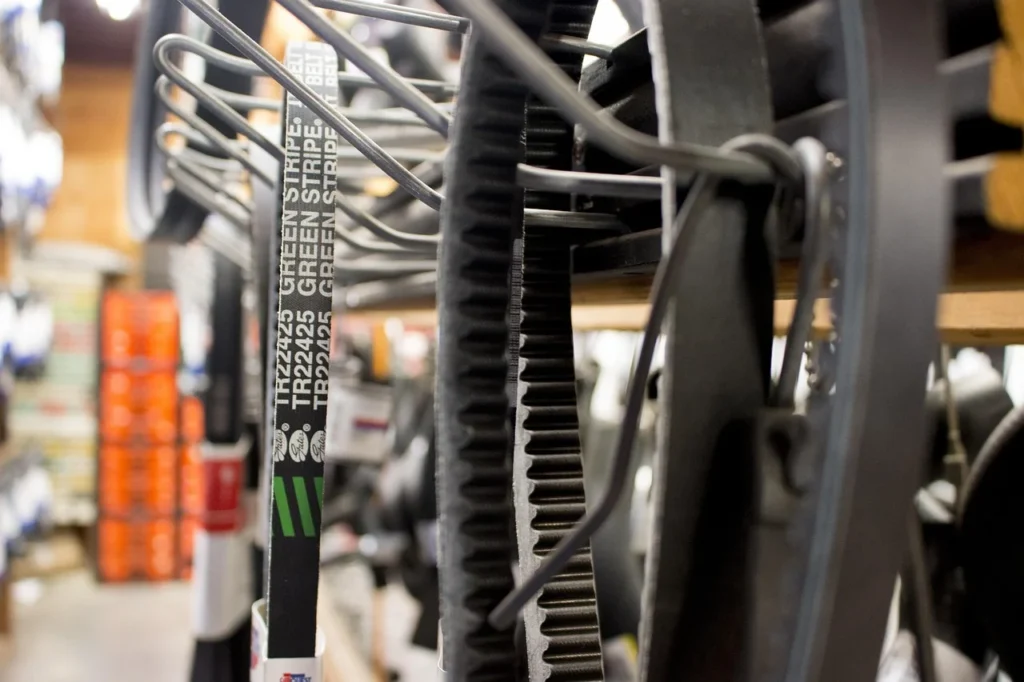
The auxiliary belt is one of those components that quietly does its job for years until it doesn’t, and a failure can leave you stranded with a genuinely inconvenient combination of lost power steering and a rapidly discharging battery. Knowing the warning signs helps you catch wear before it becomes a breakdown.
What the auxiliary belt actually does
The auxiliary belt, sometimes called the drive belt or serpentine belt, uses power from the engine’s crankshaft to drive several other components simultaneously, commonly including the alternator, power steering pump, and air-con compressor. A single belt failure can therefore affect multiple systems at once.
Why this belt matters more than its size suggests
Despite being a relatively simple, inexpensive component, the auxiliary belt’s failure has genuinely significant consequences, since losing the components it drives affects your car’s charging system and, on many cars, power steering assistance almost immediately, both of which are important for safe, continued driving.
How the belt gradually wears over time
Made from reinforced rubber, the auxiliary belt gradually degrades through heat exposure, general flexing as it runs continuously, and simple age, developing cracks and reduced flexibility over time. This wear is a normal, expected part of the component’s lifespan, though it does mean periodic replacement is genuinely necessary.
Squealing noise: the most common early warning sign
A squealing or chirping noise from the engine bay, often most noticeable when starting the engine or during acceleration, is typically the earliest and most common sign of a worn or slipping auxiliary belt, caused by the belt no longer gripping its pulleys with full effectiveness.
- Squealing or chirping noise, particularly on startup or acceleration
- Visible cracking, fraying or glazing on the belt’s surface
- A loose, slipping feel or visible belt wobble while running
- Reduced power steering assistance or a whining steering noise
- The battery warning light illuminating on the dashboard
Visible cracking and fraying: a clear sign of advanced wear
A visual inspection of the belt, checking for cracks across its ribbed surface, fraying at the edges, or a shiny, glazed appearance that indicates the rubber has hardened, gives a clear indication of genuine wear that a listening check alone might not fully reveal.
A loose or slipping belt
Over time, belt tensioners can wear alongside the belt itself, and a belt that’s become loose or is visibly slipping on its pulleys reduces how effectively it drives the connected components, sometimes producing an intermittent rather than constant squealing noise as it slips periodically under different loads.
Reduced power steering as a warning sign
On cars with hydraulic power steering, a struggling auxiliary belt can cause noticeably heavier steering effort, or an audible whining noise when turning, since the power steering pump isn’t being driven as effectively as it should be, worth taking seriously as an indicator of belt condition.
The battery warning light and charging issues
Since the auxiliary belt drives the alternator, a failing or slipping belt can prevent the alternator from properly charging the battery, triggering the battery or charging warning light on the dashboard. This is a genuine warning sign worth investigating promptly rather than continuing to drive and hoping it resolves.
What happens if the belt fails completely while driving
A complete belt failure while driving causes an almost immediate loss of power steering assistance and battery charging, meaning steering becomes noticeably heavier and the battery begins discharging without the alternator’s support. Depending on your specific car, the engine’s cooling system may also be affected if the belt drives the water pump.
Why some belt failures affect engine cooling too
On some car designs, the auxiliary belt also drives the water pump, meaning a belt failure can additionally cause the engine to overheat relatively quickly without proper coolant circulation, adding urgency to stopping safely rather than continuing to drive on a failed or failing belt.
How often auxiliary belts typically need replacing
Replacement intervals vary by manufacturer and specific car, though many specify roughly every 60,000 to 100,000 miles, or a specific number of years, whichever comes first. Checking your specific handbook or service schedule gives the definitive interval for your particular vehicle.
Why auxiliary belt and cambelt are genuinely different components
It’s worth being clear these are two entirely separate belts serving different purposes, the cambelt, or timing belt, synchronises internal engine timing, while the auxiliary belt drives external components like the alternator and power steering pump. Confusing the two can lead to missing one or the other’s genuinely important replacement interval.
Why the tensioner and pulleys should be checked alongside the belt
A proper belt inspection considers not just the belt itself but also the tensioner mechanism and the pulleys it runs across, since a worn tensioner or pulley can cause premature belt wear even with a genuinely new belt fitted, making a complete assessment more valuable than replacing the belt in isolation.
Why proactive replacement beats waiting for failure
Given the genuinely significant consequences of a complete belt failure, particularly the sudden loss of steering assistance and charging, replacing the belt proactively once it’s approaching or reaching its recommended interval is considerably more sensible than waiting for it to fail unexpectedly, often at an inconvenient moment.
How weather conditions can accelerate belt wear
Extreme temperature swings, common through a full UK year, particularly affect rubber components like the auxiliary belt, with repeated expansion and contraction gradually accelerating the development of cracks and reduced flexibility over time.
Why checking during routine servicing catches wear early
Since visual inspection is a straightforward part of any proper service, having the auxiliary belt checked at each routine visit means developing wear is caught and flagged well before it reaches the point of squealing, slipping or genuine failure risk.
What to do if you notice belt-related symptoms while driving
If you notice a new squealing noise, heavier steering, or a battery warning light, it’s worth having the car checked promptly rather than continuing to drive for an extended period, since a belt showing these symptoms can fail with relatively little further warning.
Why replacing a worn belt is a relatively straightforward job
Compared to some engine repairs, auxiliary belt replacement is generally a relatively straightforward, cost-effective job, making proactive replacement genuinely good value compared to the inconvenience and potential knock-on cost of an unexpected failure and recovery.
Why some cars use multiple auxiliary belts rather than one
Depending on the specific engine layout, some cars use more than one auxiliary belt to drive different components separately, rather than a single serpentine belt handling everything, meaning a proper check needs to account for exactly how many belts your specific car actually has fitted.
How belt noise can sometimes be mistaken for other issues
A squealing noise from the engine bay isn’t always the auxiliary belt, since other components can produce similar sounds, making a proper diagnostic check valuable to confirm the actual source rather than assuming and potentially replacing the wrong part.
Why humidity and damp conditions can temporarily worsen belt noise
A belt that’s otherwise in reasonable condition can sometimes squeal more noticeably in damp or humid conditions, particularly first thing in the morning, though this doesn’t mean the noise should be dismissed entirely, since it can still indicate developing wear worth having properly checked.
What a proper belt replacement job typically involves
A thorough replacement doesn’t just fit a new belt, it also checks the tensioner and pulleys for wear, confirms correct belt routing according to the specific engine layout, and verifies proper tension once fitted, ensuring the new belt performs as intended rather than wearing prematurely from an unaddressed underlying issue.
Why keeping track of your belt’s replacement history helps
Noting when your auxiliary belt was last replaced, alongside your other service records, helps you and any mechanic stay on top of when the next replacement is likely due, rather than relying purely on symptoms appearing before addressing it.
Why a stranded roadside failure is genuinely inconvenient
Beyond the immediate mechanical consequence, a sudden auxiliary belt failure often happens without warning at an inconvenient time and location, meaning proactive replacement genuinely saves you from the stress and disruption of an unplanned roadside recovery.
How this component fits into a wider engine health check
A proper engine bay inspection considers the auxiliary belt alongside other visible components, hoses, connections and general condition, giving a genuinely complete picture rather than assessing this one component in isolation from everything else it works alongside.
Why age matters alongside mileage for this component
Even a car covering relatively low mileage can have an auxiliary belt that’s aged and hardened simply through time and heat cycling, meaning checking based on age as well as mileage against your manufacturer’s schedule gives a more complete picture than mileage alone.
Final thoughts on staying ahead of belt wear
Given how significant the consequences of a complete failure genuinely are, treating auxiliary belt condition as a routine, proactive check rather than something only addressed once symptoms appear is a sensible, low-cost way to avoid a considerably more disruptive breakdown situation.
Why this small investment protects considerably more expensive systems
The relatively modest cost of proactive belt replacement is genuinely small compared to the potential cost and inconvenience of a battery drained by a failed charging system, or an overheated engine from a lost water pump connection, making this one of the more clearly worthwhile proactive maintenance items available.
What a proper belt check actually costs versus a roadside failure
A proactive auxiliary belt inspection and, if needed, replacement is a relatively modest cost when booked as routine maintenance. Compare that against the cost of a roadside recovery, a replacement battery if a slipping belt has left it repeatedly undercharged, and potentially a hire car or missed commitments while everything gets sorted, and the value of catching this early becomes considerably clearer. It is exactly the kind of small, inexpensive job that saves a genuinely larger and more disruptive bill later.
A simple torch check you can do yourself
With the engine off and cool, a torch shone across the belt’s ribbed underside, visible from above or below depending on your specific engine layout, lets you check for cracking, fraying or a shiny glazed look without needing to remove anything. Turning the engine over gently by hand, if you know how to do this safely on your specific car, lets you inspect the full length of the belt rather than just the section visible from one angle. If you are ever unsure what you are looking at, a quick photo shown to a mechanic is often enough for them to give you an informed opinion without needing the car in front of them straight away.
Why replacing the belt alone sometimes isn’t enough
Fitting a brand new belt onto a worn tensioner or a pulley with failing bearings often leads to the new belt wearing prematurely or squealing again within a matter of months, since the underlying issue causing the original wear hasn’t actually been addressed. A mechanic who checks the whole system, not just the belt itself, gives you a genuinely lasting fix rather than a repeat job sooner than it should be needed.
Getting your auxiliary belt checked and replaced
If you’ve noticed any of the warning signs covered here, or it’s simply been a while since your belt was last checked against your manufacturer’s schedule, booking an auxiliary drive belt replacement addresses the issue proactively, avoiding the genuine inconvenience of an unexpected roadside failure. The RAC’s car maintenance advice offers further useful general context on staying ahead of this often overlooked but genuinely important component. Asking specifically for both the belt and the surrounding components to be checked together, rather than assuming a squeal always means the belt alone needs attention, is a reasonable question to raise with whoever carries out the work. Treating the belt, tensioner and pulleys as one interconnected system rather than three separate items pays off in fewer repeat visits over the years you own the car. and that peace of mind alone is often worth the modest cost of the check.
Source: the RAC's car maintenance advice
Frequently asked questions
What does the auxiliary belt actually do?
It drives components like the alternator, power steering pump and air-con compressor using power from the engine.
What are the signs an auxiliary belt needs replacing?
A squealing noise, visible cracking or fraying, and a loose or slipping feel are the clearest signs replacement is due.
What happens if the auxiliary belt fails while driving?
You can lose power steering assistance and battery charging almost immediately, and the car may need to be stopped safely and recovered.
How often does the auxiliary belt typically need replacing?
This varies by car, but many manufacturers recommend replacement roughly every 60,000 to 100,000 miles or at a specific number of years.
Is the auxiliary belt the same as the cambelt?
No, they are different belts serving different purposes, and confusing the two can lead to missing a genuinely important replacement interval.