

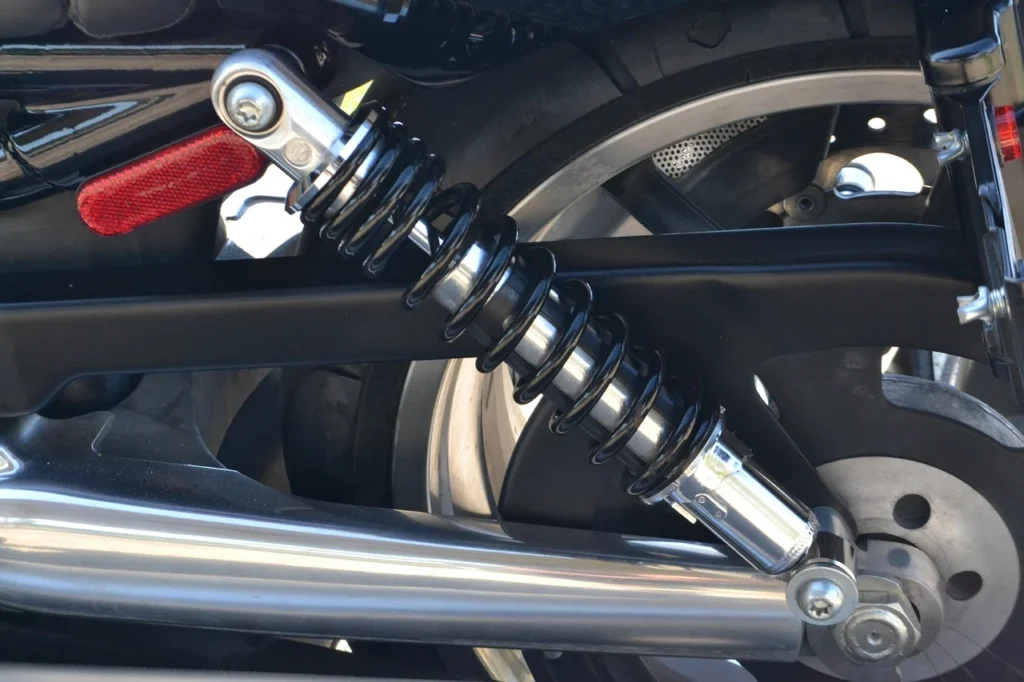
A worn shock absorber rarely announces itself with a dramatic failure. Instead it fades gradually, a bit more bounce after every pothole, a bit more sway through roundabouts, until one day you realise your car doesn’t feel like it used to and you can’t quite remember when that changed. Recognising the signs early matters, because shock absorbers do far more than smooth out bumps. They keep your tyres in contact with the road, which affects grip, braking distance and how predictably the car handles in an emergency.
What shock absorbers actually do
Every time a wheel meets a bump or a dip, the suspension spring compresses and rebounds. Left alone, that spring would keep bouncing long after the bump has passed. The shock absorber’s job is to dampen that motion, converting the spring’s kinetic energy into heat through hydraulic fluid moving through small valves inside the unit. A healthy shock brings the wheel back under control within a fraction of a second. A worn one lets it keep oscillating, which means less rubber in contact with the tarmac exactly when you need grip the most.
The bounce test and other simple checks
One of the oldest and still most useful checks is the bounce test. Push down firmly on each corner of the car and release. A car with healthy shocks should settle back to level within one bounce, maybe one and a half. If a corner keeps bobbing up and down two or three times, that shock absorber is losing its damping ability. It’s not a precise diagnostic tool, but it’s a fair early warning that’s worth doing every few months, particularly before a long trip.
- Excessive bouncing after speed bumps or potholes
- Nose diving heavily under braking
- Body roll that feels more pronounced through corners than it used to
- Uneven or cupped tyre wear patterns
- Visible fluid leaking from the shock body
- A knocking or clunking noise over rough surfaces
How worn shocks affect braking distance
This is the point that surprises most drivers. Braking performance depends on tyres staying pressed against the road, and when shock absorbers can’t control wheel movement properly, tyres skip and hop over uneven surfaces rather than staying planted. Independent testing over the years has repeatedly shown that cars with significantly worn dampers need noticeably longer to stop from motorway speeds, particularly on wet or uneven roads. It’s a safety issue as much as a comfort one, and it’s easy to overlook because the car still drives, just not as well as it should.
Why tyre wear is often the first real clue
Uneven tyre wear, particularly cupping or scalloping where the tread wears in a wavy pattern around the circumference, is one of the clearest signs that a shock absorber isn’t controlling wheel movement properly. The tyre is essentially bouncing against the road surface rather than rolling smoothly across it. If you’ve had a set of tyres wear unevenly despite correct pressures and alignment, worn dampers are a strong candidate worth ruling out, especially if the car is approaching or past 60,000 miles.
Typical lifespan and what shortens it
Most shock absorbers are designed to last somewhere between 50,000 and 80,000 miles under normal conditions, though this varies considerably by manufacturer, driving style and road surfaces. West Yorkshire’s mix of potholed back roads, hilly routes and stop-start town driving tends to wear dampers faster than motorway-heavy mileage would. Regularly loaded vehicles, roof boxes, towing, or a boot full of tools for work, also accelerate wear because the springs and shocks are working harder on every cycle.
What happens if you leave it too long
Beyond the comfort and handling changes, badly worn shocks put extra strain on other suspension and steering components as they try to compensate for the uncontrolled wheel movement. Bushes, ball joints and even the tyres themselves wear faster. There’s also an MOT angle here. A shock absorber with a leak or that fails the bounce and damping assessment during testing will result in a fail, so leaving it too long can turn a straightforward planned replacement into an unexpected test-day problem.
What a shock absorber replacement involves
Replacement is usually a fairly contained job. The shock absorber itself unbolts from the top mount and the lower suspension arm or knuckle, and a new unit goes in its place. Shocks are typically replaced in pairs, front or rear together, to keep handling balanced side to side even if only one side is showing obvious symptoms. Depending on the vehicle, coil springs may need to be compressed and transferred if the shock and spring form a combined strut assembly, which is a job best left to a qualified mechanic given the stored energy involved.
Getting it checked without the hassle
A mobile mechanic can carry out the bounce test, a visual inspection for leaks and physical damage, and a proper assessment of ride quality right at your home or workplace, without you needing to book a garage slot or arrange time off. If replacement is needed, the parts can usually be sourced and fitted on the same visit, saving a second trip. Given how directly shock absorbers affect braking and handling, it’s not a job worth putting off once the signs start showing.
When to book a check
If your car has passed 50,000 miles, if you’ve noticed any of the signs above, or if it’s simply been a while since anyone looked at the suspension, it’s worth getting it checked before the next MOT rather than waiting for it to become a fail item. A quick assessment now can save a more expensive repair, and a more dangerous drive, later on.
Front versus rear shock absorbers
Front and rear shocks tend to fail slightly differently in how they show up to the driver. Front shock wear is usually noticed first through steering feedback and nose dive under braking, since the front end carries more weight and does more work during braking and cornering. Rear shock wear tends to show up as a wallowing feeling over motorway expansion joints, or a rear end that feels light and unsettled when carrying passengers or luggage. Knowing which end feels different helps a mechanic narrow down the inspection, though both ends are worth checking together since they’re often replaced around the same mileage regardless of which shows symptoms first.
How shock absorber wear affects everyday comfort
Beyond the safety implications, worn shocks simply make everyday driving more tiring. Every pothole, speed bump and uneven junction sends a harsher jolt through the cabin than it should, and passengers notice it too, particularly on longer journeys. Drivers sometimes adjust to this gradually without realising quite how much rougher the ride has become, until they drive a car with fresh shocks and are reminded what a controlled, settled ride actually feels like. That contrast is often the moment people finally book the work in.
Shock absorbers and modified or heavily loaded vehicles
Vans and cars regularly used for work, carrying tools, equipment or trade stock, put shock absorbers through a harder life than an equivalent vehicle used mainly for commuting. The extra weight means the suspension is compressing further and rebounding harder on every cycle, accelerating wear on both the springs and the dampers. If your vehicle is used for towing a trailer or caravan regularly, the same logic applies, and it’s worth having shocks checked more frequently than the standard interval would otherwise suggest, simply because the working conditions are more demanding.
A quick self-check you can do at home
Beyond the classic bounce test, walk around the car and look at each tyre’s wear pattern with the car parked on level ground. Run a hand across the tread, cupping or a wavy, scalloped pattern under your palm is a strong physical clue. Take note of how the car feels the next time you go over a familiar speed bump or pothole, does it settle quickly or does it keep moving for a beat or two longer than you remember. None of this replaces a proper inspection, but it gives you a reasonable sense of whether it’s worth booking one sooner rather than later.
How weather and road conditions in West Yorkshire play a part
Local roads around Bradford, Leeds and the surrounding Pennine villages combine steep gradients, sharp bends and a fair share of poorly maintained surfaces, all of which put more demand on shock absorbers than gentler, flatter routes elsewhere. Add in wetter, colder weather for a large part of the year, which corrodes exposed metal components including shock absorber bodies and mounting hardware, and it’s easy to see why local drivers often find suspension wear creeping up faster than manufacturer estimates might suggest. Regular checks make more sense here than in drier, flatter parts of the country.
Signs it might be springs rather than shocks
Suspension springs and shock absorbers work together, but they can fail independently, and it’s worth understanding the difference. A sagging ride height, where one corner of the car sits noticeably lower than the others, points more toward a weakened or broken spring than a worn shock absorber. A creaking or groaning noise over bumps, distinct from a knocking sound, can also suggest a spring issue rather than a damper problem. A proper inspection distinguishes between the two, since fitting a new shock onto a genuinely weak spring, or vice versa, won’t fully resolve the underlying handling issue.
Making the most of a replacement visit
If you’re already booking a shock absorber replacement, it’s a sensible moment to have the mechanic check related components while they have access to that corner of the car, top mounts, bushes, and the condition of the springs themselves. Addressing everything together, rather than piecemeal over several separate visits, is usually more cost effective and means you’re not paying for the same labour access twice within a short space of time.
A final word on cost versus risk
Weighing up whether to replace shock absorbers now or wait often comes down to a simple comparison, the cost of the parts and labour against the cost of accelerated tyre wear, additional strain on other suspension components, and the genuine safety risk of reduced braking and grip in an emergency situation. Framed that way, most drivers find the decision straightforward once they’ve had a proper assessment rather than guessing based on how the car feels day to day.
What drivers commonly get wrong about shock absorbers
A common misconception is that shock absorbers only affect comfort, and that a slightly bumpier ride is simply something to live with rather than something worth fixing. In reality the safety implications, reduced grip, longer braking distances, less predictable handling in an emergency swerve, are the more important reason to address wear promptly. Comfort is a nice side benefit of getting it sorted, but it shouldn’t be the only reason drivers wait until it becomes a genuine problem before booking a check.
Talking to your mechanic about what you’re feeling
When you book a check, it helps to describe as precisely as you can what you’ve noticed, whether the bounce happens on one corner or all four, whether it’s worse over certain types of bump, and roughly when you first started noticing it. This kind of detail helps a mechanic focus their inspection more efficiently and can speed up an accurate diagnosis, rather than starting entirely from scratch with only a vague sense that “the ride feels different lately.”
A last practical note
Shock absorbers rarely fail all at once, which is exactly why they’re so easy to overlook until the wear becomes severe. Building a quick check into your normal routine, alongside tyre pressure checks and other simple habits, means you’re far more likely to catch the early signs while replacement remains a straightforward, planned job rather than an urgent one forced by an MOT fail or a genuinely unsettling drive home in poor weather.
Ultimately, the cost of staying on top of shock absorber wear is small compared to the cost, financial and otherwise, of ignoring it until it becomes a genuine hazard. A few minutes of attention now, and a straightforward booking with a mobile mechanic, is really all it takes to keep this part of your car working the way it should.
Frequently asked questions
How much does it cost to replace a shock absorber in the UK?
Costs vary by vehicle and whether they are replaced in pairs, but budget for parts and labour together rather than parts alone, since fitting and any alignment checks add to the total.
Can I drive with a worn shock absorber?
You can usually still drive, but braking distances and grip in emergency situations are reduced, so it is worth getting it checked and replaced promptly rather than leaving it.
Do shock absorbers need replacing in pairs?
Yes, it is best practice to replace them in axle pairs so that damping performance stays balanced side to side, even if only one side shows obvious symptoms.
Will worn shocks cause an MOT failure?
A leaking shock absorber or one that fails the damping assessment will result in an MOT fail, so it is worth addressing before your test date.
How do I know if it is the shocks or the springs?
A bounce test and visual inspection usually distinguish the two, though a mechanic can confirm with a proper suspension check if symptoms are unclear.