

The check engine light, sometimes called the engine management light, is one of the most common warnings drivers encounter, and also one of the least specific. It can mean anything from a loose fuel cap to a serious internal engine fault, which is exactly why this particular light causes so much anxiety: the symbol itself tells you almost nothing about how serious the underlying issue actually is.
What triggers the check engine light
This light is connected to your car’s onboard diagnostic system, which continuously monitors a wide range of engine and emissions-related sensors. When a reading falls outside its expected range, the system stores a fault code and illuminates the light to let you know something needs attention. Because so many different systems feed into this single warning, the possible causes span an enormous range of severity, from something trivial to something that needs immediate attention.
Common causes, from minor to serious
- A loose or faulty fuel cap, surprisingly common and completely harmless once tightened or replaced
- A failing oxygen sensor, affecting fuel efficiency and emissions but not usually an immediate danger
- Worn spark plugs or ignition coils causing a misfire
- A faulty catalytic converter or EGR valve
- More serious issues such as a developing engine fault affecting internal components
Without a proper diagnostic scan, there’s genuinely no reliable way to tell which of these, or something else entirely, is behind your specific light, which is why guessing based on how the car feels to drive is a risky approach.
Solid versus flashing: why it matters
A solid check engine light generally indicates a fault that should be checked soon but isn’t causing immediate danger, while a flashing light indicates a more serious, active problem, most commonly a misfire severe enough to risk damaging the catalytic converter if you continue driving normally. If your light starts flashing, it’s worth reducing speed and load on the engine and having it checked as soon as possible, rather than continuing your journey as normal.
What a proper diagnostic scan involves
A diagnostic scan reads the stored fault codes directly from your car’s computer, giving a precise starting point rather than a guess. A good technician then interprets those codes alongside the car’s actual symptoms and, where needed, live sensor data, since a fault code points toward a system rather than always confirming the exact failed component on its own. This combination of code reading and proper interpretation is what actually gets you an accurate answer rather than a guess dressed up as a diagnosis.
Why this light causes more anxiety than most
Part of what makes the check engine light so unsettling is precisely its lack of specificity compared with, say, a fuel gauge or a clearly labelled tyre pressure warning. Drivers often imagine the worst possible cause, a failing engine, when statistically a large share of check engine light triggers relate to emissions components or sensors rather than the engine’s core mechanical health. This is not a reason to ignore the light, but it is a reason not to panic before you have an actual diagnosis in hand.
Keeping a simple note of when the light came on and whether you noticed any change in how the car was running, or driving conditions at the time, such as a particularly cold start or a specific type of journey, can genuinely help a mechanic narrow down the cause more efficiently once you bring the car in.
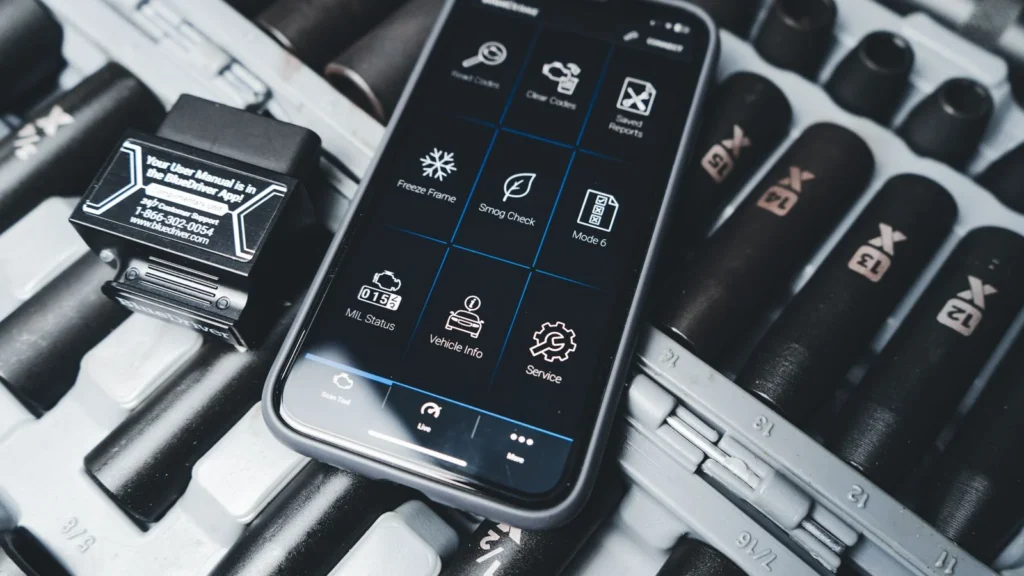
Keeping a basic OBD reader in the car, inexpensive and widely available, lets you check a fault code yourself as a first step, though interpreting what that code actually means for your specific car is still best left to a proper diagnostic assessment.
What happens if you ignore it
Ignoring a check engine light doesn’t make the underlying issue go away, and in cases like a persistent misfire, continuing to drive normally can cause expensive damage to the catalytic converter that wouldn’t have happened if the original, cheaper fault had been addressed promptly. Even for less urgent causes, an unresolved fault often means the engine is running less efficiently than it should, costing you in fuel economy while the fault sits unaddressed.
What a mechanic actually checks during a check engine light diagnosis
Beyond simply reading the stored fault code, a thorough diagnosis checks live sensor data alongside that code, since the same code can sometimes be triggered by more than one underlying cause, and live data, such as fuel trim figures or oxygen sensor readings in real time, helps confirm exactly which explanation fits your specific car. The technician will also check for any related, secondary codes stored alongside the primary one, since a pattern of several linked codes often points more precisely toward the actual root cause than a single code viewed in isolation.
How check engine light causes compare in typical urgency
A loose fuel cap sits at one end of the spectrum, causing no real risk beyond a slightly less efficient fuel system until tightened. A persistent misfire sits much further along that spectrum, since unburned fuel passing through a hot exhaust can damage the catalytic converter within a surprisingly short distance if ignored. Understanding roughly where your specific fault sits on this spectrum, once diagnosed, helps you judge how quickly to act rather than treating every check engine light with identical urgency.
Why the light sometimes goes off on its own
Occasionally a check engine light clears itself after a number of successful drive cycles without any repair having taken place, particularly for intermittent faults like a loose fuel cap that’s since been tightened, or a sensor reading that briefly fell outside range due to a temporary condition. This doesn’t necessarily mean nothing was wrong, and it’s still worth having a diagnostic scan to check for any stored codes even after a light has cleared itself, since the underlying cause may resurface.
Why fuel quality can trigger this light
Poor quality or contaminated fuel can sometimes trigger emissions-related codes without any actual mechanical fault present, since the engine’s sensors detect a change in combustion characteristics linked to fuel quality rather than a failed component. If your check engine light appeared shortly after refuelling at an unfamiliar station, mentioning this to whoever diagnoses the fault is worth doing, since it can point toward a temporary fuel-related cause rather than a genuine mechanical issue.
Frequently asked questions
Can I drive to a garage with the check engine light on? Generally yes if the light is solid rather than flashing and the car otherwise feels normal, though it’s worth avoiding unnecessary journeys and getting it checked reasonably promptly rather than continuing normal use indefinitely.
Will clearing the code myself with a cheap reader fix the underlying problem? No, clearing a code without addressing the actual cause simply removes the warning temporarily, and the light will return once the system detects the same underlying fault again during normal driving.
How this compares with other warning lights in terms of causes
Unlike a dedicated oil pressure or coolant temperature light, which each relate to a single, specific system, the check engine light’s genuinely broad scope means the same symbol can represent dozens of entirely different underlying faults, spanning fuel delivery, ignition, emissions, and general engine management. This breadth is precisely why a generic guide can only take you so far, and why the diagnostic scan discussed here matters more for this particular light than for almost any other on the dashboard.
Why some check engine lights relate to driving style rather than a fault at all
Occasionally, a check engine light triggers from a pattern of driving that falls outside what the ECU expects as normal, extremely short journeys in very cold weather, for example, without any genuine mechanical fault being present at all. These situations sometimes resolve without any repair once the underlying condition, such as milder weather, returns, though this shouldn’t be assumed without a proper diagnostic check confirming there’s genuinely no stored fault worth addressing.
Why keeping the light’s history matters for future diagnosis
If your check engine light has come on more than once over the car’s ownership, keeping a simple note of each occurrence, roughly when, and what was found each time, builds a genuinely useful pattern that can help a mechanic spot a recurring issue faster on a subsequent visit, rather than starting the diagnostic process completely from scratch each time the light reappears.
Why some drivers experience this light far more often than others
Cars with higher mileage, older emissions components, or a history of using budget fuel consistently tend to trigger check engine warnings somewhat more often than newer, lower mileage vehicles maintained with quality fuel and regular servicing. This isn’t a hard rule, and even well-maintained cars can develop a genuine fault at any point, but it’s a useful pattern to be aware of when trying to understand why your specific car seems to trigger this light more often than a friend’s similar vehicle.
A final word on this warning specifically
Given how broad the range of possible causes genuinely is, resist the temptation to assume either the best or the worst before a proper diagnostic scan has actually run, since both extremes lead to the same mistake of acting on incomplete information rather than an actual answer.
What to mention when booking a check engine diagnostic
Describing whether the light is solid or flashing, whether the car feels different to drive, and roughly when it first appeared relative to your last fill-up or service gives a mechanic genuinely useful context before the diagnostic scan even begins.
Booking a Basic OBD Diagnostic Scan promptly once the light appears remains the most reliable way to get an accurate answer rather than guessing.
A closing thought on living with this particular light
Because this light covers such a broad range of possible causes, the single most useful thing you can do is resist the urge to assume either the best or worst case, and instead get an actual diagnostic answer as soon as reasonably practical.
Book a proper scan today and get a real answer instead of a guess.
Why mobile diagnostics suit this particular fault well
Since the check itself is quick and the equipment portable, having a mechanic come to you rather than needing to book a garage slot and wait around removes friction from what is otherwise a common, everyday warning that many drivers put off addressing simply due to inconvenience.
A note on cars with start-stop technology and this light
Some cars with automatic engine start-stop technology will temporarily disable that feature once a check engine light is triggered, as a precaution, which is worth knowing so an unrelated change in how the car behaves at traffic lights does not add unnecessary confusion to diagnosing the original fault.
A note on aftermarket tuning and this light
Cars fitted with aftermarket performance tuning sometimes trigger check engine warnings more readily than a standard, unmodified vehicle, since the modified parameters can fall outside what the original sensors and software expect, worth mentioning if your car has any performance modifications fitted.
A note on cars still under manufacturer warranty
If your car remains under manufacturer warranty, having a check engine fault diagnosed and repaired through an approved process helps preserve that cover, worth checking with your specific warranty provider before booking independent repair work if this matters to you.
A quick, accurate diagnosis beats a guess every single time, regardless of how confident that guess might feel.
Take that step today rather than putting it off another week.
Your engine, your wallet, and your peace of mind will all benefit from acting promptly.
A well maintained car starts with paying attention to exactly these kinds of warnings.
If your check engine light has come on, get it properly diagnosed rather than guessing. SSK Mechanics offers a Basic OBD Diagnostic Scan to identify exactly what’s triggering it. See the RAC’s guide to engine warning lights for more background, then book with SSK Mechanics today.
Frequently asked questions
Can I drive with the check engine light on?
If the light is solid rather than flashing, it is generally safe to continue your immediate journey, but you should get it checked soon rather than ignoring it.
Why did my check engine light turn off on its own?
Some faults are intermittent, and the light can clear itself after a number of successful drive cycles, though the underlying fault code is often still stored and worth checking.
Does a loose fuel cap really trigger this light?
Yes, a poorly sealed fuel cap can trigger an evaporative emissions fault code, and tightening or replacing it is genuinely one of the simplest possible causes.
How much does a diagnostic scan cost?
A basic OBD diagnostic scan is generally an affordable, quick check, and it gives you a precise starting point rather than paying for repairs based on a guess.