

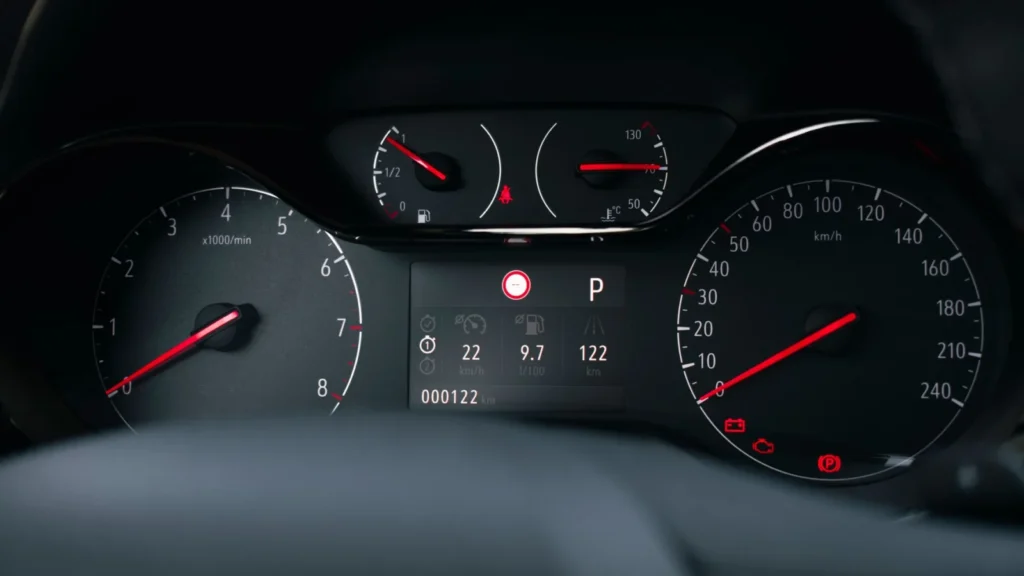
The ABS warning light appearing on your dashboard tends to cause more alarm than it strictly needs to, mostly because drivers understandably associate it with braking and safety. The reassuring part is that your normal brakes still work perfectly well with this light on; what you lose is the anti-lock function that helps maintain steering control during hard or emergency braking, which is still worth addressing properly rather than leaving indefinitely.
What the ABS light actually indicates
ABS, anti-lock braking system, prevents your wheels from locking up completely during hard braking, which helps you maintain steering control and generally shortens stopping distances on most surfaces compared with wheels that have locked and are simply sliding. When the system detects a fault, most commonly a failed wheel speed sensor, damaged wiring, or occasionally a fault within the ABS control module itself, it disables the system and illuminates the warning light as a safety precaution, since it would rather turn off an unreliable system than let it intervene incorrectly during an actual emergency stop.
Is it safe to drive with the ABS light on
Yes, in the sense that your regular brakes continue to function normally, and you can drive the car in ordinary conditions without an immediate emergency. However, without ABS assistance, hard braking on a wet, icy, or otherwise slippery surface carries a higher risk of wheel lock-up and reduced steering control exactly when you need it most, which is why this shouldn’t be treated as something to ignore long term, even though it’s not usually an immediate stop-the-car situation.
What a mechanic checks
- Wheel speed sensor readings at each corner, checking for a failed or inconsistent sensor
- Wiring and connectors for damage, corrosion, or a poor connection
- The condition of the toothed reluctor ring the sensor reads from
- ABS control module fault codes stored in the system
- Brake fluid level, since low fluid can sometimes trigger a combined brake and ABS warning
Common causes worth knowing about
A failed wheel speed sensor is the most common cause by a significant margin, often linked to a worn wheel bearing, road debris, or general age-related wear. Damaged wiring, sometimes from rodent damage or corrosion in an exposed area near the wheel, is another frequent cause. Less commonly, a fault within the ABS module itself or a low brake fluid level can also trigger this warning, which is part of why a proper diagnostic scan matters rather than assuming it’s always the sensor.
Why ABS matters most in the moments you least expect
Because ABS only actively intervenes during hard or emergency braking, a car with a faulty system can feel completely normal for weeks or months of ordinary driving, right up until the one moment it would have made a genuine difference to how well you kept control of the car. This is exactly why it is worth treating this warning with more urgency than its lack of everyday symptoms might suggest.
Modern stability control systems also rely on the same wheel speed data as ABS, meaning a fault here can quietly reduce your car’s overall safety net in more ways than the ABS light alone might suggest, which is another reason a broader diagnostic check, rather than a narrow ABS-only assumption, makes sense.
Getting this checked at home or work with a mobile mechanic avoids driving around for days with reduced safety margins while waiting for a garage slot to become free, which matters given how directly this system supports safe braking in an emergency.
Wet, leaf-covered autumn roads and icy winter mornings are exactly when ABS earns its keep most, which is part of why getting a fault addressed before the weather turns is worth prioritising rather than leaving it until spring.
Getting it checked properly
What a mechanic actually checks during an ABS diagnosis
Beyond reading the stored fault code, a proper assessment checks live wheel speed sensor data from each corner while the car is raised, comparing the signal from each wheel individually to identify exactly which sensor, or occasionally which wiring circuit, is behind the fault. The technician will also visually inspect the sensor’s mounting and wiring for physical damage or corrosion, since this exposed, low-mounted location is particularly vulnerable to road debris and winter grit, a genuinely common cause that has nothing to do with the sensor’s internal function failing.
How ABS faults compare with a simple low fluid warning
It’s worth distinguishing an ABS-specific fault from a combined brake warning triggered by low fluid, since these can sometimes appear together or be confused with each other depending on your car’s specific symbol design. Low fluid affects your regular braking directly and needs prompt attention regardless of ABS status, while a genuine ABS-only fault leaves regular braking fully functional, just without the anti-lock assistance during hard braking.
Why this fault sometimes appears after wheel or tyre work
A wheel speed sensor can occasionally be disturbed or its wiring stressed during routine tyre changes or wheel removal, particularly if a technician isn’t paying close attention to the sensor’s position and cable routing during the work. If your ABS light appeared shortly after any tyre or wheel related work, mentioning this timing to whoever diagnoses the fault is genuinely useful, since it points toward a specific, recent cause rather than a fault developing independently over time.
Why winter is the season this fault appears most often
Road salt and grit, combined with the repeated wetting and drying cycle winter driving involves, accelerates corrosion around sensor connectors considerably compared with drier conditions, which is a genuine contributing factor in why ABS faults linked to wiring and connections become noticeably more common through the colder months on cars regularly driven on gritted roads.
Frequently asked questions
Will an ABS fault affect my MOT? Yes, a stored ABS fault is checked during the MOT test and can result in a failure, so addressing it before your test date is worth prioritising if you suspect a fault is present.
Can I reset the ABS light myself without a proper repair? Clearing the code without fixing the underlying cause simply removes the warning temporarily, and the fault, along with the reduced safety margin it represents, remains present and will likely trigger the light again.
How this compares with the traction control and ESP lights
Because ABS, traction control, and stability control share the same underlying wheel speed sensor data on most modern cars, it’s genuinely common for more than one of these lights to appear together following a single sensor fault, rather than each light representing a completely separate, unrelated problem. If you’ve noticed several of these lights appearing at the same time, mentioning this pattern specifically helps a mechanic recognise the likely shared cause more quickly.
Why some ABS faults only appear at certain speeds
A wheel speed sensor giving an intermittent or degraded signal might produce a reading the system considers acceptable at low speed but flags as faulty once wheel rotation reaches a certain speed, meaning the warning light can appear specifically during motorway driving while seeming absent during slower, local trips. This pattern, if you’ve noticed it, is worth mentioning during diagnosis since it can help narrow down the specific type of sensor fault involved.
Why this fault is worth prioritising ahead of winter specifically
Given how directly ABS supports safe stopping on wet or icy roads, and how much more common these conditions become through a British winter, addressing a known ABS fault before the colder months arrive, rather than after the first icy morning has already tested the system, is a sensible piece of seasonal preparation worth prioritising if you’ve noticed this warning during the autumn.
Why this fault sometimes coincides with a squeaking or grinding brake noise
An ABS fault linked to a worn wheel bearing, rather than the sensor alone, can sometimes present alongside a grinding or growling noise from the affected wheel, distinct from a typical brake squeal, which is worth mentioning specifically if you’ve noticed any unusual noise alongside the ABS warning, since it points toward a potentially more involved repair than a simple sensor swap.
A final word on this warning specifically
Given how quietly this fault can sit in the background of normal, dry-weather driving without any obvious symptom, treating the warning itself as sufficient reason to book a check, rather than waiting for a noticeable driving difference, is the sensible approach given what this system exists to protect.
What to mention when booking an ABS check
Describing whether the light appeared suddenly or gradually, and whether it coincided with any specific event such as a pothole strike or recent tyre work, gives a mechanic useful context before the car is even raised for inspection.
Booking an Advanced Multi-System Diagnostic promptly once this light appears remains the most reliable way to restore full braking assistance.
A closing thought on this particular warning
Because ABS only proves its worth in the exact moments you most need it, treating this warning as worth addressing promptly, even though everyday driving feels unaffected, is the right instinct to trust here.
Book a proper check today and restore your full braking safety margin.
Why mobile diagnostics suit this particular fault well
Given that a car with an ABS fault remains fully driveable in normal conditions, having a mechanic visit your home or workplace to diagnose it avoids an unnecessary trip to a garage purely to find out what is wrong before any actual repair work begins.
A note on cars with combined ABS and traction control modules
On some vehicles a single shared control module handles both ABS and traction control functions, meaning a fault here can affect both systems simultaneously even though only one physical module has failed, which is worth understanding when a quote covers what sounds like two separate repairs.
A note on cars recently imported or converted
Vehicles imported from another market or converted between left and right hand drive occasionally show unusual ABS behaviour linked to how the system was originally configured, worth mentioning to your mechanic if this applies to your specific car history.
A note on the difference between a fault and a self-test failure
Occasionally a stored fault code relates to the self-test procedure itself failing under specific conditions, such as extreme cold, rather than the sensor or wiring genuinely being faulty, worth understanding since it can sometimes explain a warning that clears on its own once conditions change.
A note on how ABS interacts with hill start assist
Many cars pair ABS with hill start assist, which briefly holds the brakes on an incline to prevent rolling back, and a fault in one system can sometimes affect the other, worth mentioning if you have noticed hill start assist behaving unusually alongside the ABS warning.
A note on booking this alongside your next MOT
If your MOT is due soon and you have noticed an ABS warning, having it checked and, where needed, repaired before the test avoids a guaranteed failure and the inconvenience of a second visit shortly afterward.
Take that step today rather than putting it off another week.
Your safety margin on the road is worth this small amount of effort.
A properly diagnosed and repaired braking system protects everyone on the road, not just you.
Book the check today.
A note on keeping a simple record of any ABS work carried out
Noting which sensor or component was replaced, and when, gives useful reference for any future warning, helping distinguish a genuinely new fault from a recurrence at the same location during any later conversation with a mechanic.
Because ABS interacts closely with traction control and stability control on most modern cars, a fault here can affect more than just anti-lock braking alone, which is why a broader diagnostic check makes sense rather than a narrow, single-system test. SSK Mechanics offers an Advanced Multi-System Diagnostic to properly identify what’s triggering your ABS light. See GOV.UK’s MOT guidance for how this is assessed at test time, then book with SSK Mechanics to find out.
Source: GOV.UK MOT guidance
Frequently asked questions
Will my normal brakes still work with the ABS light on?
Yes, standard braking continues to work normally, you simply lose the anti-lock function that helps during hard or emergency braking.
What is the most common cause of an ABS warning light?
A failed or faulty wheel speed sensor is the most common cause, often linked to wear, road debris, or a worn wheel bearing nearby.
Will an ABS fault affect my MOT?
Yes, on vehicles fitted with ABS as standard, a fault causing the light to stay on is a checked item and can result in an MOT failure.
Does the ABS light affect traction control too?
Often yes, since these systems typically share the same wheel speed sensor data, a fault can disable more than just ABS alone.