

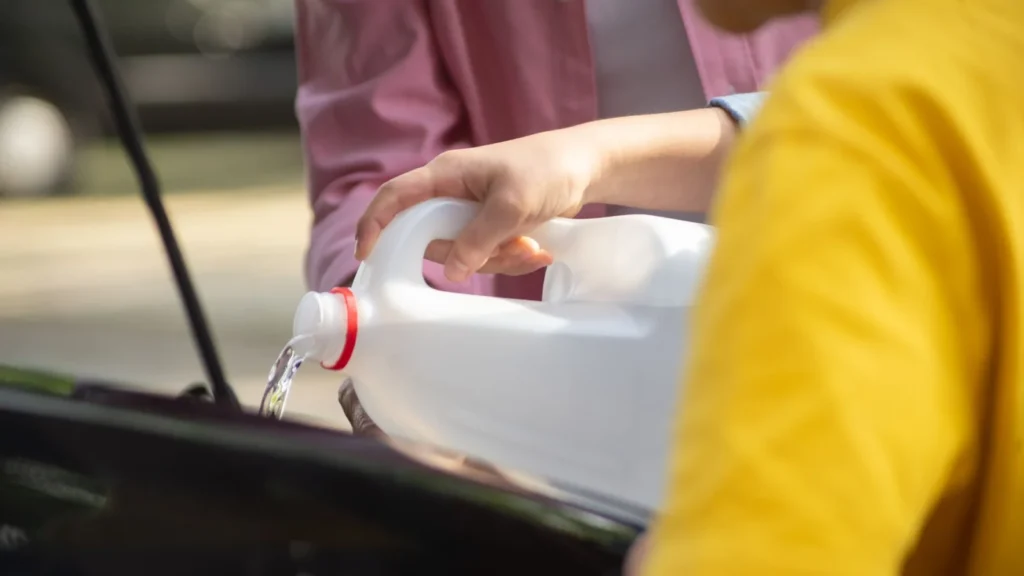
A puddle of green, pink, orange, or blue fluid under the middle or front of the car is almost always coolant, and a failing water pump or a perished hose are two of the most common sources. Coolant leaks tend to be thinner and lighter coloured than oil, and often have a faintly sweet smell, which is a useful way to tell the two apart before you’ve even looked underneath.
What causes a coolant leak under the car
The likely sources, working from most to least common in our experience:
- A failing water pump, where the internal seal starts to weep coolant, usually visible as staining or a drip directly below the pump pulley at the front of the engine
- A perished or split coolant hose, which becomes more likely as rubber hardens and cracks with age, particularly around the joints where hoses clamp onto other components
- A cracked radiator, whether from a corroded core or a split plastic end tank, which is a fairly common failure point on radiators over eight or so years old
- A failing thermostat housing, often made of plastic on newer cars, which can crack over time from repeated heat cycling and let coolant weep out around the seal
If you’re topping the coolant up more than once, that’s a sign it’s worth tracking down properly rather than continuing to top it up indefinitely, since the leak rate typically only goes one direction.
How urgent is it
Coolant does two jobs, regulating engine temperature and protecting against corrosion and freezing, so running low isn’t something to shrug off. An engine that overheats because coolant’s been lost can suffer expensive damage within minutes, including a warped head or blown head gasket. Keep a close eye on the temperature gauge if you know there’s a leak, and don’t set off on a longer journey without checking the level first.
The RAC’s drive advice on coolant leaks covers the broader signs of a cooling system fault and is a useful reference if you’re trying to gauge how serious yours might be.
What a mechanic actually checks
A pressure test on the cooling system is the standard way to find where a leak is coming from, pressurising the system to reveal drips or seepage that might not show with the engine simply idling. Water pump condition gets checked for play in the bearing and any weeping around the seal, hoses are inspected along their full length for softness, cracking, or bulging, and the radiator gets checked for staining around the seams and end tanks.
Where a water pump is confirmed as the source, it’s common practice to replace the thermostat at the same time, since it’s usually located close by and sharing the labour to do both together is more sensible than paying for access twice down the line.
Book now or wait
A very slow, barely noticeable weep with a stable coolant level gives you some room to book a slot in the near future. A visible puddle, a coolant level that keeps dropping, or a temperature gauge that’s creeping upward needs attention promptly, before it turns into an overheating breakdown.
What it typically costs to fix
A perished coolant hose or a loose jubilee clip is the cheapest fix, often £40-100. A leaking radiator typically costs £150-300 to replace. A failing water pump, which often leaks from the weep hole underneath, runs £180-350 including the coolant refill. The radiator expansion tank or its cap can also be the culprit and is usually a £30-80 fix once identified.
What happens if you leave it
Coolant leaks rarely stay small. As the leak point wears further, the rate of loss increases, and a car that’s low on coolant is at real risk of overheating with very little warning, particularly on a warm day or a long motorway run. Topping up coolant repeatedly without finding the source just delays the point where you’re stuck on the hard shoulder.
What you can check yourself first
Check the coolant colour, whether it’s pink, green, blue or orange, and where roughly it’s pooling under the car, since a leak nearer the front usually points to the radiator while one further back can point to a hose or the water pump. Check the coolant level in the expansion tank regularly in the meantime, and never remove the cap while the engine is hot.
It also helps to note whether the leak only appears after a longer drive or is there even after the car has been parked overnight, since a leak that only shows up once the system is under pressure and hot can be harder to spot with the engine cold, and that detail is genuinely useful for a mechanic doing a pressure test.
Why water pumps fail with age
A water pump uses an impeller, spun by the auxiliary belt or timing belt depending on the design, to keep coolant circulating around the engine and through the radiator. The shaft that impeller sits on passes through a seal designed to keep coolant contained on one side while allowing the shaft to spin freely. Over years of use, that seal wears, and once it does, coolant begins to weep past it, usually visible as staining or a drip directly below the pump, often with a small weep hole specifically designed to direct any leak away from the bearing and make it visible externally rather than letting it contaminate the bearing grease. A failing water pump bearing can also produce a distinct growling or grinding noise from the front of the engine, which is worth mentioning alongside any visible leak, since it changes how urgently the pump needs attention.
Why coolant leaks are sometimes harder to spot than oil leaks
Modern coolant is thinner than engine oil and evaporates more readily, which means a coolant leak can sometimes disappear from view faster than an oil leak would, leaving less obvious staining behind, especially on a warm day or after the car’s been driven for a while and the leaking coolant has had a chance to evaporate off a hot surface. This is part of why a pressure test matters so much for tracking down a coolant leak specifically, since it reveals leaks that simply aren’t producing a visible puddle by the time anyone gets a chance to look underneath the car.
The relationship between coolant leaks and the expansion tank cap
The coolant system operates under pressure when the engine’s running and hot, and the expansion tank cap is designed to maintain that pressure up to a specific rating, releasing it safely if it exceeds a set threshold. A cap that’s lost its seal, whether from age or a small crack in the plastic, can’t maintain proper system pressure, which lowers the boiling point of the coolant and can cause it to boil and escape even under conditions that wouldn’t trouble a properly sealed system. This is a genuinely cheap and easy thing to check and replace, and it’s worth ruling out before assuming a more expensive component like the radiator or water pump is definitely at fault.
Why replacing the thermostat alongside the water pump makes sense
The thermostat, which regulates coolant flow to keep the engine at its optimal operating temperature, sits in a similar area to the water pump on most engines and is exposed to the same heat cycling over the years. While a failing thermostat doesn’t typically cause a leak itself, replacing it at the same time as a water pump avoids paying for the same labour and access twice, since much of the time involved in either job is getting to that part of the engine in the first place rather than the replacement itself.
What to expect during a mobile check
A mobile coolant leak diagnosis uses a pressure tester connected to the expansion tank to bring the system up to its normal operating pressure without needing the engine running, which makes even small leaks visible as drips or seepage that wouldn’t show under normal idling conditions. Combined with a visual inspection of hoses, the radiator, and the water pump area, this approach reliably identifies the source without needing specialist workshop equipment, meaning most coolant leaks can be diagnosed and often repaired at your home or workplace.
What you can check yourself before booking
Check the coolant colour and note where under the car the puddle or staining is concentrated, since a leak nearer the front of the engine bay often points toward the radiator or water pump, while a leak further back can point toward a hose or the heater matrix connections. Check your coolant level regularly in the meantime, and listen for any new grinding or growling noise from the front of the engine that might suggest the water pump bearing itself is wearing, not just the seal.
Why some coolant leaks only appear under pressure
A cooling system reaches its full operating pressure only once the engine has been running for a while and has warmed through properly, which means a small leak that only becomes apparent under that pressure can be completely invisible during a cold, static inspection. This is precisely why simply looking under a cold engine and seeing nothing does not rule out a leak, and it is also why a pressure test, which artificially brings the system up to that same pressure without needing the engine running, catches leaks that a visual check alone would miss entirely.
Why a slow coolant leak can be more dangerous than a fast one
Counterintuitively, a very slow, gradual coolant leak can sometimes be riskier than a faster, more obvious one, precisely because it is easier to miss until the level has dropped enough to genuinely affect cooling performance. A fast leak tends to announce itself quickly with a visible puddle or a rapidly rising temperature gauge, prompting action sooner. A slow leak might only lose a small amount over several weeks, easy to top up without really registering that it keeps needing it, until eventually the loss catches up and the car overheats with comparatively little additional warning.
If you have a habit of checking your coolant level as part of a broader monthly routine alongside oil, tyre pressures and screen wash, that habit alone is often what catches a slow leak early, well before it becomes a genuine overheating risk, and it costs nothing beyond a couple of minutes with the bonnet open.
Keep in mind too that mixing coolant colours from different top-ups, while not usually catastrophic on its own, makes it harder for a mechanic to judge coolant condition and age at a glance, so sticking to one correct type consistently is worth the small extra care involved.
A quick reminder that coolant is toxic to pets and wildlife due to its sweet taste attracting them, so any driveway leak is worth cleaning up promptly and keeping animals away from until it has been addressed properly.
Getting a coolant leak sorted properly the first time, rather than repeatedly topping up, is almost always the cheaper option in the long run once you account for the risk of a full overheating breakdown.
Booking a check as soon as you notice a pattern of repeated topping up, rather than waiting for a dramatic failure, is consistently the more cost effective and less stressful route for most owners.
A little patience during diagnosis pays off here too, since correctly identifying the exact source the first time avoids paying for a repair that does not fully resolve the underlying leak.
Getting this right the first time saves a repeat visit down the line.
SSK Mechanics carries out water pump and thermostat replacement at your home or workplace across Bradford and West Yorkshire, pressure testing the cooling system first to confirm the exact source before any parts are ordered or fitted.
SSK Mechanics carries out water pump and thermostat replacement at your home or workplace across Bradford and West Yorkshire, tracing the leak first so the right part gets fixed the first time. Get an instant quote and we’ll get it sorted.
Frequently asked questions
How can I tell if the leak under my car is coolant?
Coolant is typically thin and coloured (green, pink, orange, or blue depending on the type) and often has a faintly sweet smell, which sets it apart from the darker, thicker look of an oil leak.
Can I just keep topping up the coolant instead of fixing the leak?
It's a temporary measure at best. A leak rarely seals itself, and letting coolant run low between top ups risks overheating and serious engine damage, so it's worth getting the actual leak found and fixed.
Is a water pump leak expensive to fix?
Costs vary by vehicle, and SSK Mechanics doesn't quote fixed prices here, but you can get an instant quote through the website once the fault's confirmed.