

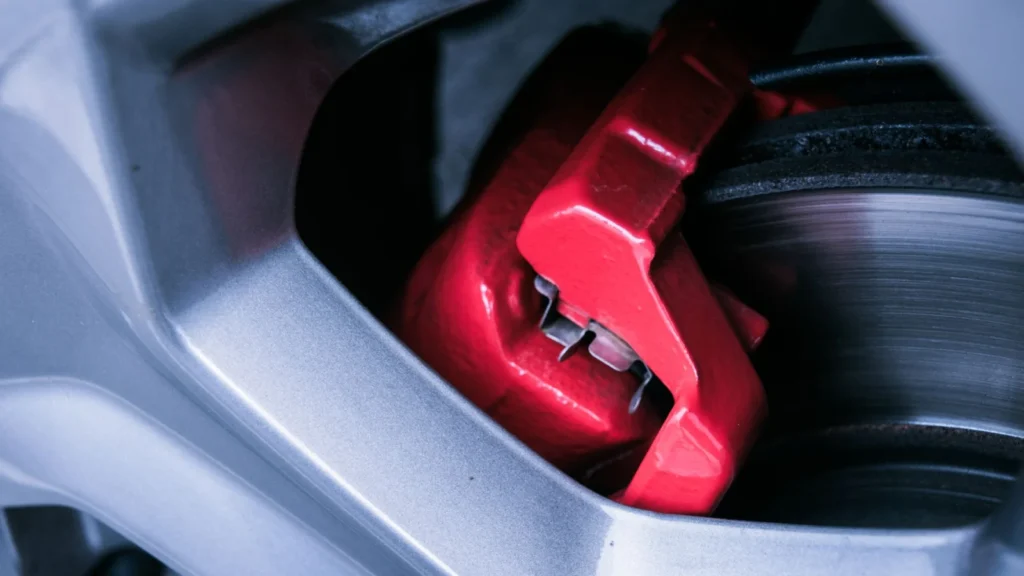
A sharp, acrid smell from the wheel area after driving usually means the brake pads are overheating, either from riding the brakes too much on a long descent, or because something’s causing constant, low level contact between the pad and disc even when you’re not pressing the pedal. The second one is the version worth paying attention to, since it means the brakes aren’t fully releasing.
What causes brakes to smell burning
Working through the likely causes:
- Worn brake pads down to or near the wear indicator, which can generate excess heat and, in some cases, metal on metal contact if left too long
- A sticking brake caliper, where the piston or slider pins have seized slightly and aren’t releasing fully, so the pad keeps a light contact with the disc even off the brake pedal
- A seized handbrake cable or mechanism, holding light pressure on the rear pads or shoes without you realising
- Heavy or prolonged braking, such as coming down a long hill, which can overheat pads temporarily without indicating a fault, though it should clear once you’ve stopped and let things cool
If the smell is paired with the car pulling slightly to one side, a wheel that feels noticeably hotter than the others to the touch after driving, or reduced brake feel, that points more toward a sticking caliper than simple wear.
How urgent is it
This is a genuine safety concern and shouldn’t be left to sort itself out. Overheated brakes lose effectiveness, known as brake fade, right when you might need them most, and a caliper that’s dragging constantly will wear the pad and disc unevenly and can eventually damage the caliper further. Worn pads that go past the wear indicator risk damaging the disc too, turning a straightforward pad replacement into a more expensive disc and pad job.
IAM RoadSmart’s braking safety advice is worth a read if you want a clearer sense of how brake fade develops and why it matters, particularly if you drive regularly in hilly parts of West Yorkshire.
What a mechanic actually checks
Each wheel gets checked individually, since a smell coming from one corner rather than all four points more clearly at a sticking caliper than general pad wear. Pad thickness is measured against the minimum, and the disc surface is checked for scoring, heat discolouration (often a blueish tint), or uneven wear that suggests the caliper hasn’t been releasing evenly.
Caliper sliders and pistons get checked for free movement, and the handbrake mechanism gets inspected if the smell is coming from a rear wheel specifically. Where a caliper is confirmed as sticking, it’s usually more sensible to replace it alongside the pads rather than fit new pads to a caliper that’s still going to drag and wear them down again quickly.
Book now or wait
If the smell only happened once, after a long downhill stretch, and hasn’t come back, it was probably just heat and nothing more. If it’s happening regularly, coming from one wheel specifically, or paired with reduced braking feel, book it in straight away. This is not one to leave and see how it goes.
What it typically costs to fix
A sticking brake caliper is the most common cause and typically costs £120-220 per side to replace, including the pads. A handbrake that isn’t releasing fully is often a cheaper adjustment, £40-90. If new, overly aggressive braking has simply overheated the pads temporarily, there may be no repair needed at all, just time for everything to cool down and settle in properly.
What happens if you leave it
A caliper that’s sticking will keep the pad in light contact with the disc constantly, which wears both parts down far faster than normal and can eventually warp the disc from the sustained heat. Left unchecked, that turns a caliper repair into a caliper and disc and pad replacement, and in rare cases sustained overheating can affect the brake fluid itself, reducing braking performance when you need it most.
What you can check yourself first
After a short drive, carefully check whether one wheel feels noticeably hotter than the others, which points to a dragging caliper on that corner. Check that the handbrake releases fully when you lower it, since a handbrake that’s not disengaging properly is a common and simple cause. If the smell only appeared after a long descent or heavy braking, it may just need time to cool rather than pointing to a fault.
It’s worth noting whether the smell fades after the car has been parked for ten or fifteen minutes, since that would suggest the brakes have simply overheated and are cooling normally. A smell that persists well after stopping, or that gets stronger the next time you drive, is the pattern that points more toward a genuine caliper or handbrake fault.
How brake fade actually happens
Brake pads work by converting the car’s kinetic energy into heat through friction against the disc, and that heat has to go somewhere. Under normal driving, pads and discs are designed to handle this heat and dissipate it quickly between applications. But sustained or repeated hard braking, such as a long descent without using engine braking to help, or a caliper that’s dragging constantly and never gets a chance to cool, can push temperatures beyond what the pad material is designed to handle. Once that happens, the friction material can partially glaze or even begin to break down chemically, reducing the actual grip it provides against the disc, which is what’s meant by brake fade, the pedal still moves and the brakes still technically work, but with noticeably less stopping power than usual.
Why a dragging caliper is worse than occasional hard braking
Heavy braking on a single long hill, while it can produce a temporary burning smell and even some fade, usually resolves itself once you’re back on level ground and the brakes get a chance to cool properly. A caliper that’s constantly dragging is a different situation entirely, since there’s no cooling-off period, the pad is in light contact with the disc essentially all the time the car is moving, which means heat keeps building even during what should be normal, gentle driving. This is why a smell that persists well beyond a single hill or heavy braking event points more strongly toward a genuine caliper fault than simple overheating from driving conditions.
The relationship between a seized caliper and MOT failure
Uneven braking force between the two sides of an axle is specifically checked during an MOT using a roller brake tester, which measures how much force each wheel is generating independently. A caliper that’s sticking, whether dragging constantly or not applying full force when needed, will typically show up as an imbalance between the two sides, which is a straightforward MOT failure. Getting this addressed before your test, rather than at the test centre, avoids the inconvenience of a failed test and having to arrange a second visit.
Handbrake mechanisms and rear caliper design
On many cars, the rear calipers do double duty, providing both the normal hydraulic braking force and housing the mechanism the handbrake uses to hold the car stationary when parked. This dual function means there are more moving parts that can seize or corrode compared to a simple hydraulic-only caliper, and it’s part of why rear brake smells can sometimes have a slightly different character or pattern to front brake smells, tied more closely to how recently and how firmly the handbrake has been used.
What to expect during a mobile check
A mobile brake smell diagnosis starts with a road test where safe to do so, applying the brakes at a controlled, safe speed to feel and listen for anything unusual. Each wheel gets checked individually afterward for temperature differences, and pad thickness and disc condition get assessed visually and with measuring tools. Caliper piston and slider movement gets tested by hand once the wheel is removed, giving a clear answer on whether the caliper itself needs replacing or whether the issue is more straightforward, like an overdue pad change or a handbrake that needs adjusting.
What you can check yourself before booking
After a short, careful drive, check each wheel by feel for any that seem noticeably hotter than the others, being cautious not to touch anything too soon after braking. Check that your handbrake fully releases when you lower it, watching or listening for any resistance. Note whether the smell has appeared after a specific event, a long downhill stretch, heavy traffic braking, or seemingly out of nowhere during normal driving, since that context helps a mechanic prioritise where to look first.
Why brake fluid boiling point matters here
Brake fluid has a specified boiling point, and as it absorbs moisture from the air over its lifespan even in a sealed system, that boiling point gradually drops. Under normal driving this rarely matters, but during sustained hard braking or a caliper that is generating excess heat constantly, old, moisture-laden fluid can reach its lowered boiling point and produce small vapour bubbles within the brake lines. Because bubbles compress unlike liquid fluid, this can make the brake pedal feel spongy or reduce stopping power right at the moment heat is already causing other problems, compounding a caliper issue with a second, related fluid issue that a simple caliper replacement alone will not fully resolve if the fluid itself is significantly overdue for changing.
Why brake dust colour is worth noticing
The dust that builds up on your alloy wheels from normal braking is usually a dull grey or black, but a caliper generating excessive, sustained heat can sometimes produce a slightly different residue, occasionally with a bluish tinge on the disc itself from heat discolouration. If you wash your wheels regularly and notice an unusual amount of dust building up on one wheel specifically compared to the others, or a change in the disc colour visible through the wheel spokes, that is worth mentioning alongside any smell when you book a check.
Brake pad compound also affects how a smell presents itself. Some higher performance pad materials naturally run hotter and produce more odour under hard use than standard OE-spec pads, which is worth bearing in mind if you have had aftermarket pads fitted recently and are noticing a stronger smell than you are used to, even without any underlying fault.
It is also worth checking your tyre pressures and general tyre condition when investigating a brake smell, since a car pulling slightly under braking due to uneven tyres can sometimes be mistaken for a caliper issue, and ruling out the simpler explanation first can save an unnecessary callout.
Finally, if you tow regularly or carry consistently heavy loads, your brakes are working harder than average on every stop, which naturally shortens pad and disc life and makes a burning smell somewhat more likely to appear sooner than it would on a car used mostly for light, unladen driving.
Keep your brake fluid change on schedule as part of routine servicing, since this alone prevents a meaningful share of the caliper corrosion issues that lead to the sticking and dragging covered throughout this guide.
A brake smell noticed for the first time after a long motorway drive followed by heavy braking approaching a junction is often simply heat build-up rather than a fault, and worth a moments pause to assess before assuming the worst.
A quick, careful sniff test is not something to be embarrassed about doing yourself before booking a mechanic, it genuinely helps narrow things down.
SSK Mechanics carries out front and rear brake work at your home or workplace across Bradford and West Yorkshire, checking calipers, pads and discs together so the actual cause of the smell gets addressed rather than just the symptom that’s currently most obvious.
SSK Mechanics carries out front brake pads replacement at your home or workplace across Bradford and West Yorkshire, and will check calipers and discs at the same time to make sure the actual cause gets sorted, not just the symptom. Get an instant quote and we’ll come to you.
Frequently asked questions
Is a burning smell from my brakes dangerous?
It can be. It often means the pads are overheating, either from wear or a caliper that isn't releasing properly, and it can reduce braking effectiveness. It's worth getting checked rather than ignored.
Why does only one wheel smell hot after driving?
This usually points to a sticking caliper on that specific wheel, causing constant light contact between the pad and disc even when you're not braking.
How do I know if it's just brake fade from a long descent?
If the smell appeared after heavy or prolonged braking, such as a steep hill, and clears once the car has cooled and hasn't returned, it was likely just temporary heat rather than a fault.