

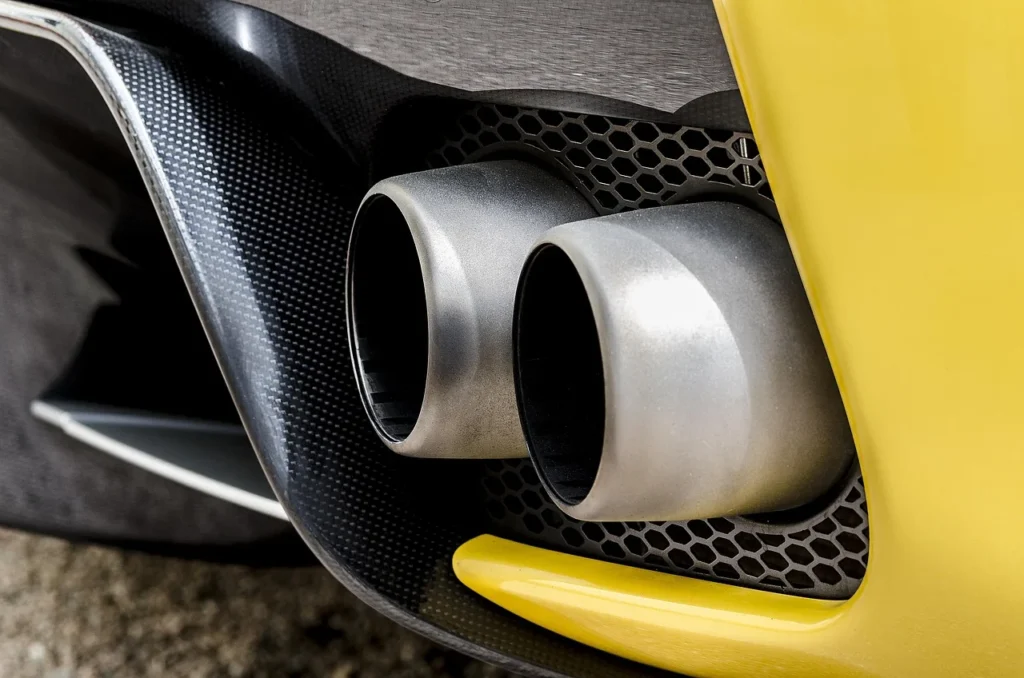
Emissions testing is one of the less visible parts of the MOT, and it catches plenty of drivers off guard because the fault causing a fail often isn’t something you’d notice from behind the wheel. A car can drive perfectly normally and still fail on emissions, since the reading comes from equipment measuring exactly what’s coming out of the tailpipe rather than anything a driver would feel or hear.
Understanding what’s actually being measured, and what tends to cause a fail, gives you a much better shot at avoiding this category altogether, particularly on diesel cars where emissions-related fails have become considerably more common as regulations have tightened.
What’s measured on a petrol car
Petrol cars are tested for carbon monoxide and hydrocarbon levels, measured with the engine at idle and again at a higher, fast idle speed. The exact limits depend on the age of the car and which Euro emissions standard it was built to meet, with newer cars generally held to stricter limits than older ones. A properly running engine with a healthy catalytic converter and a clean air filter will typically pass this comfortably, which is why a fail on a petrol car often points to something specific having gone wrong rather than general age or wear.
Common causes of a petrol emissions fail include a failing catalytic converter, a faulty oxygen sensor giving the engine management system bad information, a dirty or clogged air filter, or an engine running rich due to a fuel system fault. Any of these can push carbon monoxide or hydrocarbon readings above the legal limit even if the car otherwise drives and sounds normal.
What’s measured on a diesel car
Diesel cars are assessed differently, using a smoke opacity test that measures how much light is blocked by the exhaust smoke as the engine is revved. This is a proxy for how much particulate matter the engine is producing. Diesel cars registered from 2014 onwards are almost always fitted with a diesel particulate filter, and the emissions limits applied to these vehicles are considerably stricter than for older diesels without one fitted, since the DPF is expected to be doing its job of trapping particulates before they leave the exhaust.
A DPF that’s been removed, has failed, or is significantly blocked will almost always cause a diesel car to fail the smoke test, since the filter’s entire purpose is reducing exactly what the test is measuring. This has become one of the more common and more expensive emissions-related fail points on diesel cars, particularly those used mostly for short journeys that don’t get the engine hot enough for long enough to allow the DPF to regenerate naturally.
Why the DPF causes so many diesel emissions fails
Diesel particulate filters are designed to burn off trapped soot periodically through a process called regeneration, which needs sustained higher engine speeds and temperatures to happen properly. Cars used mainly for short, low-speed urban trips, exactly the kind of driving common around Bradford’s residential areas, often don’t get the chance to complete a full regeneration cycle, which allows the filter to gradually clog over time. A blocked DPF doesn’t just risk an MOT fail, it can also trigger a warning light, reduce engine performance, and in more serious cases lead to the filter needing replacement rather than simply cleaning.
- Regular longer drives at motorway speed help the DPF regenerate naturally
- A dashboard DPF warning light should be acted on quickly rather than ignored
- A forced regeneration or deep clean can often resolve a partially blocked filter
- Removing a DPF entirely is illegal and will fail the MOT outright
- Using the correct oil specification matters, since the wrong oil can increase ash buildup in the filter
Other faults that can affect an emissions reading
Beyond the exhaust system itself, general engine health plays a role in emissions performance. An engine burning oil, running with worn piston rings, or with a faulty sensor feeding incorrect data to the engine management system can all push readings higher than they should be, even on a well-maintained exhaust. This is part of why an emissions fail is worth treating as a signal to look at the wider running condition of the engine rather than assuming the fix is always going to be exhaust-related.
How a diagnostic check helps before the test
A diagnostic scan reads fault codes already stored by the engine management system, which can flag a developing issue with the catalytic converter, an oxygen sensor, or the DPF before it shows up as a full emissions fail on test day. Combined with a physical inspection of the exhaust system for leaks, damage or an obviously blocked filter, this gives a much clearer picture of whether your car is likely to pass the emissions portion of the test before you book it in officially.
What a DPF deep clean actually involves
A DPF deep clean is a process designed to remove built-up soot and ash from a partially blocked filter without needing full replacement, which is considerably more expensive. It’s typically carried out using specialist equipment and chemicals to break down the trapped particulate matter, restoring the filter’s ability to trap and burn off soot properly. This is often the difference between a straightforward, moderate-cost fix and a much larger bill for a full DPF replacement, particularly if the problem is caught before the filter has become completely blocked. SSK Mechanics offers a DPF deep clean specifically aimed at diesel drivers dealing with reduced performance, warning lights, or the early signs of an emissions issue.
Electric and hybrid vehicles
Fully electric vehicles have no exhaust system at all and are exempt from the emissions portion of the MOT entirely, though every other relevant part of the test still applies. Hybrid vehicles with a petrol or diesel engine still go through emissions testing on the combustion side, though the specific process can differ slightly depending on how the hybrid system manages engine operation during the test.
How emissions standards have tightened over time
The Euro emissions standards, which set the framework testers work from, have become progressively stricter with each new iteration, reflecting growing regulatory pressure to reduce vehicle pollution in towns and cities. A car built to an earlier Euro standard is tested against the limits that applied when it was manufactured, not against the current, tighter standard, which is why two cars of noticeably different ages can be held to genuinely different emissions thresholds during the same test. This matters because owners of older vehicles sometimes assume the test has gotten harder to pass over time, when in reality their car is still being measured against the standard it was originally built and certified to meet.
That said, general wear and reduced maintenance on an older engine can still push emissions higher over time even against its own original standard, which is part of why emissions fails do become somewhat more common as a car ages, independent of any change in the regulatory limits themselves.
The environmental and health reasoning behind the test
Vehicle emissions are a significant contributor to poor air quality in towns and cities, and particulate matter in particular has been linked to a range of respiratory health issues, especially in built-up urban areas with heavy traffic. The emissions portion of the MOT exists specifically to catch vehicles that are polluting well beyond what’s expected for their type and age, removing or requiring the repair of the worst offenders from the road. Understanding this context helps explain why the limits are taken seriously and enforced strictly, rather than being treated as a minor bureaucratic hurdle alongside the rest of the test.
What happens after an emissions fail
An emissions fail is treated the same as any other MOT fail in terms of process: the car cannot legally be driven except to a pre-booked repair or retest, and the specific fault needs addressing before a retest can be passed. Because the underlying cause can range from a simple, cheap fix like a dirty air filter to something considerably more involved like a failed catalytic converter or a badly blocked DPF, it’s worth getting a proper diagnosis of the actual cause rather than guessing, since replacing the wrong component won’t fix an emissions reading that’s actually being caused by something else entirely.
Driving habits that help keep emissions in check
Beyond mechanical maintenance, how a car is driven day to day genuinely affects emissions performance over time. Diesel cars in particular benefit from occasional longer runs at sustained higher speed, which allows the DPF to regenerate properly rather than gradually clogging from a diet of short, low-speed urban trips. Letting the engine warm up properly before demanding heavy acceleration, and avoiding excessive short journeys where possible, both help keep the whole exhaust and emissions system working as designed rather than accumulating the kind of gradual buildup that eventually shows up as a test failure.
Avoiding an emissions fail
Keeping up with regular servicing, using the correct fuel and oil specification, and giving a diesel car occasional longer drives to allow proper DPF regeneration are the most effective ways to avoid an emissions-related fail. A warning light or a noticeable drop in performance is worth investigating promptly rather than waiting for the MOT to confirm there’s a problem, since catching an emissions issue early is almost always cheaper and simpler than dealing with it once it’s progressed to the point of an outright fail. You can find further detail on how emissions are assessed during the test in gov.uk’s guide to MOT checks.
Why emissions fails are worth taking seriously beyond the test itself
A car failing its emissions test isn’t only a legal or financial issue, it’s also a genuine sign the engine isn’t running as cleanly or efficiently as it should be. Poor combustion, a struggling catalytic converter, or a blocked DPF don’t just affect the tailpipe reading, they typically come with reduced fuel economy and reduced performance too, meaning the same underlying fault is quietly costing money at the pump on every single journey, not just at MOT time. Treating an emissions fail as a prompt to properly investigate and fix the root cause, rather than finding the cheapest way to scrape a pass, tends to pay for itself through better day to day running as well as a cleaner test result.
How the smoke opacity test is actually carried out
For a diesel car, the tester revs the engine to just below its governed maximum speed three times in succession, with the smoke meter positioned near the tailpipe measuring how much light is blocked by the exhaust gas each time. The readings are then averaged, and that average is compared against the specific limit for the car’s Euro emissions standard, with cars fitted with a DPF as standard held to a considerably tighter figure than older diesels without one. Since May 2018, any visible smoke of any colour during this test results in an automatic fail regardless of the numerical reading, a specific change introduced to catch DPFs that had been removed or were failing badly enough to be obvious without needing the meter’s exact figure.
Petrol cars go through a comparable but different process, with the tester taking readings at idle and again at a fast idle speed of around 2,500 to 3,000rpm, checking carbon monoxide and hydrocarbon levels against limits set by the car’s age and emissions standard. Both processes take only a couple of minutes at the test centre, but they’re measuring genuinely different things given how differently petrol and diesel engines produce and manage their exhaust emissions.
Getting ahead of it before your next test
If your car is due an MOT and you’re at all concerned about the emissions portion, particularly on an older diesel or a car that’s done a lot of short urban journeys, it’s worth having the exhaust system and DPF looked at properly beforehand rather than waiting to find out on the day. A DPF deep clean, combined with a diagnostic check to rule out other contributing faults, is a proactive way to head off one of the more expensive and less predictable categories of MOT fail, and it’s considerably less stressful than discovering the problem cold at the test centre with the clock already running on your current certificate.
Source: gov.uk's guide to MOT checks
Frequently asked questions
What emissions limit does a petrol car need to meet?
Petrol cars are tested for carbon monoxide and hydrocarbon levels at idle and at a higher engine speed, with limits that vary depending on the age and Euro emissions standard of the vehicle.
What emissions limit does a diesel car need to meet?
Diesel cars are tested for smoke opacity, essentially how much light is blocked by the exhaust smoke, with stricter limits applied to newer vehicles fitted with a diesel particulate filter.
Can a fault elsewhere in the car cause an emissions fail?
Yes, issues like a failing catalytic converter, a blocked or removed DPF, a dirty air filter, or an engine burning oil can all push emissions readings over the legal limit.
Do electric cars go through emissions testing?
No, fully electric vehicles have no exhaust and are exempt from the emissions part of the test entirely, though other elements of the MOT still apply.
How can I check emissions before booking my MOT?
A pre-MOT check or diagnostic scan can flag issues likely to cause an emissions fail, such as a fault code linked to the catalytic converter or DPF, before you get to the test centre.