

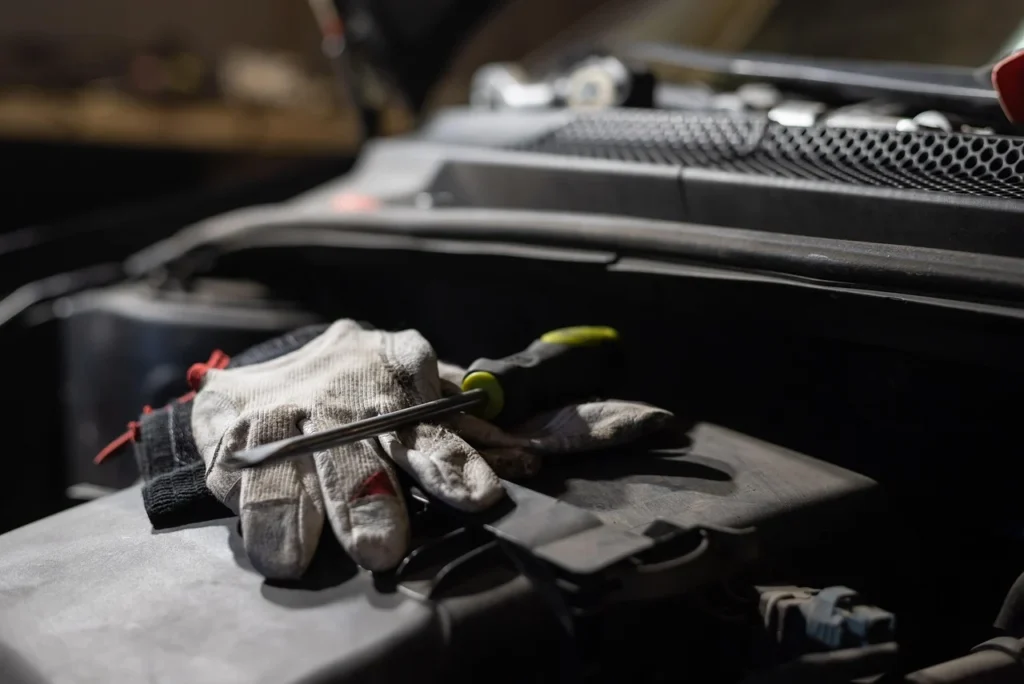
A clunk or thud from under the bonnet when you accelerate hard, shift gears, or come to a stop is one of those noises that’s easy to dismiss until it happens often enough to become genuinely annoying. Worn engine mounts are a common cause, and while they’re rarely a dramatic safety emergency on their own, ignoring them lets the problem cause knock-on wear elsewhere that costs more to fix later.
What engine mounts actually do
Engine mounts hold the engine and gearbox securely in place within the engine bay while absorbing vibration and movement, both from normal engine operation and from the torque generated every time you accelerate or change gear. Most cars use several mounts working together, and modern mounts often contain hydraulic fluid or specifically engineered rubber compounds designed to control vibration far more precisely than a simple solid rubber block would.
When a mount wears out, it loses its ability to control that movement properly, allowing the engine to shift more than it should under load. That extra movement is what produces the clunk, and it also puts additional strain on nearby components, from exhaust mounts and brackets to coolant hoses and wiring, that weren’t designed to absorb that extra motion themselves.
Signs of a worn engine mount
- A clunk or thud on acceleration, deceleration, or gear changes
- Increased vibration felt through the cabin, particularly at idle
- Visible movement of the engine when revved with the bonnet open, checked safely by a mechanic
- Cracked, split, or visibly sagging rubber on the mount itself
- Rattling noises that seem to come from deep within the engine bay
Typical cost breakdown
A single engine mount replacement, supplied and fitted, typically costs somewhere between £100 and £220 depending on the vehicle and which mount is affected, since some sit in easily accessible positions while others require more disassembly or specialist support equipment to safely take the engine’s weight during the job. If multiple mounts need replacing at once, which is common since they generally wear at a similar rate, the combined job often runs from around £250 up to £450, reflecting the shared labour of safely supporting the engine throughout.
What happens if you leave it
A worn mount left in place allows increasing amounts of engine movement over time, and that movement gradually stresses everything connected to the engine that expects it to stay relatively still. Exhaust systems, coolant and fuel lines, and wiring looms can all suffer premature wear or damage from the extra flexing, turning what started as an inexpensive mount replacement into a repair involving several additional components if left long enough. In more severe cases, a completely failed mount can allow the engine to shift enough to affect drivetrain alignment or even contact other components under hard acceleration.
Choosing quality mounts over the cheapest option
Engine mounts vary in build quality between suppliers, and while a budget mount will control the engine adequately when new, some cheaper options degrade noticeably faster than a quality original equipment or reputable branded replacement, particularly the rubber compound used in the mount itself. Given how relatively affordable this repair already is compared with many others, opting for a proven quality part rather than the absolute cheapest option available tends to be worthwhile, since it avoids repeating the job again within a year or two.
It is also worth having a mechanic check for any fluid contamination around the mount during inspection, since an oil or coolant leak dripping onto a rubber mount can degrade it considerably faster than normal wear alone, meaning the real underlying issue is a separate leak that also needs addressing to stop the new mount deteriorating in the same way.
A simple way to notice early mount wear yourself is placing the car in gear with the handbrake firmly applied and gently, carefully revving slightly while watching the engine, though this check is best left to a mechanic who can do it safely and interpret what they see accurately.
Is it safe to keep driving
At an early stage, with just an occasional clunk, it’s not typically an immediate safety issue, though it’s worth having checked reasonably soon. If the noise is getting more frequent or pronounced, or you can see visible damage to a mount, it’s worth treating with more urgency, since a badly failed mount can affect how predictably the car responds under acceleration.
What a mechanic actually checks before recommending mount replacement
Beyond a visual check for cracked or sagging rubber, a proper assessment includes safely revving the engine while watching how much it moves under load, comparing that movement against what’s expected for a healthy mount on that specific vehicle. The technician will also check each mount individually, since a car with several mounts can have one significantly worn while the others remain healthy, and replacing only the genuinely worn mount rather than the full set as a precaution keeps the repair proportionate to the actual fault found.
How engine mount wear compares with other clunk-producing faults
A clunk under acceleration isn’t automatically an engine mount. Worn driveshaft joints, a loose exhaust mount, or worn suspension bushes can all produce a broadly similar sound under load, and distinguishing between them needs a proper inspection with the car raised rather than relying on the noise alone. This matters given how differently these faults are priced, since fitting a new engine mount when the actual fault is a loose exhaust bracket wastes money without resolving the symptom.
Why hydraulic mounts fail differently to solid rubber ones
Many modern engines use hydraulic mounts, which contain fluid that provides more sophisticated vibration damping than a simple solid rubber block. These can fail by developing an internal fluid leak, which reduces their damping ability without necessarily showing the visible cracking associated with a worn solid rubber mount, meaning a hydraulic mount fault can be less obvious to spot visually and relies more on the physical movement check to confirm properly.
How towing and load affect mount wear
Regularly towing or carrying heavy loads increases the torque and stress transmitted through engine mounts with every acceleration and gear change, which can accelerate wear compared with a car driven mostly unladen. Owners who tow occasionally, even just for holidays, are worth mentioning this use pattern to their mechanic, since it can influence whether a higher-durability replacement mount makes more sense than a standard specification part.
Frequently asked questions
Can I drive normally while waiting to have a worn mount checked? Generally yes for a short period at an early stage, though it’s worth avoiding hard acceleration and having it looked at reasonably soon to prevent knock-on wear to nearby components.
Does engine mount wear affect fuel economy? Not directly in most cases, though the excess vibration and movement can contribute to wear in components that do affect efficiency over time if left unaddressed for long enough.
What happens during engine mount replacement in practice
The engine’s weight is safely supported using a proper engine support brace or jack positioned correctly for that specific vehicle, since removing a mount without adequate support risks the engine shifting unexpectedly, a genuine safety concern for anyone working underneath or nearby. Once supported, the old mount is unbolted and removed, the new mount fitted and torqued to specification, and the support is gradually released while checking the engine settles correctly onto the new mount without any binding or misalignment. A test drive afterward, including some deliberate moderate acceleration, confirms the clunk has genuinely resolved rather than simply assuming a new part guarantees success.
Frequently asked questions: can engine mount replacement be done without specialist lifting equipment? Not safely on most vehicles, since properly supporting the engine’s weight during the process requires equipment specifically designed for the job, which is exactly why this isn’t a repair suited to attempting without the correct tools and experience.
Why quotes for engine mount work vary between garages
Access difficulty genuinely varies between vehicles, and a mount that’s straightforward to reach on one engine layout might require additional disassembly on another, which is reflected honestly in a proper quote rather than being a sign of overcharging. It’s reasonable to ask specifically which mount is affected and why the labour time quoted reflects that particular position within the engine bay.
How local road conditions affect mount wear
The combination of hill starts and uneven road surfaces common around parts of West Yorkshire places slightly more repeated stress on engine mounts than smoother, flatter driving conditions, since every hill start and gear change transmits torque through the mounts, which is worth bearing in mind if this repair has come up sooner than expected for your car’s age and mileage.
How mount health connects to exhaust and driveline wear
A worn mount allowing excess engine movement doesn’t just produce noise, it transmits that extra motion into everything rigidly connected to the engine, including exhaust mounts, coolant hoses, and wiring looms, none of which are designed to flex as much as a badly worn mount allows. Addressing worn mounts promptly protects these connected components from premature wear that can otherwise turn a moderate repair into a considerably larger one.
Keeping records after mount replacement
Noting which specific mount was replaced and when gives useful context if a similar clunk returns later, helping a mechanic quickly judge whether it’s the same mount failing again, a different mount reaching the end of its life, or an unrelated fault worth investigating separately.
A final word on cost expectations
Given how affordable this repair is relative to many others covered here, there is little reason to delay it once genuinely diagnosed, particularly given how directly ignoring it risks additional wear to considerably more expensive components nearby.
What to mention when booking an engine mount check
Describing exactly when the clunk occurs, on acceleration, deceleration, gear changes, or over bumps, and whether it has become more frequent recently, gives a mechanic useful context that can help narrow down which specific mount is likely affected before the car is even raised for inspection.
Why a mobile assessment suits this fault particularly well
Given that a proper engine mount check can be carried out at your home or workplace, there is little need to plan around a fixed garage appointment for the initial diagnosis, even though the actual replacement, given the equipment involved, may need a slightly more established setup depending on the specific vehicle and mount position.
A simple way to notice this developing over time
Paying attention to whether a clunk that was once occasional has become a regular part of every gear change or acceleration is a useful, free way to track progression between proper checks, and a clear worsening trend is worth mentioning specifically when booking an appointment.
None of this needs to feel overwhelming. A clear explanation of which mount is affected and why helps you understand exactly what the repair addresses.
How this compares with similar clunk-related repairs
Compared with a worn CV joint or a failing exhaust mount, both of which can also produce a clunk under acceleration, engine mount replacement tends to sit in a similar, moderate cost bracket, which is worth knowing if you are trying to judge whether a quote for this specific fault seems reasonable relative to other clunk-related repairs discussed elsewhere on this site.
Booking this check promptly once a clunk becomes noticeable, rather than waiting for it to worsen, tends to keep the repair straightforward and protects nearby components from unnecessary extra wear.
A brief mention of your typical driving style, gentle or more spirited, also helps a mechanic judge how quickly a replacement mount is likely to wear compared with the one being replaced.
Getting a second opinion before committing to a full multi-mount replacement is always reasonable if a quote seems disproportionate to the symptoms described.
If you’ve noticed a clunk under acceleration or when changing gear, it’s worth having your engine mounts checked properly. See the AA’s advice on engine noises for more background, then get your instant quote from SSK Mechanics now.
Source: the AA's advice on engine noises
Frequently asked questions
Can I drive with a worn engine mount?
For a short time at an early stage it is usually manageable, but the extra engine movement can cause wear elsewhere, so it should be checked reasonably soon.
How many engine mounts does a car have?
Most cars have between two and four, depending on the layout, often including a dedicated mount supporting the gearbox as well as the engine itself.
Do all engine mounts need replacing at once?
Not necessarily, though since they typically wear at a similar rate, replacing them together when one fails is often more cost-effective than repeated separate visits.
What causes engine mounts to fail?
Age and normal wear from constant vibration and movement are the most common causes, though oil or fuel contamination can also degrade the rubber prematurely.