

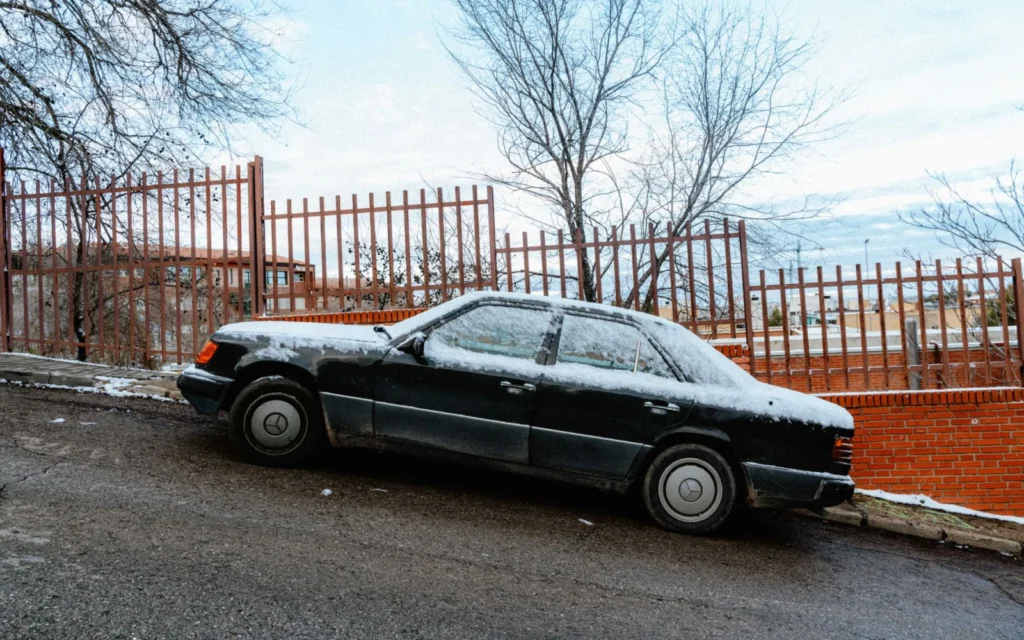
Baildon and Shipley both include some genuinely steep residential streets, where parking a car safely overnight means relying heavily on the handbrake to hold the vehicle in place against gravity for hours at a time. This is a very different demand from the brief, occasional use a handbrake sees in flatter parts of the country, and it means handbrake wear and function deserve more regular attention from drivers in these areas than the standard service interval might otherwise suggest.
Why steep hillside parking is harder on a handbrake
On a flat street, a handbrake mainly needs to hold the car still for a short period, with the engaged gear and the car’s own weight distribution doing much of the work of keeping it stationary. On a steep hill, the handbrake becomes the primary mechanism holding the entire weight of the car against gravity, often for many hours overnight, which places sustained tension on the cable or, in electronic systems, sustained clamping force on the rear brake components in a way that flatter parking never demands.
Streets in Baildon climbing towards the moor, and similarly graded roads around Shipley, mean many residents park on a genuine incline every single night, and this repeated, sustained loading is a meaningfully different kind of wear pattern from the occasional handbrake use typical of flatter areas.
How handbrake cables wear under this kind of sustained load
Traditional cable-operated handbrakes rely on a steel cable running from the handbrake lever to the rear brake mechanism, and this cable can stretch slightly over time, particularly under the kind of sustained tension steep hillside parking involves night after night. As the cable stretches, the handbrake lever needs to travel further to achieve the same holding force, and eventually a stretched cable may not be able to generate enough tension to hold the car securely on a steep gradient, even though it still feels functional during a brief test on level ground.
This is part of why a handbrake that seems to work fine when tested on a flat driveway can still fail to hold a car securely on the specific steep street where it is actually parked overnight, catching some drivers out with an unpleasant surprise.
Electronic parking brakes and why they need different attention
Many newer cars use an electronic parking brake system instead of a traditional cable, engaging and releasing the rear brakes electronically rather than through mechanical cable tension. These systems generally cope well with sustained hillside use, but they can develop their own issues over time, including calibration drift that affects how much clamping force the system applies, or sensor faults that can cause the system to behave inconsistently.
- An electronic parking brake warning light appearing unexpectedly on the dashboard
- The system taking noticeably longer than usual to engage or release
- A grinding or unusual noise when the electronic brake engages on a steep incline
- The car feeling like it creeps slightly before the electronic brake fully engages
- Any error message specifically relating to the parking brake system
Why recalibration matters for electronic systems
Electronic parking brakes rely on the system correctly understanding the clamping force needed to hold the car securely, and this calibration can drift over time, particularly on cars used regularly for demanding hillside parking. A system that has drifted out of proper calibration may apply less holding force than the driver assumes, creating a genuine risk on a steep street even though the warning light has not necessarily illuminated to flag the issue.
Having an electronic parking brake system recalibrated periodically, particularly for cars regularly parked on steep gradients like those found throughout Baildon and parts of Shipley, ensures the system continues to apply the correct holding force reliably, rather than assuming a system that has never displayed an obvious fault is necessarily working exactly as it should.
What can go wrong if a handbrake fails on a steep street
A handbrake that fails to hold securely on a steep incline creates an obvious and serious risk, potentially allowing a parked car to roll, which can cause damage to property, other vehicles or, in a worst case, injury to a person nearby. Even a partial failure, where the handbrake holds but with reduced margin, increases risk in specific circumstances, such as a particularly cold, frosty morning when reduced grip between tyre and road surface means less margin for error if the handbrake is not holding at full strength.
This is why handbrake function deserves to be treated as a genuine safety priority for residents of these steep streets, rather than a minor convenience feature that only matters when actively driving. Insurers and even neighbours would reasonably expect a car parked overnight on a steep street to be secured properly, and a known handbrake issue left unaddressed could carry consequences well beyond simple inconvenience if the worst were to happen.
Combining the handbrake with wheels turned into the kerb
Good practice on any steep hill, regardless of handbrake condition, includes turning the front wheels into the kerb when facing downhill, or away from the kerb when facing uphill, so that if the handbrake were to fail, the car would be physically prevented from rolling far by the kerb itself. This simple habit provides a genuine backup layer of safety that costs nothing and takes only a moment, and it is particularly worth adopting consistently for anyone parking regularly on the steepest streets in Baildon or Shipley.
Leaving the car in gear as well, particularly for manual cars, adds a further layer of resistance against rolling, since the engine’s internal resistance provides some additional holding force alongside the handbrake and kerb positioning.
How to tell if your handbrake needs attention
A handbrake lever that travels further than it used to before engaging fully, or an electronic system that seems slower or less confident than before, are both worth investigating promptly rather than assuming they will simply continue working adequately. Asking a passenger to check whether the car feels genuinely secure when parked on a known steep street, rather than relying solely on the driver’s own impression from inside the car, can sometimes reveal a problem that is not obvious from the driver’s seat alone.
Any noticeable change in how the handbrake feels or behaves, even a small one, is worth mentioning to a garage at the next opportunity, particularly for anyone whose regular parking routine involves a genuinely steep gradient.
Why age and mileage alone do not tell the full story
A handbrake system’s condition depends heavily on how it has been used rather than purely on the car’s age or overall mileage, which means two cars of identical age and mileage can have very differently worn handbrake systems depending on whether one has spent its life parked on steep Baildon streets and the other on flat ground elsewhere. This makes handbrake condition harder to predict from a service history alone, and it is one of several reasons a physical check specifically considering the local parking pattern gives a more accurate picture than relying on mileage-based assumptions.
Buyers of used cars from this area should factor this into their thinking too, since a car that has spent years parked on a steep incline may have handbrake wear beyond what its mileage would typically suggest, making a specific handbrake check a sensible part of any pre-purchase inspection for cars coming from these hillier parts of the district.
How weather conditions add extra risk to hillside parking
Icy or frosty conditions reduce the friction available between tyre and road surface considerably, meaning a handbrake with even slightly reduced holding force has less margin for error on a frozen, steep street than it would on the same gradient in dry conditions. Wet leaves in autumn, similarly, can reduce surface grip on a hillside parking spot, adding another layer of risk during the transitional months when handbrake margin matters more than usual.
Residents of these steeper streets often develop a heightened awareness of exactly which conditions call for extra caution, such as parking a little further from a slope’s steepest point during a hard frost, but this instinct only helps if the handbrake itself is in genuinely good working order to begin with.
What a professional handbrake check actually involves
A proper handbrake inspection goes beyond simply pulling the lever and checking it engages, involving an assessment of cable tension and condition on traditional systems, or a diagnostic check of calibration and sensor function on electronic systems. For cable systems, a technician can measure how many clicks the lever travels before fully engaging, comparing this against the manufacturer’s specification to identify cable stretch before it becomes severe enough to compromise holding force noticeably.
For electronic systems, a proper diagnostic check can reveal calibration drift or early sensor faults that would not necessarily trigger a dashboard warning light on their own, making this kind of proactive check particularly valuable for anyone relying on an electronic parking brake for genuinely demanding hillside use.
Why new residents to these areas should check sooner rather than later
Anyone moving into a property on a steep street in Baildon or Shipley, particularly if their previous home involved flatter parking, should treat an early handbrake check as a sensible priority rather than an optional extra. A handbrake that had never been seriously tested by sustained hillside use in its previous life might reveal marginal performance once it is suddenly asked to hold the full weight of the car on a genuine incline every night, and it is far better to discover this through a proactive check than through an unpleasant surprise.
Local garages familiar with the area’s steep streets can often offer specific, practical advice based on which parts of Baildon and Shipley see the steepest gradients, helping new residents understand exactly how seriously to treat this aspect of routine car care in their new neighbourhood.
Why regular checking matters more here than in flatter areas
For residents of Baildon, Shipley and similarly hilly parts of the district, handbrake function is not simply a convenience feature but an essential piece of daily safety equipment, used under sustained load every single night in a way that drivers in flatter areas rarely experience. Building a handbrake check into routine servicing, and being alert to any change in how it feels, is a sensible precaution given how much more this component is genuinely relied upon here compared with most other parts of the country.
Having the system properly checked and, where necessary, recalibrated or repaired promptly keeps the daily routine of parking on a steep hillside street as safe and stress-free as it should be, rather than leaving it to chance on the coldest, iciest mornings of the year when the margin for error is already at its narrowest. For residents of these streets, a small amount of proactive attention to the handbrake genuinely reduces both the practical and safety risks that come with living on some of West Yorkshire’s steeper ground.
Why a mechanical backup gear matters even with an electronic system
Even cars fitted with a modern electronic parking brake benefit from the additional habit of leaving the transmission in gear or in park, since this provides a mechanical backup independent of the electronic system entirely. Relying on a single system alone, however well maintained, removes the redundancy that a combination of handbrake, gear selection and wheel positioning provides on a genuinely steep street.
Building all three habits together into a consistent parking routine gives residents of Baildon and Shipley the best possible protection against the rare but serious consequences of any single system failing unexpectedly on a steep incline.
Involving other household drivers in the routine
Where more than one person drives the same car on a steep Baildon or Shipley street, making sure everyone in the household follows the same parking routine, wheels turned, handbrake fully engaged and gear selected, closes a potential gap where inconsistent habits between drivers could otherwise leave the car less secure on nights when the more careful driver was not the one who parked it.
Frequently asked questions
Why does hillside parking wear a handbrake faster?
Holding the full weight of the car against gravity for hours overnight places sustained tension or clamping force well beyond what flat parking demands.
How do I know if my handbrake cable has stretched?
A lever that travels further than it used to before engaging fully, or a car that feels less secure on a steep street, are both signs worth checking.
Do electronic parking brakes need checking too?
Yes, they can develop calibration drift or sensor faults over time, so periodic recalibration is worthwhile, particularly for cars used regularly on steep streets.
Should I still turn my wheels into the kerb if my handbrake works fine?
Yes, this remains good practice as a backup safety measure regardless of how well the handbrake is currently functioning.
Is handbrake wear something a used car buyer should check?
Yes, particularly for cars that have spent time parked on steep streets, since wear here may exceed what the mileage alone would suggest.