

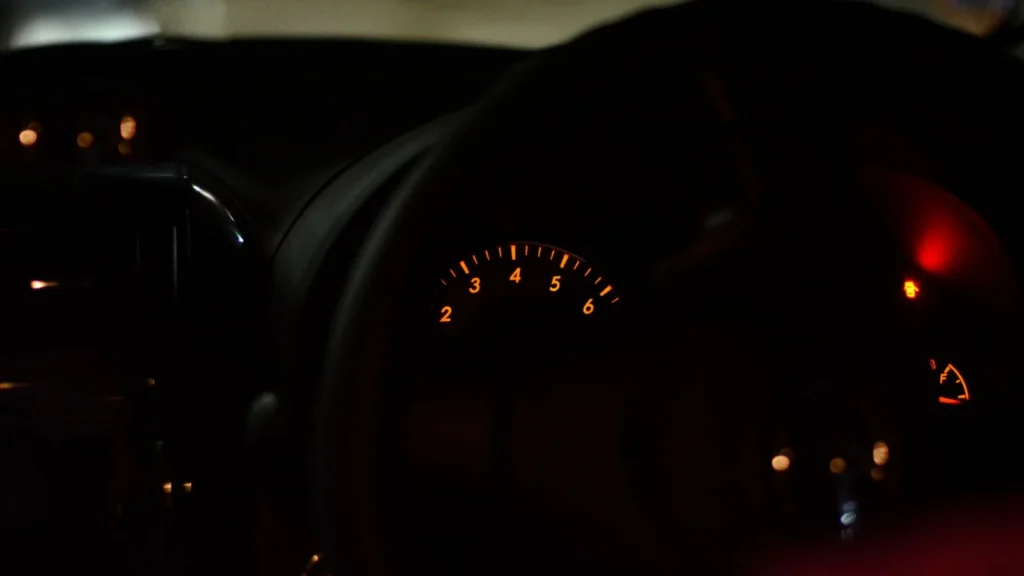
Two very different events regularly trigger dashboard warning lights on cars across West Yorkshire: a sudden cold snap arriving after milder weather, and a hard strike on one of the district’s many potholes. Both can cause a warning light to appear seemingly out of nowhere, and understanding what these lights are actually telling you, and how the underlying cause differs between the two situations, helps decide how urgently to act and what kind of inspection is actually needed.
Why cold weather specifically triggers warning lights
A sudden drop in temperature affects several systems in ways that can trigger a warning light even without any new mechanical fault having developed. Tyre pressure monitoring systems are a common culprit, since air pressure drops as temperature falls, and a tyre that was adequately inflated in milder weather can fall below the threshold that triggers a warning once temperatures drop sharply overnight, even without any actual leak or puncture being present.
Battery and charging system warning lights also become more common during cold snaps, for the reasons already well understood locally: cold weather increases the current demand of starting while simultaneously reducing a battery’s ability to deliver it, and a marginal battery that coped through milder weather can trigger a warning once genuinely cold conditions arrive.
Why potholes trigger a different pattern of warning lights
A hard pothole strike affects a car through sudden physical impact rather than a gradual environmental change, and the warning lights this triggers tend to relate to systems directly affected by that impact. Tyre pressure warnings can appear here too, but for a different reason, a sudden pressure drop from impact damage rather than gradual cold-weather contraction, and this distinction matters because impact damage often needs more urgent attention than a simple cold-weather pressure adjustment.
Suspension and steering-related warning lights, where a car is fitted with sensors monitoring these systems, are more specifically associated with pothole impacts, reflecting the kind of component stress and potential misalignment that a hard strike can cause, which is quite different from the gradual, environmental triggers typical of a cold snap.
Tyre pressure warnings: telling the two situations apart
A tyre pressure warning appearing gradually over a period of consistently cold weather, affecting multiple tyres by a similar, modest amount, is typically the ordinary cold-weather pressure drop that simply needs topping up to the correct pressure. A tyre pressure warning appearing suddenly, immediately after a noticeable impact, and affecting one tyre significantly more than the others, is far more likely to indicate impact damage, potentially including a puncture or a damaged tyre wall, and this scenario deserves a proper physical inspection rather than simply topping up the pressure and continuing, since continuing to drive on a tyre with impact damage risks a more sudden and dangerous failure later in the journey.
- Gradual, even pressure drop across all tyres during cold weather: check and top up pressures
- Sudden, uneven pressure drop after a known impact: stop and inspect the affected tyre and wheel
- A warning light that clears itself after topping up pressure: usually a simple cold-weather adjustment
- A warning light that returns quickly after topping up: may indicate an underlying puncture or leak
- Any warning light accompanied by a pulling sensation or noise: treat as a priority for inspection
Battery and electrical warning lights in cold weather
A battery or charging warning light appearing during a cold snap should be taken seriously, since it often indicates a battery that was already marginal before the cold weather arrived and has now been pushed past the point of coping adequately. Ignoring this warning risks a complete failure to start on a subsequent cold morning, which is considerably more inconvenient than addressing the issue proactively once the warning first appears.
Testing the battery and charging system properly, rather than simply clearing the warning and hoping it does not return, gives a clear picture of whether the battery needs replacement or whether the issue lies elsewhere in the charging system, such as a struggling alternator that is failing to keep the battery adequately charged during normal driving.
Suspension and steering lights after a hard impact
Where a car is fitted with sensors monitoring ride height, suspension performance or steering angle, a hard pothole strike can trigger a warning light reflecting a genuine change these sensors have detected, rather than a false alarm. Because these systems relate directly to handling and safety, a warning light appearing immediately after a known hard impact deserves prompt investigation rather than being dismissed as a minor glitch, since it may be flagging real damage to a component that affects how the car handles and stops.
Even where no specific warning light appears, a hard pothole strike is worth having checked regardless, since not every car has sensors capable of detecting every kind of impact-related damage, and a physical inspection remains the most reliable way to catch developing issues that a warning system alone might miss.
Why an advanced diagnostic check adds real value here
Modern cars carry numerous interconnected electronic systems, and a proper diagnostic check can read fault codes across multiple systems simultaneously, giving a much clearer picture of what has actually triggered a warning light than guesswork based on the light alone. This is particularly valuable after a pothole strike, where a diagnostic check can reveal whether sensors across steering, suspension and braking systems have all logged consistent fault information pointing to the same underlying cause, or whether the picture is more mixed and requires a broader physical inspection.
For cold-weather warnings, a diagnostic check can similarly distinguish between a simple, easily resolved cause like temporary tyre pressure drop and a more genuine underlying fault that happened to become apparent once cold weather placed extra strain on a marginal component.
When to stop driving immediately versus when it can wait
Some warning lights genuinely warrant stopping as soon as it is safe to do so, particularly anything relating to braking systems, a sudden and significant loss of tyre pressure, or an oil pressure or engine temperature warning, all of which can indicate a fault that worsens quickly if driving continues. Other warnings, such as a modest tyre pressure light during a cold snap or a battery warning that has not yet progressed to visibly affecting starting or electrical performance, can reasonably wait for the next convenient opportunity to have the car checked, though this should still happen promptly rather than being ignored indefinitely.
Knowing which category a particular warning falls into is not always obvious to someone unfamiliar with car systems, which is another reason a proper diagnostic check, rather than guesswork, is the safer and more reliable approach whenever a new warning light appears unexpectedly.
Why ignoring a warning light rarely saves money
A common but costly mistake is treating a warning light as something to monitor casually rather than act on, particularly when the car still seems to be driving normally despite the light being on. In practice, most warning lights indicate a problem that will worsen, sometimes slowly and sometimes quickly, and the cost of addressing an issue early is almost always lower than the cost of dealing with the consequences of a component that has been allowed to fail more completely because an early warning was ignored.
This is particularly true for issues triggered by cold weather or pothole impacts, since both scenarios tend to affect components that are already under more strain than average in this part of West Yorkshire, meaning a warning light here is more likely to reflect a genuine developing issue than a random, isolated glitch. A modest diagnostic fee paid promptly is almost always a better outcome than a larger repair bill that follows weeks or months of a warning light being left unaddressed.
How to describe symptoms usefully when booking a check
Providing a garage with clear, specific information when booking a diagnostic check considerably speeds up accurate diagnosis. Noting exactly when the warning light appeared, whether it followed a specific pothole strike or a sudden change in weather, and whether any other symptoms accompanied it, such as an unusual noise, vibration or handling change, gives a technician a much stronger starting point than a vague description of a light simply appearing at some point recently.
This kind of detail is especially useful for distinguishing between the two scenarios covered here, since a warning linked to a known pothole strike points a technician towards checking impact-related components first, while a warning that coincided with the season’s first hard frost points more naturally towards battery, charging system or tyre pressure as the likely starting point for investigation.
Why multiple warning lights together deserve extra attention
A single warning light can often be explained by one straightforward cause, but multiple lights appearing together, particularly after a hard pothole strike, can indicate a more significant impact that has affected several systems simultaneously. In this situation, a broader diagnostic check covering suspension, steering, tyre pressure and any other relevant systems together gives a far more complete picture than investigating each light in isolation, and it is generally the more efficient approach when several warnings appear around the same time following the same event, since it avoids the risk of a technician fixing one flagged issue while missing a related fault that only becomes apparent through a wider check.
Treating multiple simultaneous warnings as a signal to book a comprehensive check, rather than addressing them piecemeal over several separate visits, tends to be both quicker and more cost-effective in resolving the underlying cause properly.
Building a sensible response to unexpected warning lights
Whether a warning light appears after a sudden cold snap or a jarring pothole strike on one of West Yorkshire’s less forgiving roads, the sensible response is broadly similar: note when and under what circumstances the light appeared, avoid ignoring it in the hope it resolves itself, and book a proper diagnostic check promptly rather than waiting for symptoms to worsen. Understanding the likely underlying cause, whether environmental or impact-related, helps set reasonable expectations for what the inspection is likely to find, but only a proper check can confirm what is actually happening and what, if anything, needs to be repaired.
Treating an unexpected warning light as useful information rather than something to dismiss keeps small, easily resolved issues from developing into larger, more expensive problems, particularly given how demanding both cold weather and rough road surfaces can be on a car across this part of the country. For drivers across Bradford and the wider West Yorkshire area, where both a hard winter and a rough road surface are genuine year-round possibilities, treating warning lights with this level of consistent attention is one of the simplest habits that keeps a car reliable and safe over the long term.
Keeping a simple record of warning light history
Noting down any warning light that appears, along with the date, approximate weather conditions and any recent road incidents, builds a useful record over time that can help a garage spot recurring patterns, such as a battery that struggles every winter or a suspension component that seems to react to particular road conditions. This kind of record also proves useful when selling a car, since it demonstrates a proactive approach to maintenance that many buyers and their mechanics appreciate seeing.
Even a simple note on a phone, rather than a formal logbook, is enough to build this kind of useful history over time for anyone driving regularly across West Yorkshire’s demanding mix of cold weather and rough road surfaces.
Why a calm, methodical response beats guesswork every time
Reacting to an unexpected warning light with a brief pause to note the circumstances, rather than either panicking or ignoring it entirely, sets up the best possible outcome once the car reaches a garage. This measured approach, followed by a proper diagnostic check, consistently produces faster, cheaper and more accurate outcomes than either extreme reaction.
A warning light is rarely a false alarm on cars driven regularly across this part of the country, so treating it as a genuine prompt for action, rather than background noise to be tolerated, remains the safest and most cost-effective approach for any driver here.
Source: Highway Code guidance on vehicle maintenance and safety
Frequently asked questions
Why do potholes and cold weather both trigger warning lights?
A pothole causes sudden physical impact affecting components directly, while cold weather affects battery performance and tyre pressure gradually through temperature change.
Should I worry about a tyre pressure light in winter?
A gradual, even drop across all tyres in cold weather is usually normal, but a sudden or uneven drop after an impact needs proper inspection.
Can I keep driving with a warning light on?
It depends on the light; braking, oil pressure or significant tyre pressure warnings should prompt stopping as soon as safely possible, while others can wait briefly for a scheduled check.
Why does a diagnostic check help more than guessing?
It reads fault codes across multiple systems at once, giving a much clearer picture of the actual underlying cause than assumptions based on the light alone.
What should I tell the garage when booking a check?
Mention when the light appeared, whether it followed a pothole strike or a change in weather, and any other symptoms noticed, to help speed up diagnosis.