

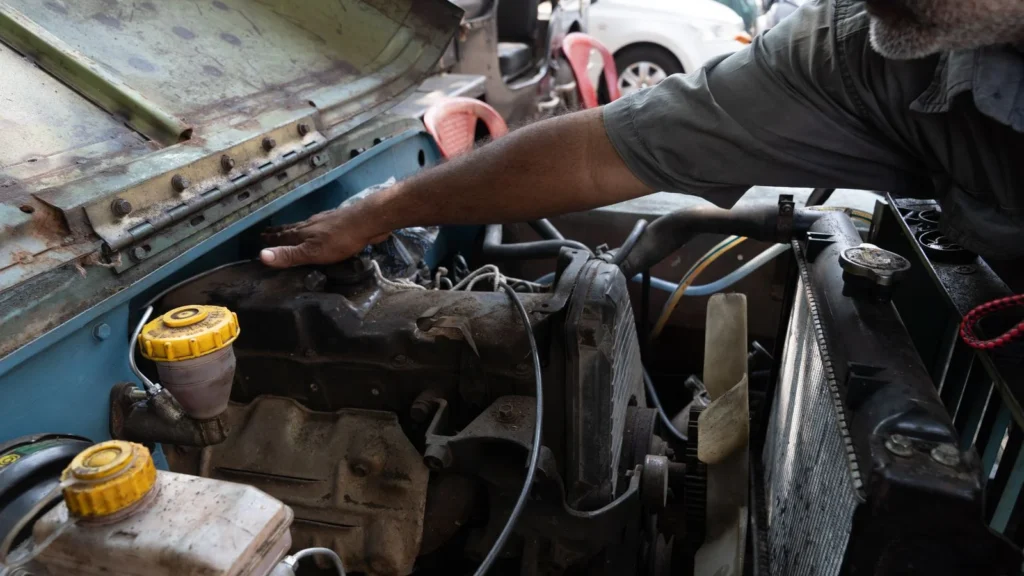
Checking antifreeze and coolant is one of the simplest, most valuable checks any car owner can do at home, and it takes only a few minutes once you know exactly where to look and what to look for. Getting this right protects the engine from both overheating in summer and frost damage in winter.
What coolant actually does
Coolant, a mixture of antifreeze and water, circulates through the engine to absorb and carry away heat, preventing the engine from overheating during normal running. The antifreeze component also lowers the freezing point of the liquid, protecting the engine block from frost damage during cold weather, and includes additives that help prevent corrosion within the cooling system over time.
Finding the coolant reservoir
Nearly every modern car has a translucent plastic coolant reservoir somewhere in the engine bay, usually marked with a warning symbol showing a thermometer in liquid, and clearly printed minimum and maximum level lines on the side. If you’re not sure where yours is located, your owner’s handbook will show you exactly, and it’s worth locating it once so you know precisely where to look each time you check.
The critical safety rule: only check when cold
This is genuinely the most important point in this entire guide: never open the coolant reservoir cap when the engine is warm or hot. The cooling system operates under pressure, and opening it while hot can cause scalding liquid to be forcefully ejected, risking serious burns. Always wait until the engine has been switched off and left to cool completely, ideally for at least a couple of hours, before checking or topping up coolant.
Step-by-step: checking the level
With the engine cold, park on level ground and locate the reservoir. You should be able to see the coolant level clearly through the translucent plastic without needing to open anything, and it should sit somewhere between the minimum and maximum markings printed on the side. If the level sits at or below the minimum line, it needs topping up before you drive the car any further.
- Ensure the engine has been switched off and cold for at least a couple of hours
- Park on level ground for an accurate reading
- Locate the translucent coolant reservoir in the engine bay
- Check the level sits between the minimum and maximum markings
- If topping up is needed, only ever open the cap when the engine is genuinely cold
Using the correct type of coolant
Not all coolant is the same, and different manufacturers specify different formulations, often distinguishable by colour, though colour alone isn’t a reliable guide since different brands use different colours for broadly similar products. Mixing incompatible coolant types can reduce the effectiveness of the corrosion inhibitors and, in some cases, cause a chemical reaction that damages the cooling system. Always check your owner’s handbook for the correct specification before topping up, and if you’re unsure, a mechanic can confirm the right type for your specific car.
Checking the concentration, not just the level
Beyond simply having enough coolant, the concentration of antifreeze within the mixture matters considerably, particularly for winter protection. A concentration that’s too weak won’t protect against frost damage effectively, while checking this properly requires a simple antifreeze tester, a relatively inexpensive tool that measures the freezing point of the mixture, or having a mechanic check it as part of a routine service.
What a consistently dropping level actually means
A coolant level that drops noticeably between checks, rather than staying roughly steady, points to a leak somewhere in the cooling system rather than simply normal, expected consumption, since a properly sealed cooling system shouldn’t lose coolant under normal conditions. Common leak points include the radiator itself, hoses, the water pump, or the head gasket in more serious cases, and this is genuinely worth investigating rather than simply topping up repeatedly and hoping the problem resolves itself.
Warning signs of a cooling system problem
Beyond a dropping coolant level, certain other signs point toward a developing cooling system issue worth having checked. A temperature gauge reading higher than normal, a sweet smell that can indicate a coolant leak, visible white or coloured residue around hoses or the radiator, or steam from under the bonnet all warrant prompt attention rather than being ignored, since an overheating engine can suffer serious and expensive damage if driven on in that condition.
Why the radiator is often the source of problems
The radiator, responsible for dissipating heat from the coolant before it circulates back through the engine, is a common source of cooling system problems, whether through internal corrosion reducing its effectiveness, physical damage from road debris, or simply age-related wear developing a leak. A radiator that’s no longer cooling effectively, or that’s developed a leak, needs replacing rather than repeatedly topped up, since a failing radiator puts the whole engine at risk of overheating.
Seasonal considerations for coolant checks
While coolant matters year-round, it’s particularly worth checking thoroughly heading into both winter, when frost protection is critical, and summer, when the cooling system works hardest to manage heat during warmer weather and heavier traffic conditions. Building a coolant check into your seasonal maintenance routine, alongside checks like antifreeze concentration testing, keeps this system properly protected across the whole year rather than only thought about when a problem has already developed.
When to get a professional check instead
If you’ve checked the level, confirmed you’re using the correct coolant type, and the level still keeps dropping, or if you’ve noticed any of the warning signs above, it’s time for a proper professional inspection rather than continuing to top up at home. The RAC’s guide to checking your coolant offers further useful detail, and a radiator replacement, carried out promptly if the radiator itself is the source of a leak, protects the engine from the more serious and expensive damage that can result from ongoing overheating.
Making coolant checks a genuine habit
A monthly glance at the coolant reservoir, alongside a proper check before any long journey, takes moments once it’s built into your routine, and it’s one of the simplest ways to protect against one of the more expensive things that can go wrong with a car. Treating this small, regular habit as seriously as checking oil or tyre pressure genuinely pays off in avoided repair bills and breakdowns over the life of your car.
What happens if an engine actually overheats
If your temperature gauge climbs into the red, or you see steam from under the bonnet, the correct response is to stop driving as soon as it’s safe to do so and switch off the engine, rather than continuing to your destination and hoping for the best. Continuing to drive an overheating engine risks serious damage, including a warped cylinder head or a blown head gasket, both of which are considerably more expensive to repair than the original cooling system issue that caused the overheating in the first place.
Never open the system while it’s still hot
It’s worth repeating this point given how important it is: even if you’re confident the engine has stopped running, the cooling system can remain pressurised and genuinely hot for a considerable time afterwards. Wait for a proper cooling-down period, ideally with the bonnet open to help dissipate heat, before ever attempting to check or top up the coolant reservoir, and if you’re at all unsure, it’s safer to wait for recovery assistance than risk a scalding injury.
How often coolant itself should be replaced
Beyond simply topping up the level, coolant itself degrades over time, gradually losing its corrosion-inhibiting properties even if the antifreeze protection remains adequate. Most manufacturers recommend a full coolant change at specific intervals, often every few years or a set number of miles, and this is typically covered as part of a major service rather than something most owners do themselves, given it involves properly draining and refilling the system.
Why mixing different coolant brands is risky
If you’re topping up and don’t have access to the exact brand originally used in your car, it’s worth being cautious about mixing different coolant products, since some formulations aren’t fully compatible with each other and mixing can reduce the effectiveness of the corrosion protection or, in rarer cases, cause a reaction that damages the system. If in doubt, a small top-up of plain water as a genuine short-term emergency measure, followed by a proper coolant top-up or flush as soon as possible, is safer than guessing with an incompatible product.
Coolant and your car’s overall reliability
The cooling system doesn’t get the same day-to-day attention as brakes or tyres, but a properly maintained system is genuinely fundamental to your engine’s long-term reliability, since sustained overheating is one of the more catastrophic and expensive things that can happen to an engine. Treating coolant checks with the same seriousness as any other core maintenance task reflects just how much this quietly important system actually protects the most expensive component of your entire car.
How the cooling system fits together
Beyond the reservoir and radiator, the cooling system includes the water pump, which circulates coolant around the engine, a thermostat that regulates flow based on temperature, and a network of hoses connecting everything together. A fault in any one of these components can affect the whole system’s ability to regulate engine temperature properly, which is why a professional diagnosis, rather than guesswork, is genuinely valuable if a cooling problem develops beyond a simple low level.
Seasonal coolant checks as part of a wider routine
Pairing your coolant check with other seasonal tasks, such as checking screen wash concentration and battery health heading into winter, makes sense given how closely these preparations overlap in timing. Treating them as a single, combined seasonal routine, rather than separate unconnected tasks remembered at different times, makes the whole process considerably more efficient and less likely to be forgotten.
What to do if you’ve never checked coolant before
If checking coolant feels unfamiliar, the first attempt is worth doing without any time pressure, simply to locate the reservoir, understand the minimum and maximum markings, and get comfortable with what a normal level actually looks like on your specific car. Once you’ve done it once, subsequent checks become quick and straightforward, and you’ll have a much better baseline for noticing if the level ever looks unusually low.
Why coolant checks matter even more before a long trip
Before any longer journey, particularly one involving motorway driving or hillier routes that place more sustained demand on the engine, it’s worth confirming the coolant level and general cooling system condition beforehand. An issue that might be manageable on a short local journey can become considerably more serious over a longer distance, making a pre-trip check a genuinely sensible precaution.
Bringing it all together
Checking coolant is one of the simplest maintenance tasks available to any car owner, requiring no special tools beyond perhaps an inexpensive antifreeze tester, and yet it protects against two of the more serious things that can go wrong with an engine: overheating damage and frost damage. Making it a genuine habit, checked monthly and always before a long journey, is a small investment of time that pays off considerably in avoided repair costs and breakdowns.
A quick summary for future reference
Only ever check or top up coolant with the engine completely cold, confirm the level sits between the minimum and maximum markings, use the correct coolant type for your car, and have a professional investigate promptly if the level keeps dropping between checks. Following these few simple rules consistently is genuinely all it takes to keep this quietly important system protecting your engine reliably throughout the year. Getting familiar with your own reservoir now, before anything actually goes wrong, means you will notice a genuine change far sooner than someone checking it for the first time only once a warning light or a puff of steam has already appeared. It genuinely is that simple once the habit sticks. and it is worth the small effort every single time.
Frequently asked questions
How often should I check my coolant level?
Checking once a month, and always before a long journey, is a sensible habit, particularly heading into winter when antifreeze protection matters most.
Can I check coolant level when the engine is hot?
No, you should only check or top up coolant when the engine is completely cold, since opening the system while hot can cause a dangerous release of pressurised, scalding liquid.
What colour should coolant be?
Coolant colour varies by brand and type, commonly pink, blue, green or orange, and the important thing is using the correct type specified for your car rather than judging purely by colour.
Can I just top up with water instead of proper coolant?
Water alone lacks the antifreeze and anti-corrosion properties of proper coolant, so it should only ever be a genuine emergency measure, with a proper top-up done as soon as possible.
What does a consistently low coolant level suggest?
A coolant level that keeps dropping between checks suggests a leak somewhere in the cooling system, which should be investigated rather than simply topped up repeatedly.