

Walk into any car showroom today and you’ll hear “hybrid,” “mild hybrid,” and “electric” used almost interchangeably by sales staff, when in reality these describe genuinely different technologies with meaningfully different running costs, maintenance needs, and driving characteristics. Understanding the real distinctions helps you choose the right car for your actual needs rather than being swayed by marketing language that blurs together three quite different propositions.
Full electric: no combustion engine at all
A full electric vehicle, often called a battery electric vehicle or BEV, has no combustion engine whatsoever. It runs entirely on electric motors powered by a large battery pack, charged externally by plugging in. There’s no petrol or diesel tank, no exhaust system, and range depends entirely on remaining battery charge, typically anywhere from around 150 to over 300 miles depending on the specific model.
This is the simplest of the three categories to understand precisely because there’s no blending of power sources involved, the car is either charged and ready to drive, or it isn’t.
Full hybrid: two power sources working together
A full hybrid combines a combustion engine with an electric motor and a meaningfully sized battery, allowing genuine electric-only driving for shorter distances, typically a handful of miles at low speed, before the combustion engine takes over or joins in for higher demand driving. Crucially, full hybrids don’t plug in, the battery charges entirely through regenerative braking and the combustion engine itself.
This makes full hybrids a genuinely self-sufficient middle ground, offering improved efficiency over a pure petrol car without requiring any change to how you fuel or charge the vehicle day to day.
Plug-in hybrid: the extended electric-first option
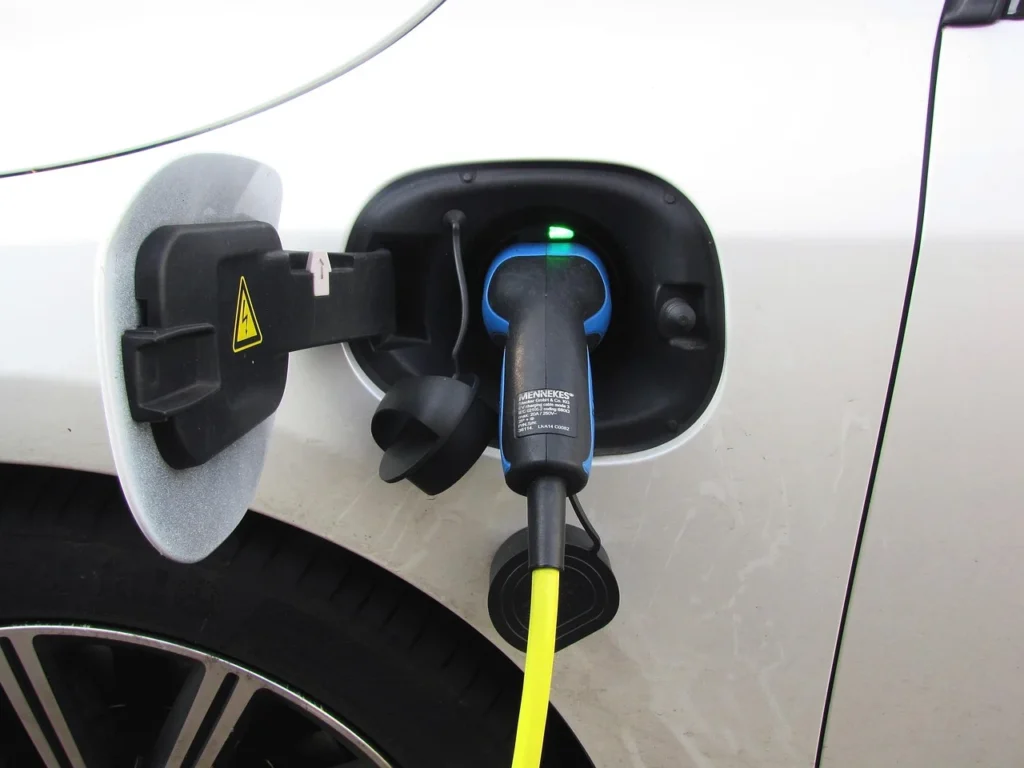
A plug-in hybrid, often abbreviated PHEV, is similar to a full hybrid but with a considerably larger battery that can be charged externally, offering meaningfully longer electric-only range, often 20 to 40 miles, before the combustion engine engages. This makes genuine electric-only commuting realistic for many drivers, with the combustion engine available as a backstop for longer journeys.
Plug-in hybrids sit between full hybrids and full electric vehicles in terms of both electric capability and the maintenance complexity that comes from carrying essentially two complete propulsion systems within one car.
Mild hybrid: assistance, not independent electric driving
A mild hybrid uses a small electric motor and battery purely to assist the combustion engine, improving efficiency during acceleration and enabling smoother stop-start functionality, but it cannot drive the car on electric power alone even briefly. Think of it as a sophisticated efficiency booster for a fundamentally combustion-powered car, rather than a genuine step toward electric driving.
Comparing maintenance needs across the four types
- Full electric: no oil changes, exhaust or timing belt, but tyres and brakes need attention
- Full hybrid: combines conventional combustion servicing with hybrid battery and system checks
- Plug-in hybrid: similar to full hybrid, plus attention to the charging system and larger battery
- Mild hybrid: largely conventional servicing, with the small hybrid battery an additional but minor consideration
Comparing typical running costs
Full electric vehicles generally offer the lowest running costs given the absence of fuel entirely, followed by plug-in hybrids for drivers who genuinely commit to charging regularly and using electric-only mode for most journeys. Full hybrids offer meaningful but more modest savings over conventional petrol cars, while mild hybrids offer the smallest improvement of the four, closer to a well optimised conventional car than a genuinely electrified one.
Which option actually suits which driver
Full electric suits drivers with reliable home or workplace charging access and journey patterns comfortably within the car’s range. Plug-in hybrids suit drivers wanting genuine electric commuting with the reassurance of a combustion engine for occasional longer trips. Full hybrids suit drivers wanting improved efficiency without any change to their fuelling routine. Mild hybrids suit drivers wanting a modest efficiency boost on an otherwise conventional car, often at a lower purchase price than the alternatives.
Why this distinction matters for maintenance planning
Understanding exactly which category your car, or a car you’re considering, actually falls into determines what kind of servicing and checks are genuinely relevant. Booking a “hybrid battery health check” makes sense for a full or plug-in hybrid, but a mild hybrid’s small battery and an electric car’s large traction battery need genuinely different assessment approaches, and a knowledgeable mechanic should tailor the check to your specific vehicle type rather than applying a generic approach.
Getting the right advice for your specific vehicle
SSK Mechanics works with the full range of electrified vehicles, full electric, plug-in hybrid, full hybrid and mild hybrid, and can advise on exactly what maintenance genuinely applies to your specific car. Whatever category your vehicle falls into, a hybrid battery health check or general inspection tailored to your specific drivetrain gives you accurate, relevant information rather than generic advice that doesn’t quite fit.
Why manufacturers sometimes blur these terms in marketing
Marketing materials frequently use “electrified,” “hybrid technology,” or “self-charging” in ways that deliberately obscure which specific category a car actually falls into, sometimes because the more impressive-sounding electric associations help sales even when the underlying technology is closer to a mild hybrid than anything with genuine electric-only capability. Learning to look past the marketing language to the actual technical specification, electric-only range, whether it plugs in, whether the combustion engine can be bypassed entirely, cuts through this confusion reliably.
A closer look at badge and specification confusion
Manufacturers frequently use badges like “e-“, “hybrid,” “PHEV” or “mild hybrid” inconsistently across their own model ranges, let alone compared with competitors, meaning the same badge can mean genuinely different things depending on the specific manufacturer and model year. Checking the actual specification sheet, particularly the electric-only range figure if quoted, and confirming whether the car has a charging port at all, are the most reliable ways to understand exactly what you’re looking at regardless of how it’s badged.
What this means when comparing used cars specifically
When browsing used car listings, it’s worth looking past the headline description toward the actual technical details, since a private seller or even a dealer listing might use “hybrid” loosely without specifying which of the four categories genuinely applies. Asking directly, or checking the vehicle’s specification against its registration details, avoids buying a car under a mistaken assumption about how it actually operates and what maintenance it genuinely needs.
How insurance and tax treatment can differ across categories
Insurance groups and vehicle tax bands can vary meaningfully between these categories, generally reflecting factors like performance, weight and official emissions figures rather than the hybrid classification itself directly, though plug-in hybrids and full electric vehicles have historically benefited from more favourable tax treatment in various government schemes over the years. Checking current rules for your specific category is worth doing as part of any purchase decision, since incentives and tax bands do shift periodically.
How each type feels different from behind the wheel
A mild hybrid drives essentially like a well refined petrol car, with perhaps a slightly smoother stop-start experience and marginally better efficiency, but nothing that fundamentally changes the driving sensation. A full hybrid introduces genuinely noticeable moments of silent electric-only running at low speed, often around car parks or in slow traffic, before the combustion engine smoothly rejoins. A plug-in hybrid extends this considerably, with many owners experiencing near-silent, genuinely electric daily commuting for weeks at a time between occasions needing the combustion engine at all. A full electric vehicle offers this experience permanently, with silent, instant torque delivery available from the very first press of the accelerator every single time.
Why understanding your actual commute matters more than the label
The single most useful exercise before choosing between these categories is honestly assessing your typical daily and weekly driving pattern, how far you commute, whether reliable charging is realistically available, and how often you undertake genuinely long journeys beyond a plug-in hybrid’s electric range. A driver commuting 15 miles each way with home charging access is likely to get more genuine benefit from a plug-in hybrid or full electric vehicle than the marginal efficiency gain a mild hybrid offers, while a driver regularly covering long distances without reliable charging access might find a full hybrid the more practical, lower-hassle choice.
What this means for long-term ownership costs
Beyond the immediate purchase price difference between these categories, considering total cost of ownership, fuel or electricity costs, maintenance, insurance, and how the specific technology suits your actual usage pattern, gives a far more complete picture than focusing on badge or category alone. A plug-in hybrid bought by someone who never actually plugs it in, relying entirely on the combustion engine, loses most of its genuine cost advantage while still carrying the extra weight and complexity of the larger battery, an outcome worth avoiding through honest self-assessment before purchase.
How SSK Mechanics helps regardless of category
Whatever category your car falls into, mild hybrid, full hybrid, plug-in hybrid or full electric, our team can identify exactly what maintenance genuinely applies, rather than applying a blanket approach that might miss something specific to your vehicle or unnecessarily recommend work your particular car simply doesn’t need given its actual technology.
Book your assessment today
Get in touch with SSK Mechanics to book a health check tailored specifically to your car’s actual drivetrain type, giving you accurate, relevant maintenance guidance across Bradford and the wider West Yorkshire area.
A quick reference table worth remembering
Mild hybrid means assistance only, no independent electric driving whatsoever. Full hybrid means genuine short-range electric driving without ever needing to plug in. Plug-in hybrid means meaningfully longer electric range achieved through external charging, with a combustion engine as backup. Full electric means no combustion engine exists in the car at all, ever. Keeping these four simple definitions in mind cuts through almost all of the marketing confusion you’re likely to encounter while researching or shopping for your next car.
Why this knowledge pays off long after purchase
Understanding exactly which category your car belongs to isn’t just useful at the point of purchase, it continues paying off throughout ownership, helping you book the right kind of maintenance check, understand warning lights correctly, and set realistic expectations for running costs and range across every single year you own the vehicle.
Making your final decision with confidence
Armed with a clear understanding of the genuine differences between these four categories, you’re in a considerably stronger position to choose the right car for your actual driving pattern, budget and priorities, rather than being swayed by whichever label sounds most impressive on a showroom sign or in an advert.
We’re here to help with whatever you drive
Our experienced team across Bradford and West Yorkshire works with the full spectrum of electrified vehicles and is always happy to explain exactly what your specific car needs, in plain, straightforward language rather than technical jargon.
Get in touch today
Whatever category your current or prospective car falls into, reach out to SSK Mechanics for honest, model-specific advice and a proper health check tailored to your vehicle’s actual technology.
Call, message, or book online, whichever is most convenient for you, and let us help you make sense of exactly what your car needs.
We look forward to hearing from you soon.
Our friendly team is always ready to talk through your options, whatever stage of your EV journey you’re currently at, from initial research through to years of established ownership.
Whatever questions you have, we’re happy to answer them clearly and honestly, without any pressure to choose one category over another beyond what genuinely suits your situation best.
Book with confidence today.
We look forward to helping you find genuine clarity.
Understanding your car properly is the first step toward looking after it properly, and that principle applies just as much to choosing between hybrid and electric technology as it does to any other part of responsible car ownership over the years ahead.
Get in touch today.
We are ready when you are.
Thank you for reading, and we hope this guide has made the differences genuinely clear.
Frequently asked questions
Can a mild hybrid drive on electric power alone?
No, a mild hybrid uses its small electric motor purely to assist the combustion engine and cannot drive the car independently on electric power, even briefly.
Do plug-in hybrids need charging to work at all?
No, they can run on the combustion engine alone if never charged, but skipping charging means missing out on the genuine electric-only range and efficiency benefits the larger battery provides.
Which type of electrified car has the lowest running costs?
Full electric vehicles generally offer the lowest running costs, followed by plug-in hybrids for drivers who charge regularly and use electric mode for most journeys.
Do all these vehicle types need a hybrid battery health check?
Full and plug-in hybrids benefit most from a dedicated hybrid battery check, while mild hybrids and full electric vehicles need an assessment tailored specifically to their different battery type and size.
Is a mild hybrid worth the extra cost over a conventional petrol car?
It depends on the specific price difference and your priorities, since the efficiency improvement is more modest than a full hybrid or plug-in hybrid would offer.