

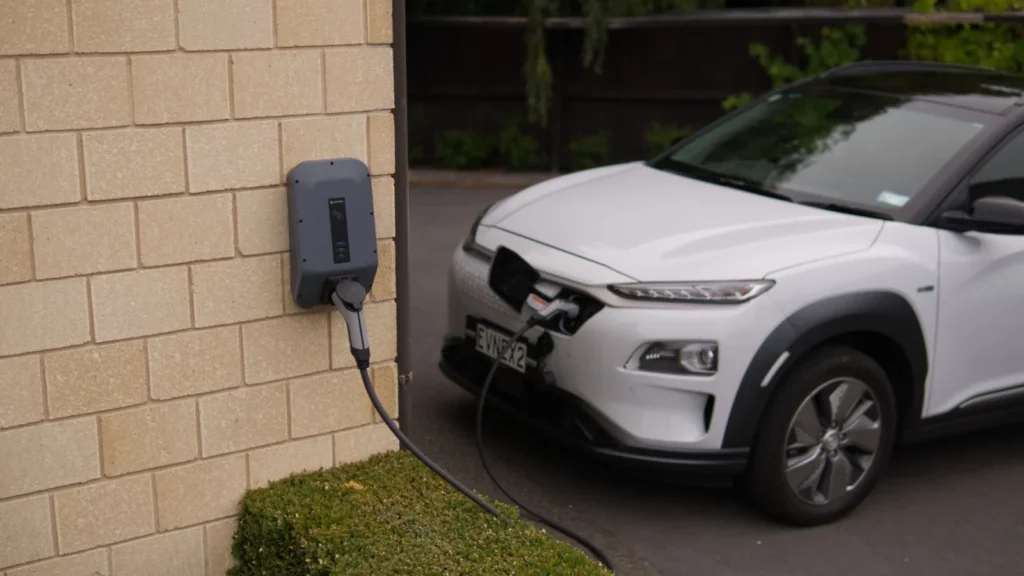
Home and public charging both get your EV’s battery topped up, but they’re genuinely different experiences with different implications for battery health, cost, and convenience. Understanding what actually differs helps you build a sensible charging routine rather than treating every charging option as functionally identical.
The core technical difference
Home charging typically uses a slower AC wallbox, commonly rated at 7kW, delivering a gentle, steady charge over several hours, ideal for overnight use. Public rapid and ultra-rapid chargers use DC power delivered directly to the battery at considerably higher rates, sometimes 50kW, 150kW or beyond, designed to top up a meaningful amount of range in a fraction of the time a home charger would take.
Why the speed difference matters for battery health
Faster charging generates more heat within the battery pack, and while modern EVs actively manage this through cooling systems, repeated frequent fast charging still adds more cumulative thermal stress than the gentler process a home wallbox provides. This is really the key practical difference between the two options beyond simple convenience.
Cost comparison between home and public charging
Home charging, particularly on an EV-specific off-peak electricity tariff, is typically considerably cheaper per mile than public rapid charging, where you’re paying a premium for both speed and the infrastructure cost of the charging network itself. For most owners with off-street parking, home charging represents the meaningful majority of their overall charging cost savings compared with running an equivalent petrol car.
When public charging genuinely makes sense
- Longer journeys beyond your car’s comfortable single-charge range
- Topping up during a motorway service stop on a longer drive
- Occasional emergency top-ups when you’ve misjudged remaining range
- Owners without off-street parking who rely on public infrastructure for most charging
The reality for owners without a driveway
Not every EV owner has access to home charging, and for many in terraced housing or flats across Bradford and similar towns, public charging genuinely is the primary option rather than an occasional supplement. In this situation, choosing slower public destination chargers where available, rather than always defaulting to the fastest rapid charger, helps reduce cumulative thermal stress even without home charging access.
Why charging network reliability varies
Public charging infrastructure has improved considerably in recent years but still varies meaningfully in reliability and availability depending on location, with some networks and locations considerably more dependable than others. Building familiarity with reliable chargers on your typical routes, rather than assuming any charger will work when needed, avoids frustration on longer journeys.
How to build a sensible mixed routine
For most owners with home charging access, a sensible routine looks like predominantly gentle overnight home charging for everyday use, with occasional public rapid charging reserved genuinely for longer trips rather than routine convenience. This gets the best of both worlds, low cost and reduced battery stress most of the time, with fast top-ups available when actually needed.
What this means for battery health over the years
An EV charged predominantly at home on a gentle schedule, with rapid charging reserved for genuine long-distance need, will generally show somewhat better long-term battery health than an otherwise identical car relying heavily on frequent rapid charging for all its top-ups. This is one of the more practical, actionable ways owners can influence their car’s long-term battery condition.
Confirming your battery’s actual condition
Whatever your charging routine looks like, a periodic battery health check gives you real, specific data on how your car is actually performing rather than relying purely on general guidance about home versus public charging.
Book a health check with SSK Mechanics
SSK Mechanics can carry out a thorough hybrid or EV battery health check at your home across Bradford and West Yorkshire, giving you clarity on your battery’s actual condition and practical, honest advice about your specific charging routine.
How charging speed classifications actually work
Charging speeds are broadly grouped into slow, around 3kW from a standard domestic socket, fast, typically 7 to 22kW from a home wallbox or public destination charger, and rapid or ultra-rapid, ranging from 50kW well beyond 150kW at motorway service stations and dedicated rapid charging hubs. Understanding which category a given charger falls into helps set realistic expectations for both charging time and, relevant here, the relative thermal stress involved compared with a gentler overnight charge.
What a typical Bradford area charging setup looks like
Many EV owners across Bradford and the surrounding West Yorkshire area rely on a home wallbox for the bulk of their charging, supplemented by the growing network of public rapid chargers at retail parks, supermarkets and dedicated charging hubs for occasional top-ups or longer journeys beyond the local area. This mixed approach, predominantly gentle home charging with rapid charging reserved for genuine need, reflects exactly the balance most battery health guidance recommends.
Why charging network apps are worth using properly
Most public charging networks operate through a smartphone app showing real-time charger availability, pricing, and often charger speed and condition, information genuinely useful for planning a longer journey with confidence rather than arriving at a charging location and hoping for the best. Building familiarity with the app for whichever network is most common on your typical routes removes a lot of the uncertainty that puts some owners off relying on public charging for longer trips.
Considering installation costs and grants for home charging
Installing a home wallbox involves an upfront cost, though various grant schemes have existed over recent years to offset this for eligible households, and the ongoing savings from cheaper home charging compared with relying entirely on public infrastructure typically recoup this cost within a reasonable timeframe for most regular drivers. It’s worth checking current eligibility and grant availability directly, since scheme details and eligibility criteria have changed over time.
Why some owners deliberately choose a mixed strategy
Rather than treating this as a strict either-or decision, many experienced EV owners deliberately build a mixed strategy, home charging for the vast majority of everyday use, combined with an active membership or app account with one or two reliable public networks for the genuine longer trips where rapid charging is the sensible choice. This removes the stress of relying entirely on one option while still capturing most of the cost and battery health benefits home charging provides.
What to check before relying on a specific public charger
Before a longer trip, checking recent user reviews or network status for chargers along your planned route, rather than assuming availability, avoids the frustration of arriving at a broken or occupied charger with limited remaining range. This small bit of planning genuinely makes the difference between a smooth long-distance EV trip and a stressful one.
Getting personalised advice for your situation
Whether you have home charging access or rely primarily on public infrastructure, SSK Mechanics can advise on the most sensible charging approach for your specific car and circumstances, alongside a proper battery health check confirming exactly how your current routine has affected your battery so far.
How charging costs have shifted over recent years
Public rapid charging pricing has fluctuated considerably as networks have expanded and energy costs have shifted, and the gap between home and public charging costs, while still generally favouring home charging, has narrowed and widened at different points depending on wider energy market conditions. Checking current pricing for your specific area and preferred networks, rather than relying on older assumptions, gives a more accurate picture of the real cost difference you’ll actually experience.
The bigger picture on charging choice
Ultimately, the right balance between home and public charging depends on your specific circumstances, daily mileage, access to home charging, and typical journey patterns, more than any single universal rule. Understanding the genuine trade-offs between speed, cost and battery health lets you make sensible choices suited to your own situation rather than following advice designed for a completely different type of driver.
What newer charging technology might change going forward
Charging technology continues to develop quickly, with improvements in charging speed, battery chemistry tolerance for fast charging, and network reliability all progressing steadily. What counts as best practice today may shift somewhat as batteries become more tolerant of rapid charging, though the core principle, that gentler charging generally means less cumulative stress, is likely to remain broadly true even as the specific numbers and thresholds evolve over time.
A sensible starting point for new EV owners
If you’re new to EV ownership and unsure where to start, defaulting to predominantly home charging with an 80 percent daily limit, reserving public rapid charging genuinely for longer trips, is a sensible, low-effort baseline that serves the vast majority of owners well without requiring constant fine-tuning or second-guessing.
What we recommend for most owners
For the majority of drivers with home charging access, our general recommendation is straightforward, use home charging as your default, keep daily charge limits moderate, and treat public rapid charging as a genuinely useful tool for longer trips rather than routine convenience. This balanced approach captures most of the available benefits without requiring constant vigilance or overthinking every single charging decision.
Get in touch with SSK Mechanics
Whatever your charging setup looks like, our team can assess your EV or hybrid’s actual battery condition and offer honest, model-specific guidance tailored to how you actually use your car, across Bradford and the wider West Yorkshire area.
Understanding the genuine trade-offs between home and public charging, rather than assuming one is simply always better, lets every owner build a routine that suits their own circumstances, their own car, and their own typical driving pattern across Bradford and beyond.
Whichever combination of home and public charging suits your lifestyle, keeping half an eye on the underlying principle, gentler charging generally means less cumulative stress, helps you make sensible choices without needing to overthink every single charging session you plug in for.
Public rapid charging networks continue expanding across West Yorkshire, which is genuinely good news for owners without home charging access, gradually narrowing the practical gap between the two options in terms of convenience even as the underlying cost and battery health considerations remain broadly similar to how they stand today.
Understanding these differences properly means you are never simply guessing at what is best, you are making an informed choice based on how your specific battery, your specific car, and your specific routine actually interact with the charging options available to you locally.
Our team regularly advises drivers across Bradford, Leeds, Halifax and the wider West Yorkshire area on exactly this kind of practical, everyday question, and we are always happy to talk through what makes sense for your specific car and circumstances rather than offering generic, one-size-fits-all advice that might not actually suit how you drive.
Charging your electric car does not need to feel complicated once you understand the basic principles behind it, and most owners find that after the first few weeks, sensible charging simply becomes second nature rather than something requiring ongoing thought or effort.
Whether you rely mostly on a home wallbox, a mix of home and public charging, or public infrastructure entirely, understanding what genuinely differs between the options puts you in a better position to look after your battery for the years ahead, whatever your specific setup happens to look like.
Get in touch today to book a battery health check and personalised charging advice from a team that genuinely understands the local charging landscape across Bradford and the wider West Yorkshire area.
There is no single perfect answer for every driver, only a sensible balance that suits your own routine, and taking a little time to understand the real differences between home and public charging is genuinely worthwhile for anyone planning to own an electric or hybrid car for more than just a year or two.
Book your check today. We look forward to helping you.
Understanding the practical realities of home versus public charging, rather than following blanket advice, is what genuinely helps EV and hybrid owners across the region get the most out of their car for years to come.
Frequently asked questions
Is home charging really better for my EV battery than public rapid charging?
Generally yes, home charging is slower and gentler, generating less heat within the battery pack, which adds less cumulative stress than frequent fast charging over time.
Is public charging more expensive than home charging?
Usually yes, particularly rapid and ultra-rapid public charging, which carries a premium for speed and infrastructure costs compared with a home charging tariff.
Can I rely entirely on public charging if I do not have a driveway?
Yes, many owners do, and choosing slower public destination chargers where available rather than always using the fastest rapid charger helps reduce battery stress even without home charging.
How often should I use rapid public charging?
Reserving it for genuine longer journeys, rather than routine daily convenience, is generally recommended to minimise unnecessary thermal stress on the battery.
Does my charging routine actually show up in battery health data?
Yes, a dedicated battery health check can reveal how well a car's battery has held up over time, reflecting the cumulative effect of its charging history.