

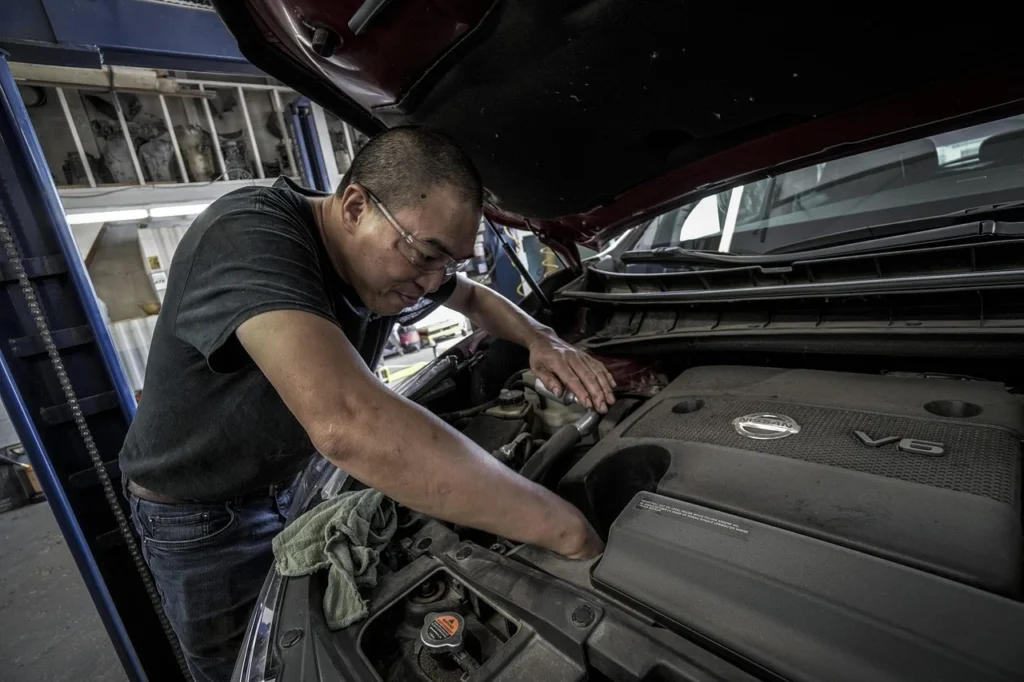
When you book a pre-purchase inspection, it can feel a little like a black box: you hand over a fee, a mechanic spends an hour with the car, and you get a report back. Understanding exactly what happens during that hour helps you appreciate the value of the process and know what questions to ask once the findings come in. This guide walks through, system by system, what a competent mechanic is actually checking when they inspect a used car on your behalf.
The initial visual walkaround
Every inspection starts with a methodical walk around the exterior of the car in good light. The mechanic checks panel gaps for consistency, since uneven gaps between doors, bonnet and wings can indicate a car has been in an accident and had panels replaced or realigned during repair. Paint thickness and colour matching are checked closely too, often using a paint depth gauge, since a respray on one panel while the rest of the car retains original paint is a strong indicator of previous damage.
Tyres are examined for even wear across the tread, uneven wear patterns can point to alignment issues, worn suspension components, or a history of hard driving. The mechanic also checks tyre brands and ages, since mismatched tyres or unusually old rubber can be a sign the car has not been well maintained.
Under the bonnet
With the bonnet open, the mechanic inspects the engine bay for oil leaks, coolant leaks, and any signs of recent repair work such as fresh gasket sealant or replaced hoses. Fluid levels and condition are checked across engine oil, coolant, brake fluid and power steering fluid, with attention paid to colour and consistency as indicators of maintenance history. A dirty, sludgy oil dipstick, for example, suggests infrequent oil changes even if the car has a service book showing regular stamps.
Belts and hoses are checked for cracking, fraying or perishing, and the mechanic will note whether a timing belt appears to be original or has been replaced, cross referencing this against the manufacturer’s recommended replacement interval since a timing belt failure can cause catastrophic engine damage on interference engines.
Starting and running checks
A cold start, where possible, reveals a lot about engine health. Excessive smoke on startup, rough idling, or unusual noises when the engine first fires up can all indicate developing problems that might not be obvious once the engine has warmed up and settled into a smoother idle. The mechanic listens carefully for knocking, tapping or whining noises at different engine speeds, each of which points toward different potential issues from worn bearings to a failing water pump.
Exhaust smoke colour is also assessed, since blue smoke suggests oil burning, white smoke beyond normal condensation can indicate a head gasket issue, and black smoke often points to a fuelling problem, particularly on diesel engines.
Underneath the vehicle
Getting the car up on a ramp or ramps, or at minimum using a trolley jack and axle stands, allows the mechanic to properly inspect the underside, which is where many serious problems hide from a standard viewing. Corrosion on the chassis, subframe, sills and floor pan is checked closely, since structural rust can be extremely expensive to repair and, in severe cases, can make a car unroadworthy. Exhaust system condition, including the catalytic converter and any particulate filter, is inspected for damage, corrosion or leaks.
Suspension components including bushes, ball joints, springs and dampers are checked for wear, play or leaking, and the mechanic checks brake pad and disc condition on all four corners, along with brake line condition and any signs of fluid leaks around the calipers.
Transmission and drivetrain
For manual cars, the mechanic assesses clutch feel and biting point during a test drive, checking for slipping or an unusually high or low bite point that might indicate wear. On automatics and DSG type gearboxes, gear changes are assessed for smoothness, hesitation or harsh shifting, and fluid condition is checked where accessible, since dark or burnt-smelling transmission fluid often indicates overdue servicing or developing problems.
Driveshafts and CV joints are checked for excessive play and for torn or leaking gaiters, which if damaged allow contamination into the joint and lead to expensive repairs if left unaddressed for too long.
Electrical systems and electronics
Every electrical function is tested during a thorough inspection, from power windows and central locking to air conditioning, heated seats, and infotainment systems. The battery is checked for age and condition, since a failing battery is a common cause of unreliability that is easy to overlook if the car happens to start fine on the day of inspection. A diagnostic scan is also run using appropriate equipment, checking for stored fault codes across the engine management system, ABS, airbag system and, on hybrid or electric vehicles, the battery management system.
Warning lights on the dashboard are noted and investigated, and the mechanic checks whether any bulbs have been intentionally removed to hide a persistent warning light, which unfortunately does happen on some poorly maintained or dishonestly presented cars.
The road test
Where the seller allows it, a road test forms a crucial part of the inspection. This covers how the car pulls away, how it performs under acceleration, how the brakes feel and perform under both gentle and firmer braking, and how the steering responds at different speeds. The mechanic listens for noises over bumps, checks the handbrake holds properly on an incline, and pays attention to how the car tracks in a straight line, since pulling to one side can indicate alignment or brake issues.
The road test also allows the mechanic to check how the car behaves once fully warmed up, since some issues, particularly around cooling systems and certain transmission faults, only become apparent after sustained driving rather than in the first few minutes.
Compiling the findings into a report
Once the inspection is complete, everything is compiled into a clear written report, usually including photographs of anything significant that was found. Issues are typically categorised by urgency, distinguishing between things that need addressing before the car should be driven regularly, things worth budgeting for in the near future, and minor cosmetic points that are simply worth being aware of. This structure helps you quickly understand the overall picture rather than being overwhelmed by a long list of minor observations.
A good mechanic will also be available to talk through the report with you directly, answering questions about what a particular finding means in practice and offering a rough sense of likely repair costs if you decide to proceed with the purchase despite an identified issue.
Why this level of detail matters
Every one of these checks exists because a specific type of problem tends to hide in a specific place, and years of experience inspecting used cars teaches a mechanic exactly where to look and what subtle signs to watch for. A buyer without this training might glance at an engine bay and see nothing obviously wrong, while a trained eye spots a slightly different shade of paint on the inner wing that reveals a significant prior repair. This is precisely the gap a pre-purchase inspection exists to close.
Book your inspection today
If you are seriously considering a used car, understanding exactly what goes into a proper inspection should give you confidence in the value of booking one. We carry out full pre-purchase inspections across Bradford and West Yorkshire, attending wherever the car is located, and provide a clear, honest report covering every area outlined above so you can make your decision with complete confidence.
Checking hybrid and electric vehicle specifics
If the used car you are considering is a hybrid or fully electric model, the inspection needs to go further than a standard petrol or diesel check. Battery health is assessed using diagnostic equipment capable of reading state of health data from the battery management system, giving an indication of how much capacity remains compared to when the car was new. This matters enormously for both range and resale value, and it simply cannot be judged by eye or by a short test drive around the block.
High voltage cabling is visually inspected for damage to its orange protective sheathing, charging ports are checked for corrosion or damage, and the mechanic reviews any stored fault codes relating to the inverter, DC-DC converter, or motor control systems. Given the complexity and cost of these components, a proper inspection on a hybrid or electric car is arguably even more valuable than on a conventional petrol or diesel model.
Interior and comfort systems
Inside the cabin, the mechanic checks the condition of the seats, carpets and trim for wear that might be inconsistent with the stated mileage, since heavily worn pedal rubbers or a sagging driver’s seat bolster on a car claiming low mileage can be a subtle red flag worth investigating further. Every switch, button and control is tested, including window regulators, which are a common failure point, along with mirrors, sunroof operation if fitted, and the operation of the infotainment and navigation system.
Air conditioning is tested for both cooling and heating performance, since a system that blows only lukewarm air may need a costly regas or could indicate a leak in the system that will need tracing and repairing before it can be properly recharged.
Documentation cross-checks during inspection
A thorough inspection does not stop at the physical car. The mechanic cross-references the VIN plate against the V5C document, checks the service book stamps against odometer readings recorded at each service, and compares the current mileage against the most recent MOT test result to check for any inconsistency. Any mismatch between these sources is flagged immediately, since it can indicate anything from an honest clerical error to a more serious attempt to disguise the car’s true history.
Spare keys, service records, and any warranty documentation still in date are also noted, since these all form part of the overall picture of how well the car has been looked after by its previous owner or owners.
Getting the most from your inspection
To get the most value from a pre-purchase inspection, try to arrange it before you make any firm commitment or pay a deposit, and be present if possible so the mechanic can walk you through anything significant in person rather than purely relying on the written report afterwards. Bring along any questions you have about the car’s history or condition, since the mechanic carrying out the inspection is often happy to explain findings in plain terms and help you weigh up whether any issues found are genuine deal breakers.
Armed with a full understanding of exactly what gets checked, you can approach any used car purchase with far more confidence, knowing that a proper inspection leaves very little to chance and gives you the clearest possible picture of what you are actually buying before you commit your money.
A final word on trusting the process
Some buyers wonder whether a pre-purchase inspection is worth the cost on a lower priced car, but the truth is that budget cars can hide expensive problems just as easily as premium ones, sometimes more so given inconsistent maintenance histories. Whatever the price point, a proper inspection gives you leverage in negotiation, protection against costly surprises, and the simple reassurance of knowing exactly what you are buying rather than hoping for the best. Book your inspection with us today and buy your next car with real confidence.
Whether it is your first car or your fifth, the value of an independent, professional check never really changes, and it remains one of the smartest, most cost effective steps in the entire used car buying process from start to finish.
If you have a used car in mind right now, get in touch and we will do our best to arrange an inspection quickly, since good cars rarely stay available for long once they are listed at a fair price.
We look forward to helping you buy your next car with genuine peace of mind and total confidence.
Source: GOV.UK MOT history checker
Frequently asked questions
How long does a full pre-purchase inspection take?
A thorough inspection covering all major systems typically takes between sixty and ninety minutes, depending on the car and whether a road test is included.
Do mechanics check under the car during an inspection?
Yes, checking underneath is essential for spotting corrosion, leaks, and suspension or exhaust wear that cannot be seen from the driver's seat or a quick walk around.
Can a pre-purchase inspection detect previous accident damage?
An experienced mechanic can often spot signs of prior accident repair through panel gap inconsistencies, paint thickness variation, and evidence of replaced structural components.
Will the inspection include a diagnostic scan?
Yes, a proper inspection includes plugging in a diagnostic scanner to check for stored fault codes across the engine, transmission and other electronic systems.
What happens if the mechanic finds a serious fault?
You will be given a clear explanation of the issue, its likely cost to fix, and honest advice on whether it is a deal breaker or something manageable to negotiate around.