

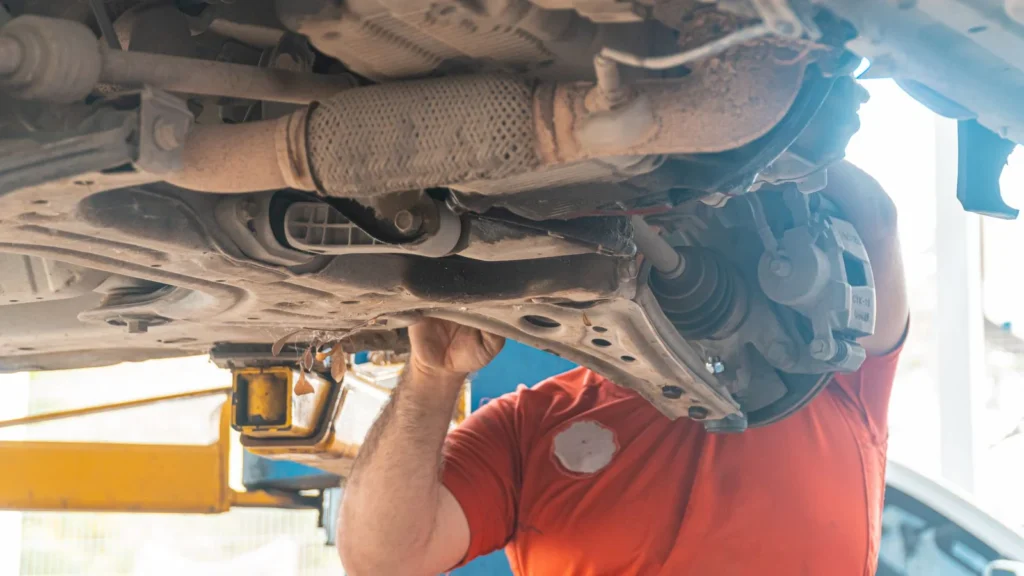
A brake pedal that slowly sinks toward the floor, whether you’re holding it at a stop or pressing it while driving, is a strong sign of a failing brake master cylinder. This component generates the hydraulic pressure that operates your brakes, and once its internal seals wear, that pressure leaks away internally instead of reaching the brakes.
This is different from a simple spongy pedal. A sinking pedal, particularly one that continues to drop the longer you hold it, points to an internal fault in the master cylinder rather than just air or moisture in the fluid. It’s a fault that tends to get worse, sometimes quickly, and it deserves prompt attention.
What Causes a Brake Pedal to Sink
A few faults can cause this symptom, with the master cylinder being the most common:
- A failing brake master cylinder, where worn internal seals allow fluid to bypass internally rather than building the pressure needed at the calipers.
- An external brake fluid leak, at a caliper, line, or hose, which gradually reduces the fluid available to build pressure.
- Air in the brake lines, though this tends to produce a springy or spongy feel more than a slow, continuous sink.
- A faulty brake booster, in some cases, though this usually affects pedal effort rather than pedal position specifically.
The master cylinder works by pushing fluid through internal seals to build pressure in the brake lines. When those seals wear or degrade, fluid can slip past them internally, which means the pedal keeps moving even though you’re not gaining any more braking force. That’s why the pedal seems to sink even under steady, constant pressure.
Safety and Urgency
This is one of the more serious brake symptoms and should be treated as urgent. If the master cylinder fails further, you could lose braking assistance partially or fully, and that’s not something you want to discover mid-journey. Gov.uk’s vehicle safety guidance classes significant brake faults as a serious roadworthiness concern, and a sinking pedal fits squarely into that category. If you notice this symptom, it’s worth minimising driving until the car has been checked, and avoiding motorway or high-speed driving in the meantime.
What a Mechanic Checks
Diagnosing a sinking pedal properly means confirming exactly where pressure is being lost:
- Testing the master cylinder for internal bypass, often by holding steady pedal pressure and watching for the pedal to creep down.
- Checking for external leaks at every caliper, line, hose, and connection point.
- Inspecting brake fluid level and condition, since a low reservoir can point to where fluid is escaping.
- Bleeding the system after any repair to confirm the pedal holds firm under sustained pressure.
- Checking the brake booster and pedal linkage to rule out other causes with similar symptoms.
When to Book vs When It Can Wait
This is not a fault to wait on. A sinking brake pedal should be treated as a same-week, ideally same-day, priority. If the pedal sinks noticeably or you’ve had to pump the brakes to get normal stopping power, stop driving the car and get it checked before continuing, since the risk of a more serious loss of braking increases the longer it’s left.
What it typically costs to fix
A leaking brake caliper or wheel cylinder typically costs £120-220 per side to replace. If the master cylinder itself is failing internally, which produces the classic slow sink to the floor, expect £200-350 including a full brake fluid bleed. Air in the brake lines from a smaller leak elsewhere can sometimes be fixed with a bleed alone, usually under £80, but the source of the air still needs finding.
What happens if you leave it
This is one of the more serious symptoms on this list and should not be driven on. A brake pedal that sinks to the floor means the hydraulic system is losing pressure, and that can progress from a slow sink to a sudden loss of braking with very little warning. If you notice this, get the car checked before driving it again rather than after your next journey.
What you can check yourself first
Check the brake fluid reservoir level, and look underneath the car and around each wheel for any visible fluid staining, which would indicate where a leak is coming from. Do not continue to drive the car if the pedal sinks noticeably when held under constant pressure. This is a genuine safety concern that needs checking before your next journey, not after it.
As a mobile mechanic covering Bradford and West Yorkshire, we can come to you quickly to diagnose the cause and, where the master cylinder is at fault, carry out the repair on site. You can see full details of our brake master cylinder replacement service and get an instant quote to get this sorted without delay.
Brakes are not a system to gamble on. A sinking pedal is your car telling you something has gone wrong internally, and it’s worth listening to that warning straight away.
How a master cylinder actually generates braking pressure
A brake master cylinder contains one or more pistons that, when pushed by the pedal, force fluid through internal passages and out to the brake lines, building the pressure that ultimately clamps the pads against the discs. Most modern cars use a dual-circuit design specifically for safety, splitting the front and rear brakes, or diagonal pairs, into two separate hydraulic circuits so that a single failure doesn’t remove braking entirely, only reduces it. This is precisely why a failing master cylinder often produces a pedal that sinks partway and then holds, rather than sinking all the way to the floor with no resistance at all, since the second circuit is often still providing some braking force even as the first fails.
Why this fault sometimes develops after a period of disuse
Internal seals inside a master cylinder can develop wear specifically at the point where the piston normally rests, since that section of the bore sees less fluid movement and can develop a slight ridge of corrosion or deposit over time on cars that see irregular use. When the pedal is then pressed further than usual, perhaps during a longer or harder braking event than the car has experienced in a while, the piston travels past that worn section and the seal fails to hold pressure properly from that point on. This is one reason a sinking pedal can seem to appear suddenly on a car that’s been driven normally for years without issue.
Why pumping the brakes is a warning sign, not a fix
Some drivers instinctively pump the brake pedal several times when they notice reduced stopping power, and while this can temporarily restore some pedal firmness by building pressure through repeated strokes, it is not a fix and should be understood as a clear sign the hydraulic system has already failed to the point of needing urgent attention. Relying on pumping the pedal to get adequate braking, even once, is a strong indicator that the car should not be driven further until it has been properly checked.
Why brake boosters sometimes get confused with master cylinder faults
A failing brake booster, the vacuum or hydraulically assisted unit that reduces the physical effort needed to press the pedal, produces a noticeably firmer, harder pedal that requires much more leg effort to achieve the same stopping power, which is a genuinely different symptom to the pedal sinking covered in this article. Understanding this distinction helps when describing the fault to a mechanic, since a hard, unassisted pedal points toward the booster while a soft, sinking pedal points toward the master cylinder or a fluid leak elsewhere in the system.
Why this repair should never be delayed for convenience
Unlike many faults on this site where a week or two’s delay carries manageable risk, a confirmed sinking brake pedal genuinely should not wait for a convenient slot in your diary. The progression from a slow sink to a more significant loss of braking can happen without much additional warning, and the consequences of that happening while driving are serious enough that this fault warrants rearranging your schedule rather than the other way around.
What to expect during a mobile inspection
A mobile inspection for a sinking pedal starts with a careful, controlled test of pedal behaviour under sustained pressure, watching and feeling for the characteristic slow creep that indicates internal master cylinder bypass. Combined with a full visual check for external leaks at every caliper, line and connection, this diagnostic approach reliably identifies the cause without needing specialist workshop equipment, and where the master cylinder is confirmed as the fault, replacement can often be carried out at your home or workplace.
Why a dual-circuit system doesn’t make this fault safe to ignore
While the dual-circuit design covered above genuinely provides a valuable safety margin compared with older single-circuit systems, it’s important not to treat this as a reason to delay addressing a sinking pedal. A car running on a single working circuit has roughly half its normal braking capability, and stopping distances increase considerably even with the backup circuit functioning correctly. This margin exists to get you safely to a repair, not to be relied upon as an ongoing way of driving.
What you can check yourself before booking
With the engine off, press the brake pedal firmly and hold steady pressure for several seconds, watching carefully for any downward creep. Check the fluid reservoir level and look underneath the car and around each wheel for staining that would indicate an external leak rather than an internal master cylinder fault.
Prevention through routine fluid maintenance
Regular brake fluid changes, alongside the moisture testing covered elsewhere on this site, help protect the internal seals inside the master cylinder from the kind of corrosion and degradation that eventually leads to internal bypass. A car that has never had its brake fluid changed since new is genuinely at higher risk of this fault developing, particularly once it passes eight to ten years old, regardless of how well the rest of the car has been maintained.
Getting a sinking pedal diagnosed and fixed as a genuine priority, rather than working around reduced braking with extra following distance, remains the only responsible approach given the safety implications involved. A properly functioning master cylinder is not optional equipment.
Why a second opinion is reasonable for a repair of this significance
Given how directly a master cylinder repair relates to core safety, it is entirely reasonable to want confidence in the diagnosis, and a mechanic worth using should have no issue explaining exactly what testing confirmed the fault. The pedal creep test described above is straightforward enough that it can genuinely be demonstrated to you directly, rather than simply being told the result after the fact.
Many drivers describe real peace of mind once this fault has been properly diagnosed and fixed, having driven with a nagging worry every time they approached a junction or roundabout beforehand.
Booking a check the moment this symptom appears, rather than waiting to see whether it gets worse, remains the only sensible approach given what is genuinely at stake with your ability to stop the car reliably.
Do not delay this one under any circumstances.
A short diagnostic visit is a small investment compared with the consequences of reduced braking performance when you need it most.
Genuinely worth prioritising.
Do not wait for this one to worsen before acting.
Peace of mind matters here more than almost anywhere else on this site.
Getting this diagnosed properly, and quickly, is the responsible choice for you and everyone else sharing the road with you.
A firm, reliable brake pedal is not negotiable, and restoring it properly is always worth prioritising over almost anything else on your maintenance list.
Get it checked today if you can.
Please treat this one as a priority.
Booked in properly and quickly.
SSK Mechanics can come to you quickly across Bradford and West Yorkshire to diagnose the cause and, where the master cylinder is at fault, carry out the repair on site without unnecessary delay.
Source: gov.uk's vehicle safety guidance
Frequently asked questions
Is it safe to drive with a brake pedal that sinks to the floor?
No, this should be treated as urgent. Loss of braking pressure can worsen without warning, so it's best to get the car checked before continuing to drive.
Can I top up brake fluid to fix a sinking pedal?
Topping up fluid will not fix internal wear in the master cylinder. If the seals have failed internally, the pedal will continue to sink regardless of fluid level.
How is a sinking pedal different from a spongy pedal?
A spongy pedal usually feels soft but stops sinking once pressure builds, while a sinking pedal continues to drop under steady pressure, which points more specifically to the master cylinder.