

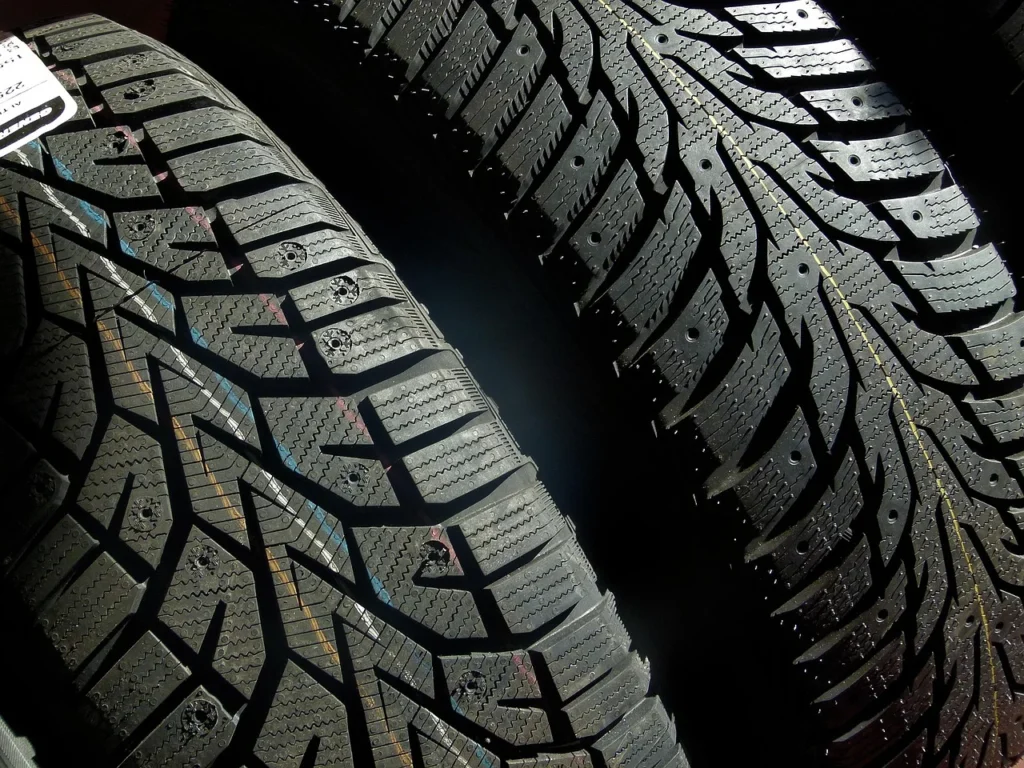
Uneven tyre wear is rarely just about the tyre. It’s usually a symptom of something else going on underneath the car, most commonly incorrect wheel alignment or a worn suspension component like a control arm. The wear pattern itself, where on the tyre it’s happening, is a genuinely useful clue to what’s actually wrong.
It’s easy to write off uneven wear as bad luck or a cheap set of tyres, but if you’re replacing tyres more often than you should be, or noticing wear that’s clearly worse on one edge or in patches, it’s worth looking further than the tyre itself.
Common Wear Patterns and What They Mean
Different patterns point toward different underlying causes:
- Wear concentrated on the inner or outer edge usually points to incorrect wheel alignment, or a worn control arm or tie rod end that’s letting the wheel sit at the wrong angle.
- Wear in the centre of the tyre, with the edges relatively healthy, usually means over-inflation.
- Wear on both edges, with the centre relatively healthy, usually means under-inflation.
- Cupping or scalloping, a wavy pattern around the tyre, often points to worn shock absorbers or suspension components that aren’t controlling wheel movement properly.
- Wear on just one tyre, more than the others, can indicate a specific fault on that corner, such as a worn control arm, ball joint, or wheel bearing.
A worn control arm is a particularly common cause of edge wear because it directly affects camber and toe angles, the geometry that determines how flat the tyre sits on the road. Once the control arm bush or ball joint wears, that geometry drifts out of specification, and the tyre starts wearing unevenly even if the alignment was correctly set previously.
Safety and Urgency
Uneven tyre wear matters for two reasons. First, it shortens tyre life significantly, meaning you end up replacing tyres more often than necessary. Second, and more importantly, it affects grip and braking performance, particularly in wet weather. Gov.uk’s tyre safety guidance is clear that tread depth and tyre condition are legal requirements, not just recommendations, and uneven wear can bring a tyre below the legal limit in one area well before the rest of the tread looks worn. It’s worth checking tyres regularly across their full width, not just at the centre.
What a Mechanic Checks
Getting to the root cause of uneven wear means looking beyond the tyre itself:
- Inspecting the wear pattern closely across the full width of each tyre to identify the type of wear present.
- Checking wheel alignment against manufacturer specification.
- Inspecting control arms, ball joints, and tie rod ends for play or wear.
- Checking wheel bearings, since bearing wear can also contribute to uneven wear patterns.
- Confirming tyre pressures are correct and consistent across all four tyres.
Simply having the alignment adjusted without fixing a worn control arm often means the alignment drifts back out of spec quickly, so it’s worth addressing the suspension component causing the issue rather than just the symptom.
When to Book vs When It Can Wait
If you’ve noticed mild uneven wear but tread depth is still healthy across the tyre, you have some time to book an inspection, though it’s worth doing soon to prevent further tyre damage. If wear is pronounced, if you’re seeing cupping or scalloping, or if tread depth is getting close to the legal minimum in patches, treat it as a priority.
What it typically costs to fix
If the cause is simply alignment, a full four-wheel alignment typically costs £60-90 and often stops further uneven wear immediately. If wear is caused by worn suspension components such as bushes or shock absorbers, expect £60-250 per component depending on what’s affected. Incorrect tyre pressures, which cause a distinct centre or edge wear pattern, cost nothing to fix once identified.
What happens if you leave it
Uneven tyre wear is rarely just a tyre problem, it’s usually a symptom of something else that will keep wearing that tyre unevenly until it’s fixed. Continuing to drive on a tyre with uneven wear reduces grip in wet weather specifically, since the wear pattern often affects the tyre’s ability to disperse water evenly, and it also means replacing tyres more often than necessary.
As a mobile mechanic covering Bradford and West Yorkshire, we can come to you to inspect your wheel bearings and related components alongside the suspension and alignment, to identify exactly what’s driving the uneven wear. Where a worn control arm is the cause, you can view our control arm (wishbone) replacement service and get an instant quote.
Uneven tyre wear is one of those things that’s easy to see and easy to ignore, but it’s telling you something specific about your car. Reading it correctly usually saves money on tyres and keeps your grip where it should be.
Why camber, caster and toe each produce distinct wear patterns
Wheel alignment is defined by three separate angles, each affecting tyre wear in a distinct way. Camber, the inward or outward tilt of the wheel viewed from the front, causes wear concentrated on one edge specifically when it’s out of specification, inner edge wear for excessive negative camber, outer edge for excessive positive camber. Toe, whether the wheels point slightly inward or outward relative to each other, produces a feathered wear pattern where the tread blocks are worn at a diagonal angle rather than straight across. Caster, the forward or backward tilt of the steering axis, affects steering feel and returnability more than tyre wear directly, though severe caster problems can contribute to uneven wear indirectly. Understanding which specific pattern you’re seeing genuinely helps narrow down which angle has drifted out of specification before any equipment is even used.
Why tyre rotation matters even with correct alignment
Even a car with perfectly correct alignment will see slightly different wear rates between front and rear tyres, and between the two front tyres specifically, since the front tyres on most cars do more work through steering, braking and, on front-wheel-drive cars, driving power too. Regular tyre rotation, swapping tyres between positions at recommended intervals, helps even out this natural wear difference and extends the useful life of a full set of tyres, complementing correct alignment rather than replacing the need for it.
Why a worn wheel bearing produces a subtler wear pattern
Unlike a control arm or tie rod end, which primarily affects alignment angles directly, a worn wheel bearing introduces play that lets the wheel wobble very slightly as it rotates, which can produce a somewhat less predictable, more localised wear pattern compared with the clean edge or centre wear associated with pressure or alignment issues. This is one of the reasons a thorough uneven wear diagnosis checks bearing play specifically, rather than assuming every wear pattern traces back to alignment or pressure alone.
Why checking wear across the full tyre width matters
It’s genuinely common for drivers to check tread depth only at the centre of the tyre, using the built-in wear indicators, without ever checking the edges specifically, which means edge wear from an alignment or suspension fault can progress to below the legal limit on one edge while the centre still looks perfectly healthy. Making a habit of running a hand or a simple tread depth gauge across the full width of each tyre, not just the centre, catches this kind of uneven wear before it becomes a legal or safety issue.
Why new tyres alone won’t solve an underlying alignment fault
Fitting new tyres to a car with an underlying alignment or suspension fault addresses the symptom, a worn tyre, without addressing the cause, and the new tyres will simply begin wearing in exactly the same uneven pattern as the ones they replaced. This is a genuinely common and costly mistake, spending money on new tyres repeatedly without ever fixing the root cause, when addressing the alignment or worn component first would have prevented the need for premature replacement in the first place.
What to expect during a mobile inspection
A mobile uneven wear diagnosis starts with a close visual inspection of the wear pattern across each tyre’s full width, which often points strongly toward the likely cause before any equipment is used. A basic alignment check can be carried out on site with the right equipment, along with physical checks of control arms, tie rods and wheel bearings for play, giving a genuine picture of what’s driving the wear before recommending any repair or tyre replacement.
Why some wear patterns take months to become visually obvious
Because tyre wear happens gradually over thousands of miles, a genuinely significant alignment or suspension fault can take several months of driving before the resulting wear pattern becomes visually obvious to a casual glance. This is exactly why a periodic, deliberate check of tread across the full tyre width, rather than waiting for wear to become impossible to miss, catches developing faults while they’re still cheap and straightforward to correct.
What you can check yourself before booking
Run your hand across the full width of each tyre, front to back, feeling for any noticeable difference in tread depth between the inner edge, centre and outer edge. Note which specific tyre or tyres show the most pronounced uneven wear, since this helps a mechanic focus their inspection on the correct corner of the car.
Prevention through routine maintenance
Having wheel alignment checked annually, or whenever new tyres are fitted, catches drift before it causes noticeable uneven wear. Checking tyre pressures monthly and rotating tyres at the manufacturer recommended interval both help distribute wear more evenly even when the underlying alignment is correct.
Addressing the root cause of uneven wear, rather than simply replacing worn tyres repeatedly, is consistently the more cost effective approach once the full picture of repeated tyre purchases is properly accounted for.
Why reading your own tyre wear is a genuinely useful skill
Learning to recognise the difference between centre wear, edge wear, and cupping does not require any special equipment or training, just a habit of looking closely at your tyres every so often rather than only when a problem becomes impossible to miss. This simple habit, built into an existing routine like checking tyre pressures, can catch a developing alignment or suspension fault months before it would otherwise become obvious, saving both money and improving safety in the meantime.
Many drivers find that once they understand what different wear patterns mean, they naturally become more attentive to their tyres generally, catching issues earlier across the life of the car rather than only when tyres need replacing anyway.
Booking a check as soon as uneven wear is noticed, rather than waiting until tyres need replacing anyway, remains the more cost effective and safer approach in the long run.
Worth doing sooner rather than later.
A short diagnostic visit is a small investment compared with the cost of repeatedly replacing tyres that keep wearing unevenly for the same unaddressed reason.
Genuinely worth prioritising.
It makes a real difference.
Do not wait for this one to worsen before acting.
Reading your tyres correctly saves real money over time.
Getting this diagnosed properly saves money on tyres and keeps grip where it should be for years to come.
It is worth the effort.
Consistent, even tyre wear is a genuine sign that the underlying suspension and alignment are doing their job properly, which is worth checking regularly rather than only when a problem becomes obvious.
A quick check now saves money on tyres over the life of the car.
Well worth arranging soon.
Please treat this one as a genuine priority too.
Small steps make a real difference.
Book it in properly.
Confidence on the road starts with tyres that wear evenly and predictably.
Ball joints and their role in a smooth ride
Ball joints connect the suspension arms to the steering knuckle and allow the wheel to move up and down while still turning left and right. A worn ball joint introduces play into this connection, which shows up as a knocking or clunking sensation over bumps rather than a smooth, controlled movement. Left unaddressed for long enough, a worn ball joint can eventually separate, which is a genuine safety concern rather than just a comfort issue, since it directly affects the car’s ability to steer and support its own weight at that corner. A visual inspection with the wheel off the ground, checking for movement in the joint by hand, is usually enough to confirm wear before it becomes a bigger problem.
SSK Mechanics can come to you across Bradford and West Yorkshire to inspect the wear pattern, check alignment, and assess suspension components together, rather than treating the tyre wear in isolation.
Source: gov.uk's tyre safety guidance
Frequently asked questions
Can uneven tyre wear be fixed by rotating the tyres?
Rotating tyres can even out wear across a set, but it doesn't fix the underlying cause, so the uneven wear pattern will usually return unless the alignment or suspension fault is addressed.
How often should I check my tyres for uneven wear?
It's worth a visual check every few weeks, running a hand across the tread to feel for cupping or edge wear that isn't always obvious just by looking.
Does uneven tyre wear affect the MOT?
Yes, tread depth is checked across the tyre at the MOT, and localised uneven wear can cause a tyre to fail even if the rest of the tread looks acceptable.