

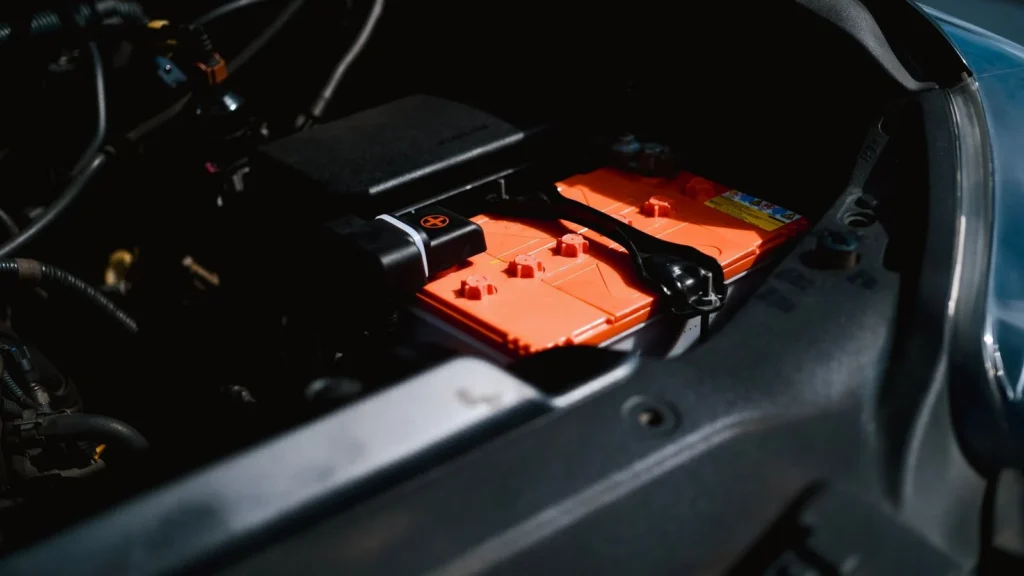
A flat 12V battery on an electric car is one of the more frustrating and genuinely common surprises new EV owners run into, usually accompanied by the confusion of “but I thought this car had a massive battery.” It does, but that huge lithium-ion traction battery and the small 12V battery underneath the bonnet or boot floor are entirely separate systems, and the little one fails just as easily, sometimes more easily, than on a conventional car.
Why EVs even have a small 12V battery at all
The main traction battery operates at several hundred volts and is far too dangerous and impractical to run low-voltage systems, lights, infotainment, door locks, and crucially the electronics that “wake up” the car and manage the process of connecting to the high-voltage system when you start driving or plug in to charge. A small conventional 12V battery handles all of this, exactly as it would in any petrol car, and it’s genuinely essential to the whole car functioning at all.
Why it goes flat more often than owners expect
Ironically, EVs can be harder on their 12V battery than petrol cars in some respects. Various onboard systems, security, connectivity features, battery management electronics, continue drawing a small amount of power even while the car is parked and switched off, sometimes described as vampire drain. If a car sits unused for an extended period, particularly in cold weather which reduces battery capacity further, this steady background draw can flatten a marginal 12V battery surprisingly quickly.
How to tell if it’s the 12V battery specifically
A completely unresponsive car, no lights, no dashboard, no response from key fob or app, often points to the 12V battery rather than the main traction battery, since the low-voltage system needs to be functioning even to display information about the high-voltage battery’s charge level. If your app shows a healthy main battery charge but the car itself won’t wake up or respond at all, the 12V battery is a strong suspect.
- Complete unresponsiveness despite a healthy main battery charge shown in the app
- Dim or flickering interior lights before the fault develops fully
- Warning messages about auxiliary or 12V systems on the dashboard
- Slow or failed wake-up when approaching the car with the key
- Charging port failing to unlock or respond
Why jump-starting an EV is different from a petrol car
You can jump-start most EVs’ 12V system in broadly the same way as a petrol car, using the correct jump points specified in the owner’s manual, but it’s worth being cautious and following manufacturer guidance closely given the proximity to high-voltage systems elsewhere in the car. This isn’t something to improvise without checking the specific procedure for your model first.
Preventing repeat 12V battery failures
If your EV sits unused for extended periods, regularly, plugging into a charger periodically rather than leaving it disconnected for weeks helps keep the 12V system topped up alongside the main battery on many models. Getting the 12V battery’s age and condition checked periodically, rather than waiting for it to fail completely, catches a weakening battery before it leaves you stranded on a cold morning.
How this differs across EV brands and models
Some manufacturers have addressed vampire drain and 12V reliability more effectively than others through software updates and improved battery management, and it’s a genuinely known issue that’s been the subject of manufacturer recalls and software fixes on certain models over the years. If you’ve had repeat 12V failures on the same car, it’s worth checking whether a relevant software update or recall applies to your specific model.
What a 12V auxiliary battery check involves
A proper check tests the battery’s actual condition and cranking capacity, not just whether it currently holds charge, along with checking terminal connections for corrosion and confirming the charging system is topping it up correctly while the car runs. This gives a genuine sense of remaining working life rather than waiting for a sudden, inconvenient failure.
Booking a check with SSK Mechanics
If your EV has left you stranded with an unresponsive car more than once, or you simply want to avoid that experience altogether, a 12V auxiliary battery check is a quick, affordable way to catch a weakening battery before it fails completely and leaves you unable to even unlock the car.
Testing the 12V battery properly rather than guessing
A battery that starts the car fine one morning can still be marginal and close to failing, since a simple successful start doesn’t reveal much about the battery’s actual remaining capacity under load. Proper testing measures cold cranking performance and internal resistance, giving a genuine indication of remaining working life rather than relying on the battery simply “seeming fine” until the day it suddenly isn’t.
How age affects 12V battery reliability on EVs
Most 12V batteries, on EVs and petrol cars alike, have a working life of around four to six years depending on usage, climate and how well maintained the connections are. Because EVs place slightly higher background demands on this battery through connectivity and security features, some owners find their 12V battery needs replacing a little sooner than they might expect from petrol car experience.
What a healthy charging system should be doing
While driving, the 12V system should be topped up either from the main high-voltage battery via a DC-DC converter or from a small onboard charging circuit, keeping it at a healthy state of charge without the driver needing to think about it. A fault in this charging path, separate from the battery itself, can cause repeated flat batteries even with a perfectly healthy 12V unit, which is why proper diagnosis matters rather than simply replacing the battery and hoping the problem goes away.
When to call for assistance versus self-diagnose
If your EV won’t wake up at all and jump-starting doesn’t resolve it, or if the problem keeps recurring despite a battery replacement, it’s worth getting a proper diagnostic check rather than repeatedly replacing the 12V battery on guesswork, since a recurring fault often points to a charging system issue rather than the battery itself being at fault each time.
Battery isolators and long-term storage
If you’re storing an EV for an extended period, weeks rather than days, some manufacturers recommend specific steps to protect the 12V battery from vampire drain, sometimes involving a maintenance charger or, on certain models, a manual isolator switch. Checking your specific manufacturer’s guidance before a long period of storage can prevent a completely avoidable flat battery scenario when you eventually come back to the car.
The genuine cost of ignoring 12V battery health
Beyond the inconvenience of a stranded car, a 12V battery that fails unexpectedly can, in some circumstances, cause knock-on issues with the car’s electronics if it fails suddenly while systems are actively drawing power, occasionally requiring a more involved reset or diagnostic visit than a simple battery swap would have needed if caught earlier. Prevention is genuinely the cheaper and less stressful path here.
Getting ahead of the problem
If you’ve experienced even one unexpected flat 12V battery on your EV, it’s worth treating that as a genuine warning sign rather than a one-off fluke, and getting the battery and charging system properly checked before it happens again, ideally at a moment of your choosing rather than on a cold morning when you actually need the car.
Why professional diagnosis beats guesswork
Repeatedly replacing a 12V battery without understanding why it keeps failing wastes money and doesn’t address whatever underlying cause, a charging fault, excessive parasitic drain, or simple old age, is actually behind the problem. A proper diagnostic check identifies the real cause rather than treating the symptom repeatedly.
What good maintenance habits look like for EV owners
Keeping the car connected to a charger periodically rather than leaving it entirely disconnected for weeks, getting the 12V battery checked annually, and paying attention to any early warning signs like dim lights or slow wake-up behaviour are the practical habits that prevent this frustrating and entirely avoidable problem from recurring.
Final thoughts
A flat 12V battery is one of the most common, and most preventable, causes of EV owner frustration. Understanding why it happens and getting it checked properly, rather than simply replacing the battery and hoping, is the difference between an occasional minor inconvenience and a recurring, genuinely stressful problem.
How manufacturers are addressing this issue long term
Several manufacturers have issued software updates specifically targeting excessive background power draw on certain models, reducing unnecessary parasitic loss during parked periods. If your specific model and software version are known to have this issue, checking whether an update is available and applying it can meaningfully reduce the frequency of flat battery incidents without needing any hardware changes at all.
What this means for less frequently driven second cars
If your EV serves as a second car that sits unused for longer stretches between drives, it’s genuinely more vulnerable to this issue than a daily-driven vehicle, simply because there’s more time for background drain to accumulate between charging sessions. Building in a periodic check-in, even just starting the car and letting it run briefly every week or two, helps keep the 12V system in better shape.
Wrapping up
Understanding the distinction between your EV’s two separate battery systems, and knowing that the smaller one genuinely needs its own periodic attention, removes most of the mystery and frustration around this surprisingly common issue, letting you address it proactively rather than being caught out by it repeatedly.
Book a check with SSK Mechanics
Whether you’ve had one flat battery too many or simply want to get ahead of the problem, a proper 12V auxiliary battery check with SSK Mechanics gives you a clear answer and, where needed, a straightforward fix carried out at your home across Bradford and West Yorkshire.
A flat 12V battery doesn’t need to be a recurring mystery. With the right check and, where needed, a straightforward fix, most owners find the problem resolved for good rather than something they simply learn to work around every few months, which is exactly how it should be.
A note on aftermarket accessories and battery drain
Dash cams, aftermarket alarms and other accessories left permanently wired into the electrical system can meaningfully add to background power draw while parked, and if you’ve had one fitted around the time flat battery issues started, it’s worth having its installation checked as a possible contributing factor alongside the usual causes.
Getting to the bottom of a repeat flat battery issue is usually quicker and less costly than owners initially expect, and once resolved properly it tends to stay resolved, freeing you from the low-level anxiety of wondering each morning whether the car will actually respond when you need it to.
In the end, a small amount of proactive attention to a component many drivers never think about at all is what separates owners who deal with this problem once and move on from those who find themselves reaching for jump leads every few weeks without ever understanding why.
SSK Mechanics can test, diagnose and where needed replace the 12V auxiliary battery on your EV at your home or workplace across Bradford and West Yorkshire, giving you a properly working car and one less thing to worry about each morning.
Rather than continuing to work around a problem that has a genuine, fixable cause, getting it looked at properly is usually the faster and cheaper path in the end, and it means one less thing standing between you and a car that simply starts every time you need it to.
Get in touch with SSK Mechanics to book a proper 12V check and put a stop to the guesswork once and for all.
Our mobile mechanics cover Bradford and the surrounding area and can usually get to you within a few days. Reach out today to get this sorted properly. We look forward to helping you resolve this once and for all. Book now. Real fixes beat repeat jump starts every time.
Frequently asked questions
Why does an electric car have two batteries?
The large high-voltage battery drives the motor, while a separate small 12V battery powers low-voltage systems like lights and locks, exactly as a conventional car does.
Can vampire drain flatten an EV 12V battery even when parked?
Yes, background systems continue drawing small amounts of power while parked, which can flatten a marginal 12V battery over an extended period of inactivity.
How do I jump-start an electric car with a flat 12V battery?
Most EVs can be jump-started using designated jump points specified in the owner manual, though it is worth following the exact manufacturer procedure given the proximity to high-voltage systems.
Does a flat 12V battery mean the main EV battery is also flat?
No, the two systems are entirely separate, so the main battery can be fully charged while the 12V battery is completely flat and preventing the car from responding at all.
How often should an EV 12V battery be checked?
Annually is a reasonable interval for most drivers, or sooner if you have already experienced an unresponsive car or noticed dimming lights or slow wake-up behaviour.