

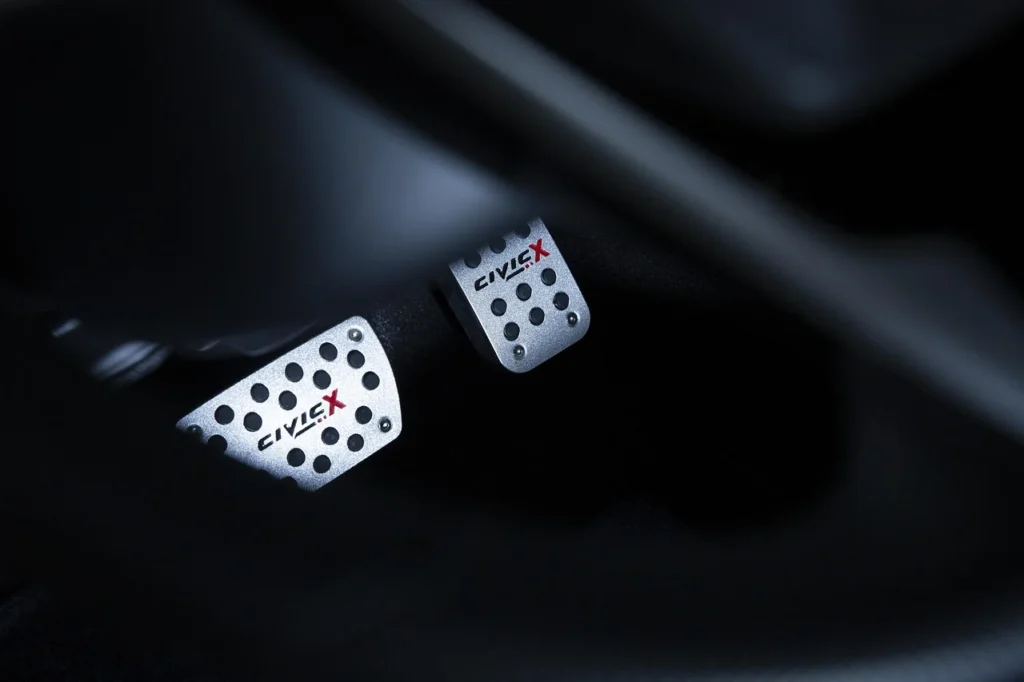
Step on the brake pedal in an EV or hybrid and something quite different happens compared to a petrol car. Before the traditional friction brakes even engage, the electric motor itself starts acting as a generator, slowing the car and feeding energy back into the battery. This is regenerative braking, and it changes brake wear patterns enough that it’s worth understanding properly rather than assuming EV brakes behave exactly like any other car’s.
How regenerative braking actually works
An electric motor can run in reverse as a generator, and when you lift off the accelerator or press the brake pedal on an EV or hybrid, the car uses this property to slow itself down while capturing kinetic energy that would otherwise be wasted as heat through the friction brakes.
That captured energy goes back into the battery, extending range, which is why regenerative braking is as much an efficiency feature as a braking one. On many EVs, the effect is strong enough that drivers can slow to a near stop using the accelerator pedal alone, sometimes called one-pedal driving.
Why this changes how the friction brakes wear
Because the motor handles a large share of everyday deceleration, the traditional friction brakes, pads pressing against discs, do considerably less work than on a petrol car covering the same mileage. Many EV and hybrid owners find their brake pads and discs last two to three times longer than they would on an equivalent petrol car.
This is a genuine, meaningful saving over the life of the car, and it’s one of the more underappreciated advantages of electric and hybrid drivetrains beyond fuel costs alone.
The catch: underused brakes corrode
Brakes that see less frequent, less forceful use are more prone to surface corrosion building up on the discs, particularly in the UK’s wetter climate. Left unchecked, this corrosion can reduce braking effectiveness and, in worst cases, cause pads to bind or stick to the disc surface.
This is precisely why infrequent brake use isn’t purely a win, it shifts the maintenance risk from wear toward corrosion and seizing, which needs a different kind of periodic attention rather than none at all.
Signs your regenerative braking system needs checking
- A grinding or scraping noise despite pads looking barely worn
- Reduced regenerative braking feel or the car coasting more than usual
- A warning light referencing the braking or hybrid system
- Uneven braking, pulling to one side under gentle braking
- Visible rust or pitting on the brake discs during a wheel-off inspection
How regen braking differs between EVs and hybrids
Pure EVs typically apply stronger, more consistent regenerative braking across a wider range of driving conditions, since there’s no combustion engine competing for control logic. Hybrids blend regenerative and friction braking with the demands of managing the combustion engine too, and the balance between the two can feel less aggressive or less consistent depending on the specific hybrid system design.
Some hybrids let drivers adjust regen strength through paddle shifters or drive modes, giving more direct control over how much braking effort comes from the motor versus the friction brakes at any given moment.
Why brake fluid still matters despite lighter friction brake use
Brake fluid absorbs moisture from the atmosphere over time regardless of how much the friction brakes are actually used, gradually reducing its boiling point and effectiveness under hard braking. This means fluid still needs periodic renewal on the standard interval even on a car with pristine, barely worn pads.
What a regenerative brake system check involves
A proper check assesses both sides of the system, testing regenerative braking function and feel, and physically inspecting the friction brakes for corrosion, binding or uneven wear that lighter use can mask. Brake fluid condition and moisture content get tested too, since that part of the maintenance picture doesn’t change regardless of drivetrain.
Getting the balance right for long-term reliability
Understanding that reduced friction brake wear doesn’t mean reduced maintenance need, just a different kind, is the key takeaway for EV and hybrid owners. Regular checks that specifically look for corrosion and seizing, not just pad thickness, keep the system working as effectively as the technology is designed to.
Booking a check with SSK Mechanics
SSK Mechanics can carry out a proper regenerative brake system check at your home across Bradford and West Yorkshire, covering both the regen function and the physical condition of the friction brakes, giving you a complete picture rather than just a pad thickness measurement that doesn’t tell the whole story on an EV or hybrid.
How much energy regenerative braking actually recovers
The exact percentage varies by vehicle, driving style and terrain, but regenerative braking can meaningfully extend real-world range, particularly in stop-start town driving where a petrol car would be constantly burning fuel accelerating away from junctions and traffic lights. On hilly routes, including much of the terrain around Bradford and the wider West Yorkshire area, regenerative braking on long descents can noticeably top up the battery, turning what would be wasted braking energy on a petrol car into genuine range extension on an EV.
Why some drivers find regen braking takes getting used to
The sensation of the car slowing itself down as soon as you lift off the accelerator, rather than coasting freely the way a petrol car does, feels unfamiliar to new EV drivers and takes a short adjustment period. Most manufacturers offer adjustable regen strength settings precisely because driver preference varies considerably, some prefer strong one-pedal driving, others prefer a gentler feel closer to a traditional automatic gearbox coasting.
What happens mechanically when brakes see less use
Brake discs are made from cast iron in most cars, EV or otherwise, and cast iron corrodes readily when exposed to moisture without the regular light abrasion that comes from frequent pad contact wiping the surface clean. On a petrol car doing regular motorway and town driving, that abrasion happens naturally and often. On an EV relying heavily on regenerative braking, the discs can sit relatively undisturbed for extended periods, allowing surface rust to build a visible layer that needs to be worn away again the next time the friction brakes are actually needed with any force.
Why this matters more after periods the car sits unused
If an EV or hybrid has sat parked for a week or two, perhaps during a holiday, it’s worth being aware that the first few brake applications afterward might feel or sound slightly different, a light grinding or scraping as surface corrosion wears away, rather than assuming something is genuinely wrong. This is normal and usually resolves within the first few proper brake applications, though persistent grinding beyond that point is worth having checked properly.
Practical driving habits that make the most of regen braking
Anticipating traffic further ahead and easing off the accelerator earlier, rather than braking hard at the last moment, lets the regenerative system capture more energy and reduces reliance on the friction brakes even further. This isn’t just an efficiency tip, it genuinely extends the gap between brake services too, compounding the natural advantage regenerative braking already provides over a typical petrol driving style.
What happens to regen braking in very cold or very full battery states
Regenerative braking strength is often automatically reduced when the battery is very cold, since accepting charge into a cold battery too aggressively can cause damage, and similarly reduced when the battery is at or near full charge with nowhere for the recovered energy to go. In either scenario, the friction brakes automatically take up the extra work seamlessly, which is why this shouldn’t be alarming if you notice slightly different braking feel on a cold morning or right after a full charge.
Why some manufacturers are moving toward brake-by-wire systems
Newer EVs increasingly use brake-by-wire technology, where the pedal doesn’t directly, mechanically connect to the hydraulic system in the traditional sense, instead using electronic signals to blend regenerative and friction braking smoothly and seamlessly. This allows more sophisticated management of exactly how much of each type of braking is applied at any given moment, generally improving both efficiency and pedal feel, though it also means diagnostic and repair work increasingly requires manufacturer-specific tools and training.
What West Yorkshire’s roads mean for regen braking specifically
The steep gradients around towns like Haworth, Ilkley and the outer edges of Bradford give regenerative braking plenty of genuine work to do on descents, meaning local EV and hybrid drivers often see a more pronounced real-world benefit from the technology than someone driving mostly flat motorway routes elsewhere in the country. This also means brake discs on locally driven EVs may see slightly different corrosion and wear patterns compared to a car used mainly for flat, steady motorway commuting, worth mentioning to your mechanic if you’re getting a check done.
Final thoughts on regenerative braking and maintenance
Regenerative braking is a genuine engineering win, extending range, reducing wear, and giving drivers a more direct, satisfying feel for how their energy use translates into distance. Understanding its one meaningful maintenance trade-off, corrosion risk from lighter friction brake use, means you can enjoy the benefit fully while still keeping the whole braking system in genuinely safe, reliable condition.
How brake pad material differs on some EVs
Given the reduced role friction brakes play, some manufacturers fit slightly different pad compounds on EVs compared with equivalent petrol models, sometimes prioritising quiet operation and corrosion resistance over the outright aggressive bite a petrol car’s pads might need for its heavier reliance on friction braking. This is one more reason it’s worth using a mechanic familiar with EV-specific parts when replacement is eventually needed, rather than assuming a generic petrol car pad is a like-for-like substitute.
Bringing it together for everyday driving
None of this needs to change how you drive day to day, regenerative braking works largely in the background once you’re used to the pedal feel, quietly extending both range and brake life at the same time. Just keep the corrosion risk in mind at your next brake check, and you’ll get the full benefit of the technology without any nasty surprises.
Choosing the right provider for regen brake checks
Not every general mechanic has the specific experience needed to distinguish between normal EV brake behaviour and a genuine fault, since the diagnostic approach differs meaningfully from a conventional petrol car brake inspection. Choosing a provider with genuine hands-on EV and hybrid experience means the assessment actually accounts for how these systems are meant to behave, rather than flagging normal regenerative braking characteristics as a fault, or missing genuine corrosion issues because the pad thickness alone looked reassuring.
Book your check today
Get in touch with SSK Mechanics to book a regenerative brake system check at your home across Bradford and the wider West Yorkshire area, carried out by mechanics who understand exactly how these systems are supposed to work.
Get in touch with our friendly local team to arrange a convenient appointment that fits around your schedule.
We work across the whole of Bradford and West Yorkshire, and we genuinely enjoy explaining exactly how these systems work rather than just quoting a price and moving on, since an informed owner tends to look after their car better in the years that follow.
Book your appointment today and keep your EV or hybrid running smoothly for years to come, brakes included. Our friendly, experienced local team is standing by to help you with whatever your EV or hybrid needs.
Understanding your EV or hybrid’s braking system properly, rather than assuming it works exactly like a petrol car’s, helps you get the most out of the technology while keeping everything genuinely safe for years of driving ahead, through wet Yorkshire winters and dry summer months alike.
Get in touch today to book your regenerative brake system check and drive away with genuine confidence in every part of your car’s braking performance.
We look forward to hearing from you. Book now. Call, message, or book directly through our website, whichever suits you best.
Frequently asked questions
Do EV brakes really last longer than petrol car brakes?
Yes, because regenerative braking handles much of the everyday deceleration, friction brake pads and discs on EVs and hybrids typically last considerably longer than on an equivalent petrol car.
Why do EV brakes sometimes seize or corrode?
Because they are used less frequently and less forcefully, surface corrosion can build up on discs and calipers, particularly in wet UK weather, which needs checking even though outright wear is reduced.
Does regenerative braking mean I never need to check my brakes?
No, they still need periodic inspection for corrosion and seizing, and brake fluid still needs regular renewal regardless of how little the friction brakes have physically worn.
Is one-pedal driving safe on an EV?
Yes, it is a designed feature using regenerative braking to slow the car, though most manufacturers still recommend using the brake pedal for emergency stops and hard braking situations.
What is the difference between regen braking on a hybrid versus an EV?
Pure EVs generally apply stronger, more consistent regenerative braking, while hybrids blend it with friction braking and combustion engine management, sometimes with driver-adjustable strength settings.