

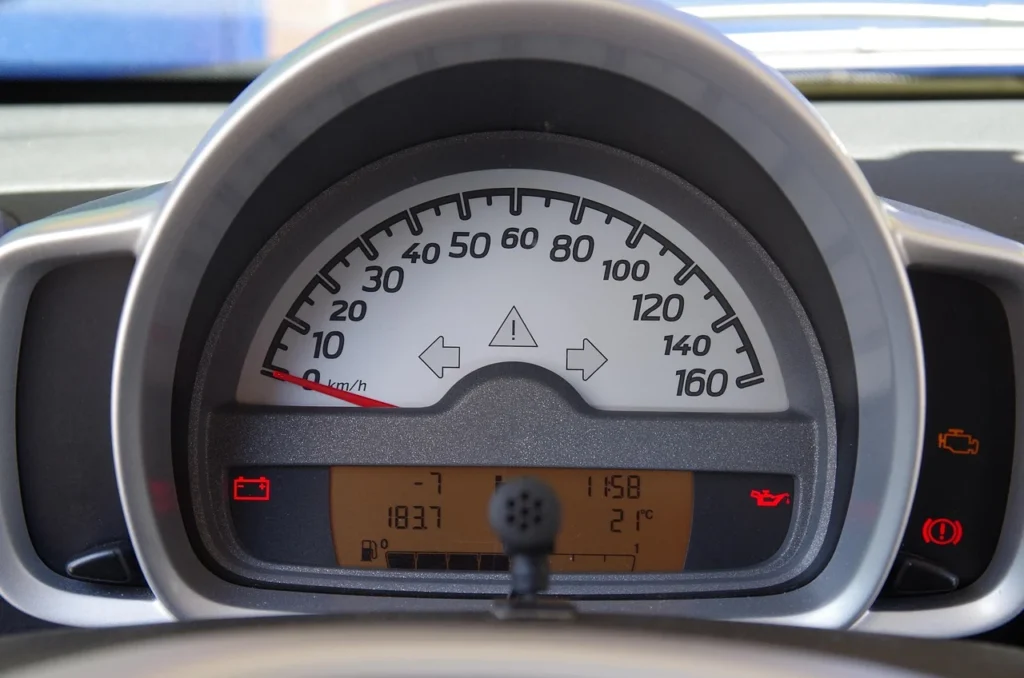
Of all the warning lights on a car’s dashboard, the oil pressure light is one of the very few where the correct response is genuinely immediate: stop the car as soon as it’s safe to do so, not when convenient, not at the next junction if you can help it, but as soon as you can safely pull over. Continuing to drive with genuinely low oil pressure can cause catastrophic engine damage within a matter of minutes.
Why this light is treated so differently
Engine oil does more than lubricate; it’s pumped under pressure to critical moving parts throughout the engine, and that pressure is what keeps metal surfaces separated by a thin film of oil rather than grinding directly against each other. When oil pressure drops significantly, whether from low oil level, a failing oil pump, or a more serious internal fault, those surfaces can begin contacting each other almost immediately, and the resulting damage, to bearings, the crankshaft, or other internal components, can be severe and expensive enough to write off the engine entirely.
What to do the moment this light appears
- Pull over safely as soon as possible, ideally within seconds rather than minutes
- Switch off the engine once safely stopped
- Check the oil level using the dipstick if you’re able to do so safely
- Do not restart the engine if the oil level is low or you’re unsure, arrange recovery instead
- Call for recovery or roadside assistance rather than attempting to drive further
If the oil level checks out as normal and you’re confident the light was a false reading or sensor fault, it’s still worth having the car properly checked before driving normally again, since a faulty sensor and genuine low pressure can look identical from the driver’s seat.
Common causes of low oil pressure
Simply low oil level, whether from a slow leak or the car being overdue an oil top-up, is a common and comparatively minor cause. A failing oil pump, a blocked oil pickup or filter, or a more serious internal engine fault causing oil to bypass where it should be flowing are more serious causes requiring proper diagnosis. Occasionally, the oil pressure sensor itself fails and gives a false reading, though this shouldn’t be assumed without checking, given the risk of guessing wrong.
Why oil level checks alone are not always enough
While checking the dipstick is a sensible first step once safely stopped, a normal oil level does not fully rule out a genuine pressure problem, since a failing oil pump or a blocked pickup can starve the engine of pressure even with adequate oil in the sump. This is why, even if the level looks fine, it remains important to have the car properly checked rather than assuming the light was a false alarm and resuming normal driving straight away.
A mobile mechanic attending you at the roadside or wherever the car has been safely stopped can carry out an initial assessment without the added complication and cost of a full recovery, provided the situation allows for a safe, informed decision about whether the car can be moved any further at all.
Keeping basic emergency contact details and your breakdown cover information easily accessible in the car means you are not searching for them at the roadside during an already stressful moment if this warning does appear unexpectedly.
What happens if you ignore it
Continuing to drive with a genuine low oil pressure fault, even for a short distance, risks serious internal engine damage that in the worst cases means a full engine replacement rather than a repair, a cost many multiples higher than whatever caused the low pressure in the first place. This is genuinely one of the situations where a cautious, immediate response protects you from a vastly larger bill later.
What a mechanic actually checks after an oil pressure warning
Beyond confirming the current oil level and condition, a thorough assessment checks the oil pressure sensor’s accuracy directly, since a faulty sensor can occasionally give a false low reading even when actual pressure is normal, though this should never be assumed without proper verification. The technician will also check for any visible signs of oil leaks, listen for unusual engine noise that might indicate bearing wear from a period of low pressure, and where appropriate, check oil pressure directly using a mechanical gauge rather than relying solely on the electronic sensor’s reading.
How oil pressure faults compare with a simple low oil level
A car that’s several hundred miles overdue a top-up, with oil level genuinely low but the pump and system otherwise healthy, is a considerably less serious situation than a healthy oil level paired with a failing pump or blocked pickup, even though both can trigger the identical warning light. This is exactly why checking the level yourself, once safely stopped, gives useful initial information but doesn’t replace a proper professional assessment before resuming normal driving.
Why oil pressure faults are more common on higher mileage engines
As an engine accumulates mileage, internal clearances gradually increase through normal wear, which can reduce oil pressure slightly even with correctly maintained oil level and quality. This gradual change is part of why some manufacturers specify a slightly thicker oil viscosity for higher mileage engines, designed to help maintain adequate pressure despite this natural wear, and it’s worth discussing with your mechanic whether this applies to your specific vehicle if oil pressure concerns have developed at higher mileage.
Why regular oil changes are the best prevention here
Oil that’s overdue for changing gradually loses viscosity and its protective properties, and in extreme cases, sludge buildup from long-neglected oil can partially block the oil pickup, restricting flow to the pump and reducing pressure throughout the system. Sticking to the manufacturer’s recommended oil change interval is genuinely one of the simplest, most effective ways to avoid ever facing a genuine oil pressure emergency in the first place.
Frequently asked questions
How quickly can low oil pressure actually damage an engine? Genuine engine damage from low oil pressure can begin within seconds to minutes of driving under load, which is exactly why the standard advice for this specific warning is to stop immediately rather than continuing even a short distance.
Is it worth checking oil level myself before booking a mechanic? Yes, once safely stopped, checking the dipstick is a sensible, free first step, though a normal reading doesn’t rule out a genuine pump or pickup fault, so a proper check remains worthwhile regardless of what the dipstick shows.
How this compares with the coolant temperature light
Both warnings demand an immediate stop, but for different underlying reasons, oil pressure protects against direct metal-on-metal contact within the engine, while coolant temperature protects against heat-related damage to the cylinder head and gasket. It’s worth understanding both demand the same urgent response even though the mechanism of potential damage differs considerably between them.
Why oil pressure warnings sometimes appear briefly at idle
Some engines, particularly older or higher mileage ones, can show a brief, low pressure reading at idle that resolves once engine speed increases, related to normal oil pump characteristics at very low RPM rather than a genuine fault. This shouldn’t be assumed without proper diagnosis though, since a genuine developing fault can present with a similar pattern in its early stages, and a mechanic’s assessment remains the only reliable way to tell the difference confidently.
Why recovery, not a short drive, is always the safer choice
Even if a garage is genuinely close by, the temptation to drive there directly rather than arranging recovery is worth resisting once a genuine oil pressure fault is suspected, since even a short distance under load can be enough to cause serious damage if the pressure loss is real. The modest cost or inconvenience of recovery is genuinely nothing compared with the cost of a damaged engine.
Why keeping basic tools in the car genuinely helps in this situation
A simple cloth for handling a hot dipstick safely, and a small torch for checking levels in poor light or at night, are genuinely useful, low-cost additions to keep in the car specifically for situations like this, where checking oil level accurately and safely at the roadside makes a real difference to the decision you then need to make.
A final word on this warning specifically
Of every warning covered on this site, this is the one where hesitation costs the most, so treat the advice here as a genuine rule rather than a suggestion: stop safely, and stop promptly, every single time this light appears.
What to mention when booking a check after an oil pressure warning
Describing exactly what you found when you checked the oil level, and whether the light cleared or stayed on after stopping, gives a mechanic genuinely useful information before you even arrive.
Booking a Full Health Check promptly, once safely recovered, remains the most reliable way to confirm the engine is genuinely undamaged.
A closing thought on this particular warning
Of everything covered across this site, this light deserves the least hesitation and the most immediate, decisive action, precisely because the cost of waiting even a short distance can be so severe.
Stop safely, act promptly, and get it checked properly every single time.
Why mobile assistance suits this particular situation well
Once safely stopped, having a mechanic come to wherever the car has been left, rather than arranging a full recovery to a fixed garage, can sometimes allow a quicker initial assessment of whether the car can be moved further at all, provided the situation genuinely allows for a safe, informed judgement call.
A note on synthetic versus mineral oil and pressure readings
Switching between oil types partway through a car life can occasionally produce a slightly different pressure reading than the engine was originally calibrated around, though this should never be assumed as an explanation without a proper check confirming there is genuinely no other cause present.
A note on older engines with mechanical oil pressure gauges
A small number of older or specialist vehicles use a genuine mechanical gauge rather than a simple warning light, giving a continuous reading rather than a binary warning, worth knowing if your specific car falls into this category since it changes how you should interpret a gradually falling reading.
A note on the difference between oil pressure and oil level warnings on newer cars
Some newer vehicles combine oil level and oil pressure monitoring into a single system with different warning stages, and understanding which specific stage your car is displaying, rather than assuming the most severe interpretation automatically applies, is worth clarifying with your handbook.
Trust this instinct every time this specific light appears, without exception.
A note on carrying basic breakdown cover
Having reliable breakdown cover in place before you ever need it means recovery from an oil pressure related stop is a straightforward phone call rather than an added stress on top of an already concerning situation.
Take that step today rather than putting it off another week.
Your engine, and your wallet, will thank you for acting decisively.
Acting quickly here is the single best thing you can do for your engine.
Book the check today.
A note on keeping a simple record of oil changes over time
Noting the date, mileage, and oil type used at every change builds a genuinely useful maintenance history, helping both you and any future mechanic understand the engine care over its full ownership history.
This small habit costs nothing and can genuinely help down the line.
It genuinely is worth doing consistently.
Keep it simple, and keep it consistent, year after year.
Your engine deserves that level of consistent care.
If your oil pressure light has come on, stop safely and get the car properly checked rather than risking further driving. SSK Mechanics offers a Full Health Check (50-Point) to assess the cause thoroughly. See GOV.UK’s vehicle safety guidance for wider reference, then book with SSK Mechanics to check it properly.
Source: GOV.UK vehicle safety guidance
Frequently asked questions
Can I drive a short distance with the oil pressure light on?
This is not recommended. Continuing to drive, even briefly, risks serious engine damage if the oil pressure loss is genuine rather than a sensor fault.
What should I check first if this light comes on?
Once safely stopped, check the oil level with the dipstick if you can do so safely, though this should not delay pulling over promptly in the first place.
Can a faulty sensor cause a false oil pressure warning?
Yes, though it should never be assumed without checking, since genuine low pressure and a faulty sensor can look identical from the driver's seat.
How much damage can low oil pressure cause?
Potentially severe, ranging from bearing damage to complete engine failure, which is why an immediate stop is the recommended response rather than continuing to drive.