

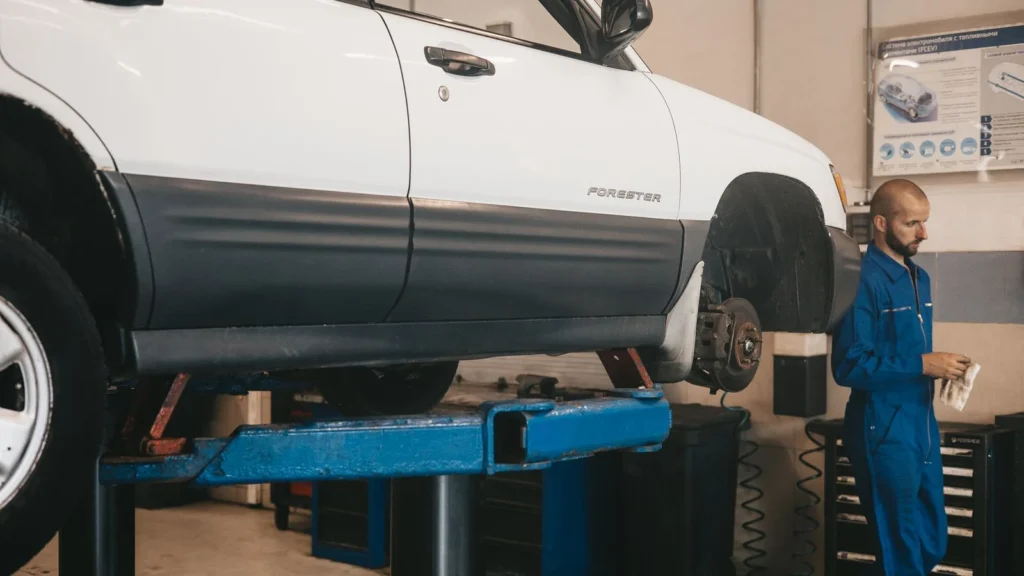
It’s a fair question, and one plenty of EV and hybrid owners genuinely wonder about. If the friction brakes are barely being used thanks to regenerative braking, does the fluid inside the braking system still need the same periodic attention a petrol car’s does? The short answer is yes, and understanding why clears up a common misconception about what brake fluid actually does.
What brake fluid does that has nothing to do with wear
Brake fluid transmits the force from your foot on the pedal through to the brake calipers via hydraulic pressure. This job has nothing to do with how much friction, and therefore wear, the pads and discs experience, it’s purely about pressure transmission through a sealed hydraulic system.
The fluid’s condition matters because it’s hygroscopic, meaning it absorbs moisture from the atmosphere gradually over time, even in a sealed system, through microscopic permeation and any tiny amount of exposure during normal operation.
Why moisture in brake fluid is a genuine safety issue
As brake fluid absorbs moisture, its boiling point drops. Under hard, sustained braking, particularly on a long downhill stretch or repeated emergency stops, fluid temperature can rise enough that moisture-contaminated fluid actually boils, creating compressible vapour bubbles in the system. This causes a spongy, less effective pedal exactly when maximum stopping power matters most.
This risk exists identically on an EV, a hybrid, and a petrol car, since it’s a property of the fluid itself rather than something related to how the brakes are mechanically operated day to day.
Why lighter brake use doesn’t slow this process down
Moisture absorption happens gradually through the system’s seals and components regardless of how often the pedal is pressed with real force. A car that’s covered ten thousand miles almost entirely on regenerative braking still has fluid that’s aged the same number of months or years as one that’s used its friction brakes constantly.
This is the core misconception worth correcting: brake fluid degrades on a calendar timeline driven by moisture absorption, not a mileage or wear timeline driven by pad and disc use.
Standard replacement intervals still apply
- Most manufacturers recommend brake fluid replacement every two to three years
- This applies regardless of drivetrain type, EV, hybrid or petrol
- Testing moisture content directly gives a more precise answer than relying purely on calendar time
- Fluid condition should be checked as part of any general health check regardless of pad wear
How EV and hybrid brake fluid testing actually works
A simple electronic tester measures moisture content directly by dipping a probe into the fluid reservoir, giving an immediate reading against the safe threshold rather than relying purely on how long it’s been since the last change. This is quick, non-invasive, and gives a genuinely accurate picture regardless of how the brakes have been used.
What happens if brake fluid is left too long
Beyond the reduced boiling point and spongy pedal risk under hard braking, moisture-contaminated fluid is also more corrosive to the internal components of the braking system, calipers, cylinders and metal brake lines, potentially leading to more expensive repairs than a routine fluid change would have cost.
Combining fluid checks with a regenerative brake inspection
Since a mechanic is already assessing the braking system for corrosion and function specific to regenerative braking, it makes sense to test fluid condition at the same time, giving a complete picture of both the mechanical and hydraulic sides of the system in a single visit.
The bottom line for EV and hybrid owners
Reduced pad and disc wear is a genuine benefit of regenerative braking, but it doesn’t extend to the fluid, which ages on its own separate timeline entirely unrelated to friction brake use. Sticking to the standard replacement interval, or testing moisture content directly, keeps your braking system genuinely safe rather than relying on a misconception about what “less wear” actually covers.
Book a check with SSK Mechanics
SSK Mechanics can test brake fluid condition and carry out a full regenerative brake system check at your home across Bradford, giving you clarity on both sides of your EV or hybrid’s braking system rather than assuming everything is fine simply because the pads look practically new.
What a moisture reading actually tells a mechanic
Fresh brake fluid typically contains a very low percentage of water by volume, and most manufacturers set a threshold, often around three percent, beyond which the fluid is considered due for replacement regardless of how it looks or how the brakes feel. A simple electronic tester gives this reading in under a minute, and it’s a considerably more precise way of deciding whether fluid needs changing than relying purely on the calendar, since actual moisture absorption rates can vary somewhat depending on climate and how often the reservoir cap has been opened for other work.
Why some owners are tempted to skip this on an EV specifically
It’s an understandable instinct, if the pads and discs are barely worn after two years, it feels intuitive to assume nothing else in the braking system needs attention either. But this intuition is exactly where the misconception creeps in, since fluid degradation is governed by a completely separate mechanism, atmospheric moisture absorption through seals, unrelated to mechanical wear from friction. Skipping the fluid change because the pads look fine is a bit like assuming your car doesn’t need an MOT because the tyres still have plenty of tread, it addresses the wrong variable entirely.
How this fits into a wider EV maintenance mindset
Brake fluid is a useful example of a broader principle worth carrying into EV ownership generally: not every maintenance item scales down proportionally just because the drivetrain is different. Some things genuinely do reduce or disappear entirely, oil changes being the obvious example. Others, like brake fluid, coolant, and cabin filters, continue on essentially the same schedule they always have, because the underlying reason they need attention has nothing to do with the engine or motor at all.
What happens during the actual fluid change
The process itself is identical to a petrol car, old fluid is bled out through each brake line while fresh fluid is introduced at the reservoir, removing air and moisture-contaminated fluid from the entire system. On EVs and hybrids with electronic parking brakes or brake-by-wire systems, a mechanic needs to follow the correct procedure to avoid triggering fault codes or leaving the system in an unexpected state, which is part of why this is worth leaving to someone experienced with the specific system on your car.
Why some EV owners get caught out at MOT time specifically
Brake fluid condition isn’t always a formal, mandatory MOT test item on every vehicle in the same explicit way tyre tread or lighting are, but a tester can and sometimes will flag visibly contaminated or clearly degraded fluid as an advisory, and severely compromised braking performance resulting from fluid issues absolutely can contribute to a fail on the rolling road brake test itself. Getting fluid tested well before the MOT, rather than discovering an advisory or worse on test day, avoids this entirely preventable surprise.
How brake fluid type varies and why it matters
Most cars use DOT 3, DOT 4 or DOT 5.1 fluid, with EVs and hybrids typically specifying the same types used across the wider industry rather than anything unique to electric drivetrains. Using the correct type specified for your specific vehicle matters, since mixing incompatible fluid types can cause seal damage within the hydraulic system, an entirely avoidable problem that simply comes down to checking the handbook or asking your mechanic to confirm before any top-up or full change.
A simple way to remember the rule
If it helps, think of brake fluid as being on its own separate maintenance clock entirely disconnected from how the brakes themselves are wearing, ticking along on time and moisture exposure alone. Pads and discs run on a mileage and usage clock. Keeping both clocks in mind, rather than assuming one dictates the other, is really the whole lesson here, and it applies just as much to a petrol car as it does to the EV or hybrid sat on your driveway.
Booking your check today
Whether it’s been a while since your brake fluid was last tested, or you simply want the reassurance of knowing exactly where it stands, SSK Mechanics can check moisture content and overall brake system condition together at your home across Bradford in a single, straightforward visit.
What DIY-minded owners should know
While checking fluid level yourself is straightforward, a full brake fluid change involves bleeding air from the system correctly, particularly important on cars with electronic parking brakes or brake-by-wire setups where an incorrect procedure can trigger fault codes or leave the system in an unusual state that then needs a vehicle-specific diagnostic reset to clear. This is genuinely one of the maintenance jobs worth leaving to a professional even for otherwise confident DIY owners.
Why this small task has an outsized safety impact
Compared to the relatively modest cost and time involved, brake fluid renewal has a disproportionately large effect on genuine emergency stopping performance, exactly the kind of unglamorous, easily deferred maintenance task that matters most in the one moment you really need it to have been done properly.
Why this matters even more for hybrid drivers specifically
Hybrid drivers sometimes assume their car’s brake fluid needs are somehow reduced compared with a petrol car since regenerative braking is part of the mix, but the same underlying moisture absorption logic applies regardless of how much regen braking a specific hybrid actually uses in daily driving. Treating hybrid brake fluid on exactly the same schedule as any other car removes any ambiguity and keeps the braking system genuinely dependable.
What good record keeping looks like
Keeping a simple note of when brake fluid was last changed, alongside your other service records, means you’re never relying on memory or guesswork when the topic comes up again at a future health check, and it gives a clear, honest answer if a buyer ever asks about the car’s maintenance history down the line.
Final thoughts
Regenerative braking genuinely changes how EV and hybrid brakes wear, but it changes nothing about how brake fluid ages, and understanding that distinction is what keeps the whole braking system, not just the parts that look worn, in properly safe condition.
One more thing worth checking at the same time
While a mechanic has the reservoir cap open to test moisture content, it costs nothing extra to have them visually inspect the fluid for discoloration too, since fluid that has darkened noticeably from its original clear or slightly amber colour can indicate contamination or internal corrosion within the braking system worth investigating further, beyond what a moisture reading alone would reveal.
Making it part of your annual routine
Building a brake fluid check into whatever annual health check or service routine you already have for your EV or hybrid means it never becomes something you have to remember separately, it simply happens as a matter of course alongside everything else, exactly how good maintenance habits are meant to work over the long run.
Whether you drive an EV, a hybrid, or a conventional petrol car, the same basic principle applies across the board, and keeping brake fluid on schedule remains one of the simplest, most cost effective safety habits any driver can maintain.
Book your fluid check today and keep every part of your braking system genuinely dependable, not just the parts you can see. Our friendly, experienced team is standing by to help across Bradford and the wider West Yorkshire area.
Small, consistent maintenance habits like this one rarely feel urgent in the moment, but they are precisely what separates a car that remains reliably safe to drive for many years from one that develops a slow, easily preventable decline in genuine stopping performance.
Get in touch today to book a full brake system check, fluid included, and drive with genuine confidence knowing every part of your braking system has had the attention it needs.
Source: the AA's guide to brake fluid
Frequently asked questions
Does brake fluid wear out faster or slower on an electric car?
Neither, it degrades on a calendar timeline driven by moisture absorption rather than a mileage timeline, so it needs the same periodic attention regardless of drivetrain type.
How often should brake fluid be changed on an EV or hybrid?
Typically every two to three years, matching the standard recommendation for any car, since fluid ageing is unrelated to how much the friction brakes have physically been used.
Why is old brake fluid dangerous?
Moisture-contaminated fluid has a lower boiling point, which can cause a spongy, less effective pedal under hard or sustained braking exactly when stopping power matters most.
Can I test my own brake fluid condition?
A simple moisture content tester exists for DIY use, though a professional check as part of a full brake inspection gives a more complete and reliable picture.
Does regenerative braking reduce the need for brake fluid changes?
No, regenerative braking reduces wear on pads and discs, but has no effect on brake fluid ageing, which happens through moisture absorption regardless of how the brakes are used.