

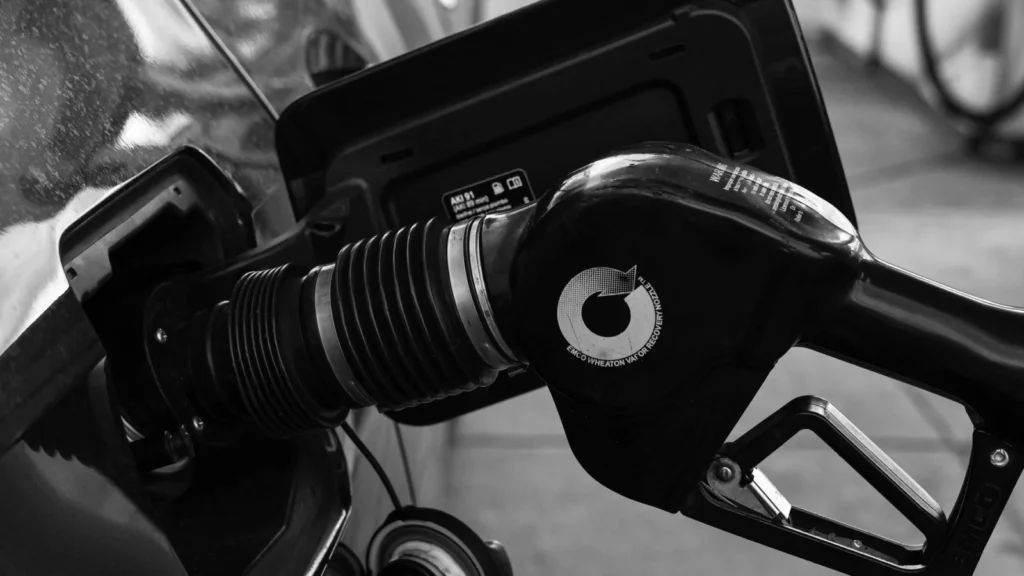
A fuel smell that lingers inside the cabin or hangs around the car after you’ve parked up almost always means fuel is escaping somewhere it shouldn’t, whether that’s a leaking injector, a perished fuel line, or a loose or faulty fuel cap. It isn’t something to shrug off. Fuel vapour is flammable and shouldn’t be building up around the car at all.
What causes a fuel smell
Working through it methodically usually narrows it down to one of these:
- A leaking or faulty fuel injector, letting fuel seep out around the injector seal rather than delivering it cleanly into the cylinder, which can produce a strong smell around the engine bay and sometimes in the cabin depending on the layout
- A cracked or perished fuel line or hose, particularly on older cars where rubber components have hardened and started to split
- A loose, damaged, or missing fuel filler cap, which sounds minor but is a genuinely common cause of a persistent smell, especially noticeable after filling up
- A leaking fuel tank or a corroded fuel line running underneath the car, more common on older vehicles that have seen a lot of road salt over the years
If the smell is stronger just after starting the car or during acceleration, that points more toward an injector or the fuel rail. If it’s more noticeable after the car’s been sat, a leak that’s dripping slowly while stationary is more likely.
How urgent is it
Treat this one seriously. Fuel vapour is a fire risk, and a persistent smell inside the cabin also means you’re breathing in fumes you shouldn’t be. If you can smell fuel strongly and consistently, particularly inside the car rather than just briefly after refuelling, it’s worth avoiding unnecessary journeys until it’s checked, and definitely don’t smoke near the car or leave it in an enclosed garage.
The gov.uk vehicle safety guidance covers the broader standards vehicles are expected to meet, and a persistent fuel leak is exactly the kind of fault that would fail an MOT and shouldn’t be left unresolved in the meantime.
What a mechanic actually checks
A fuel smell diagnosis usually starts with a visual inspection along the fuel line’s full run, from the tank to the engine, looking for wet patches, staining, or visible cracking in hoses. The fuel cap and filler neck get checked for a proper seal. At the engine end, injectors are checked for leaking O-rings or seals, sometimes confirmed with a smoke test or by checking fuel pressure and looking for drips at the rail with the engine running.
Where an injector is confirmed faulty, replacement usually needs coding to the engine control unit afterwards so the new injector’s calibration matches what the engine expects, which isn’t always something a basic swap covers if it’s done without the right equipment.
Book now or wait
Don’t sit on this one. A fuel smell that’s faint and only appears right after filling up is usually nothing to worry about, but anything stronger, more persistent, or noticeable inside the cabin needs checking promptly given the fire risk involved.
What it typically costs to fix
A loose or faulty fuel cap is the cheapest possible cause and a replacement cap is usually under £20. A perished fuel line or a leaking injector seal typically costs £80-200 to fix. If the fuel tank itself or a fuel pump seal is leaking, that’s a bigger job, often £200-450, since the tank may need to be dropped to access it safely.
What happens if you leave it
A fuel smell should never be treated as background noise. Beyond the obvious fire risk, breathing in fuel vapour over a long journey is genuinely bad for you, and a slow leak means fuel is being wasted continuously even when the car is parked. If you can smell fuel strongly and not just faintly, it’s worth stopping the car and getting it checked rather than continuing the journey.
What you can check yourself first
Check that the fuel cap is fitted properly and clicks into place, since a loose cap is genuinely one of the more common causes and costs nothing to rule out. Look underneath the car after it’s been parked overnight for any staining or a puddle, and note whether the smell is stronger when the car is running or when it’s parked, since that helps identify whether it’s a running fault or a static leak.
It’s worth checking whether the smell is present with the engine off and cold as well as when it’s running, since a smell that’s only there once the engine is warm points toward a different part of the fuel system than one that lingers even when parked overnight. Either way, don’t leave the car in an enclosed garage until it’s been checked.
How injector seals actually fail
Each fuel injector seats into the cylinder head or intake manifold using a small rubber or composite O-ring seal, designed to withstand fuel exposure and heat cycling for many years. As these seals age, they harden and lose their elasticity, and once they can no longer maintain a tight seal, fuel weeps out around the injector body rather than being delivered cleanly into the cylinder. On some engine layouts this leak stays contained within the engine bay and produces a fuel smell without much visible sign, while on others, particularly where injectors sit closer to the cabin bulkhead, a leak can allow fumes to find their way into the cabin through the ventilation system, which is one reason a fuel smell noticed specifically inside the car deserves quick attention.
Why fuel lines deteriorate over time
Older fuel lines, particularly rubber sections rather than the more durable metal or reinforced lines used on newer cars, harden and become brittle with age and heat exposure. Once a line has hardened, it loses the flexibility to handle the engine’s normal vibration and movement, and small cracks can develop, especially at bends or where the line passes close to a hot component like the exhaust. These cracks often start small, producing a smell that comes and goes before eventually becoming a visible drip. Cars that spend a lot of time outdoors, exposed to UV and temperature swings, tend to see this kind of deterioration happen somewhat faster than cars kept in a garage.
Why a loose fuel cap causes more smell than you’d expect
It’s genuinely surprising how much of a fuel smell a loose or faulty filler cap can produce, given how small a component it is. The fuel tank isn’t a fully sealed, static system, it’s designed to vent fuel vapour through a controlled evaporative emissions system, and a cap that isn’t sealing properly bypasses that controlled venting, allowing vapour to escape more freely than intended. This is worth checking first precisely because it costs nothing to rule out and takes seconds to check, yet it’s one of the more common causes of a persistent fuel smell that owners assume must be something more serious.
What happens if a fuel leak reaches an ignition source
The core reason a fuel smell deserves more caution than most other symptoms on this site is straightforward physics: petrol vapour is highly flammable, and it doesn’t take much of a spark or hot surface to ignite it under the right conditions. An electrical fault, a hot exhaust component, or even static electricity in rare circumstances could theoretically provide that ignition source if fuel vapour has built up somewhere enclosed, like an engine bay or, worse, inside the cabin. This is genuinely one of the few faults on this site where the advice is unambiguous: don’t drive on, don’t park in an enclosed space, and get it checked before continuing normal use of the car.
What to expect during a mobile check
A mobile fuel system check starts with a careful visual and smell-based inspection along the full length of accessible fuel lines and around each injector, since a leak is often detectable this way before any equipment is needed. Where the source isn’t immediately obvious, a mechanic can pressurise or monitor the fuel system while running to watch for pressure drops that indicate a leak, and a UV dye can be added to help pinpoint an exact source that isn’t visible under normal light. Because this diagnostic work uses hand tools and portable equipment rather than a ramp, it’s well suited to being carried out at your home or workplace.
Why injector coding matters after replacement
Modern fuel injectors are manufactured with tiny individual variations in flow rate, and many engine management systems store calibration data specific to each injector to account for this, fine-tuning fuel delivery for the smoothest possible running and lowest emissions. When an injector is replaced, this calibration data needs updating to match the new injector’s specific characteristics, a process usually called injector coding. Skipping this step after a replacement doesn’t necessarily stop the car running, but it can leave a slightly rough idle or a minor efficiency loss that a proper coding step would have avoided, so it’s worth confirming with whoever does the work that coding is included as part of the job rather than assumed to be unnecessary.
What you can check yourself before booking
Check that your fuel cap clicks fully into place and doesn’t feel loose when you turn it, since this costs nothing to rule out first. Note whether the smell is stronger right after refuelling and fades over the following day, which would point toward the cap or evaporative system, or whether it’s persistent regardless of when you last filled up, which points more toward a genuine leak in the lines or an injector.
Why a fuel smell after refuelling is usually different
A brief fuel smell right after filling up, particularly on a warm day or if the pump nozzle released a small amount of vapour as it disengaged, is genuinely normal and nothing to be concerned about, usually clearing within a few minutes as the vapour disperses. What separates this from a genuine fault is duration and location, a normal post-refuel smell fades quickly and stays outside the cabin, while a fault-related smell either persists well beyond that initial period or is noticeable inside the car with the windows up, neither of which should be dismissed as simply a refuelling smell.
If you regularly notice a fuel smell specifically when accelerating hard or under load, that pattern points more toward pressure-related leaks like an injector or the fuel rail, since that is when the system is under the most stress. A smell that is present even with the car parked and the engine off for some time points more toward a static leak, such as a cracked line or a genuinely faulty cap, since pressure related leaks tend to ease off once the system is not actively running.
Keep a rough note of your mileage since the smell first appeared, alongside any nearby work done to the fuel system such as a recent filter change, since this history can rule things in or out fairly quickly for a mechanic working through the possibilities.
A final practical point: never attempt to sniff out a fuel leak by getting your face close to the source, since prolonged exposure to concentrated fuel vapour is genuinely bad for you. A general awareness of the smell in the car or engine bay is enough to warrant a proper check.
Trust your instincts here. If something smells wrong, it is always worth the short time it takes to get it checked properly.
SSK Mechanics carries out fuel injector replacement and coding at your home or workplace across Bradford and West Yorkshire, tracing the leak properly first with a visual check and, where needed, a pressure test, so you know exactly what’s being fixed before any work begins.
SSK Mechanics carries out fuel injector replacement and coding at your home or workplace across Bradford and West Yorkshire, so a fault like this can be traced and fixed without you needing to drive the car anywhere. Get an instant quote and we’ll get it sorted.
Source: gov.uk vehicle safety guidance
Frequently asked questions
Is it dangerous to smell petrol in my car?
Yes, a persistent fuel smell means vapour or liquid fuel is escaping somewhere, which is a fire risk and means you may be breathing in fumes. It's worth having it checked promptly rather than ignoring it.
Why do I smell fuel only right after filling up?
This is often just residual vapour around the filler cap and usually clears within a few minutes. If it persists well after refuelling, it's worth checking the cap seal and the fuel line.
Does a new fuel injector need programming after it's fitted?
On most modern vehicles, yes. The injector typically needs coding to the engine control unit so its calibration matches what the engine expects for accurate fuelling.