

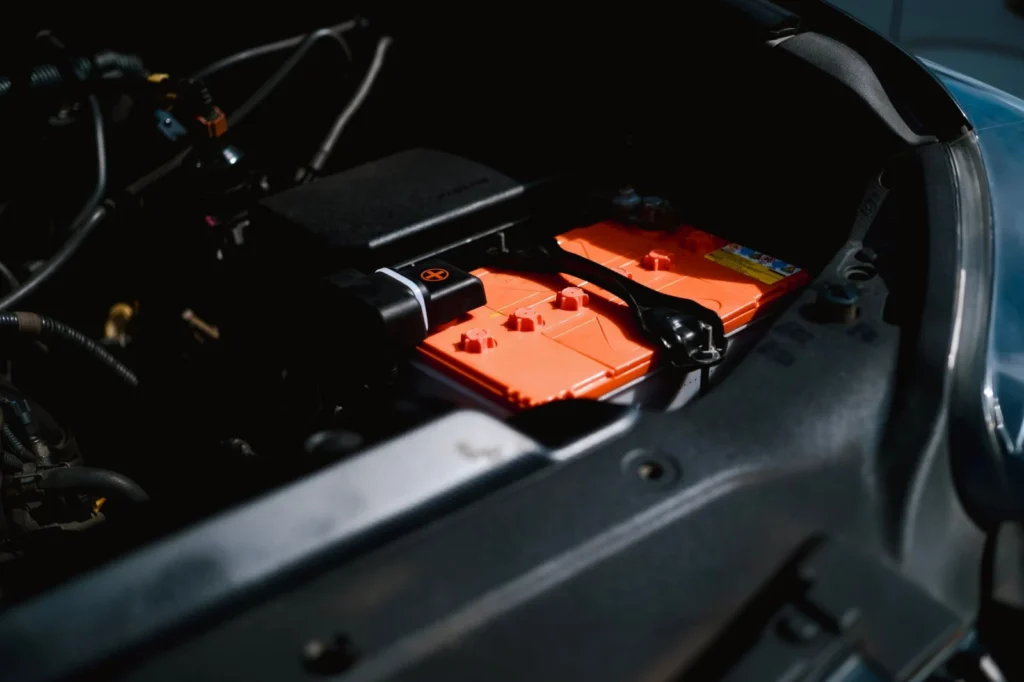
Not every car battery is the same product wearing a different label, and that’s the main reason replacement quotes can vary so much. A basic standard battery, an AGM battery, and the newer lithium options fitted to some performance and start-stop vehicles are built differently, cost different amounts to manufacture, and aren’t always interchangeable, which matters more than most drivers realise until they get a quote.
Getting the wrong type fitted isn’t just a price issue either. A car designed for AGM can suffer reduced start-stop function or a shorter battery life if a standard battery is fitted instead, so it’s worth knowing what your car actually needs before comparing prices.
Standard, AGM and lithium, what’s the difference
A standard flooded lead-acid battery is the traditional, most affordable option, still perfectly adequate for many older or simpler cars without start-stop technology. AGM, or absorbent glass mat, batteries handle the frequent starting cycles of start-stop systems far better, discharge and recharge more efficiently, and are now standard fitment on a large share of newer cars, which is part of why they cost more. Lithium batteries are lighter and handle rapid charge cycles well, but they remain a smaller share of the market, mostly seen in performance cars and some hybrids, and come at a noticeably higher price point.
Fitting a standard battery to a car designed for AGM might seem like a way to save money, but it often shortens the life of both the battery and the start-stop system, since the car’s charging strategy assumes AGM behaviour.
What else affects the price
- Battery type required for your specific make and model
- Battery size and capacity (measured in amp-hours)
- Whether the car needs battery registration or coding after fitting, common on many German and some other European makes
- Access difficulty, since some batteries sit under the boot floor or behind trim rather than under the bonnet
- Brand and warranty length
Typical cost breakdown
A standard battery, supplied and fitted, generally falls somewhere between £80 and £150 depending on size and brand. AGM batteries typically run from around £130 to £220 fitted, reflecting the more complex internal construction. Lithium batteries sit considerably higher again, often £250 upward depending on the vehicle and capacity needed. On top of the part itself, some vehicles need the new battery electronically registered with the car’s onboard computer so the charging system manages it correctly, which is a task worth confirming is included in any quote rather than assumed.
Why the cheapest battery isn’t always the best value
A budget battery might start the car reliably enough on day one, but cold cranking amps, the real measure of how much power a battery can deliver on a freezing morning, vary noticeably between brands even at the same nominal size. A battery that’s undersized or from a lower-quality manufacturer for your specific car can leave you struggling on the coldest mornings of the year, exactly when you need it most, even though it tested fine when it was fitted.
Warranty length is worth checking too. Many reputable batteries come with a warranty of three years or more, while cheaper options sometimes offer considerably less cover, which is worth factoring into the real cost per year of ownership rather than just the upfront price.
Disposal of the old battery is another detail worth checking is included. Car batteries contain lead and acid and must be recycled correctly under UK regulations, and a reputable garage will handle this as standard rather than charging it as a separate line item or leaving it to you to arrange.
Postcode and local demand can play a small part in pricing too, since labour rates vary somewhat across the country, though for a job as standardised as a battery swap the difference tends to be modest compared with the type of battery fitted.
A mobile mechanic coming to your home or workplace removes one more variable from the equation: you are not stuck waiting at a garage for a job that, once diagnosed correctly, usually takes well under an hour to complete.
Signs your battery is on its way out
Slow cranking on start-up, dashboard warning lights appearing intermittently, electrical accessories behaving oddly, and a battery warning light itself are the most common early signs. Cold weather tends to expose a weakening battery first, since low temperatures reduce a battery’s effective capacity right when the engine needs more current to start.
What a mechanic actually tests before recommending a battery
A proper battery health check goes beyond simply checking the voltage with a multimeter, since a battery can show a healthy resting voltage and still fail a load test under real starting conditions. The technician applies a load that simulates the current draw of actually starting the engine and watches how the voltage holds up, which reveals a weakening battery well before it would leave you stranded. On start-stop vehicles, the check also looks at how the car’s own battery monitoring system is reading the battery’s state of health, since some cars will restrict or disable the start-stop function automatically once they detect the battery is nearing the end of its useful life, which is sometimes the first symptom an owner notices.
Why battery registration matters more than most drivers expect
Many modern cars, particularly VW Group, BMW and Mercedes models, monitor the battery’s age and condition electronically and adjust the charging strategy accordingly. Fit a new battery without registering it through the car’s diagnostic system, and the charging system may continue treating it as the old, degraded battery it replaced, undercharging it slightly to compensate for wear that no longer exists. Over time this shortens the life of a perfectly good new battery, which is a frustrating and entirely avoidable outcome. It’s worth confirming this step is included whenever a quote is given for one of these makes specifically.
How battery faults compare with a charging system problem
A battery that’s flat in the morning after sitting overnight, but charges and holds fine once jump-started and driven, points more toward the battery itself or a parasitic drain from something left on. A battery that repeatedly goes flat within days of being replaced, despite testing fine when fitted, usually points toward the alternator not charging it properly rather than a faulty battery, which is why a charging system check is worth doing alongside any battery replacement if the symptoms don’t fully resolve.
Cold weather and battery performance around West Yorkshire
Winter mornings on the Pennine edges of Huddersfield and Halifax put a battery under more strain than milder, flatter parts of the country, since cold reduces a battery’s effective capacity right as the engine needs more current to turn over. A battery that’s borderline in September often fails outright on the first proper cold snap in November or December, which is why testing battery health before winter, rather than after a failed start on a freezing morning, tends to be the more sensible timing.
Getting the most life from a new battery
Short journeys are hard on any battery, since the alternator needs sustained running time to fully recharge what starting the engine draws down, and repeated short trips leave a battery in a permanent state of partial charge, which shortens its working life regardless of type or quality. If most of your driving is short local trips, an occasional longer run helps, and it’s worth having the charging system’s actual output checked periodically rather than assuming a new battery alone solves an underlying pattern of undercharging.
How battery type affects long-term running costs
A cheaper standard battery fitted to a car designed for AGM might save money upfront but tends to fail sooner under the demands of frequent start-stop cycling, meaning you could end up buying two standard batteries in the time a single correctly specified AGM battery would have lasted. Factoring in the likely replacement interval, rather than just the purchase price, often makes the more expensive but correctly specified battery the better value over several years of ownership, which is worth bearing in mind when comparing quotes that look significantly cheaper than others for what should be the same job.
Frequently asked questions
Can I fit a higher-capacity battery than my car originally came with? Usually yes within the same physical size and type, and it can offer a small margin of extra reserve, though it won’t fix an underlying charging fault if one exists.
Does a new battery need to be run in? Not in the way an engine does, but a short period of normal driving, rather than mostly very short trips, helps the charging system settle into recognising the new battery’s condition properly.
What to do if your battery keeps failing despite replacement
If a new battery of the correct type still struggles within a few months, the cause is very rarely the battery itself and almost always something else in the system, a parasitic drain from a fault or an aftermarket accessory left permanently connected, a charging fault, or in rare cases a fault with the battery management system misreading the new battery’s condition and applying an incorrect charging strategy. Rather than fitting a second, third replacement battery on the assumption the first one was simply faulty, which does happen but is genuinely uncommon with a reputable brand, it’s worth having the whole electrical system checked as a unit, since chasing the symptom with repeat battery swaps rarely resolves an underlying fault.
Keeping the receipt and warranty details for any battery fitted is also worth doing as standard, since most reputable brands offer meaningful cover, and a battery failing well within its stated warranty period, having ruled out other causes, may be replaced under that warranty rather than at your own cost.
What to ask before agreeing to a replacement
Confirming the exact battery type and capacity being quoted, whether registration is included for makes that need it, and what warranty length applies are three simple questions that clarify whether you’re comparing like-for-like quotes. A price that looks noticeably lower than others is often missing one of these elements rather than genuinely being better value.
How to read a battery test report
A proper battery test report typically states resting voltage, voltage under load, and often a state of health percentage comparing the battery’s current capacity against its rated capacity when new. A battery testing above roughly 75 to 80 percent state of health is generally considered still serviceable, while anything notably below that is a fair candidate for proactive replacement even if it’s still technically starting the car reliably for now. It’s worth asking for these figures rather than a simple pass or fail verdict, since a battery sitting right at the boundary is a genuinely different situation to one that’s failed outright, and knowing which you’re dealing with helps you judge whether replacing now or waiting a few more months is the more sensible call. Keeping this report, even informally, also gives a useful comparison point if the battery is tested again down the line, since a rapid decline between two tests is more concerning than a battery that’s simply aging gradually and predictably.
One more point worth knowing: a battery that’s been left sitting unused for several weeks, such as during a long holiday or a period where the car wasn’t driven, can develop a temporary deep discharge that a simple jump start and short drive won’t fully correct. A proper slow charge over several hours restores this kind of battery more reliably than repeated short drives, and it’s worth mentioning to a mechanic if the car has been off the road for an extended period before the current fault appeared, since it changes how the battery should be assessed and recharged.
If you’re not sure whether your car needs a standard, AGM or lithium battery, or whether registration is required after fitting, SSK Mechanics can check your exact vehicle and carry out a battery and charging system health check before recommending a replacement, so you’re not paying for the wrong part or missing a step. Get your instant quote from SSK Mechanics right away.
Source: GOV.UK vehicle guidance
Frequently asked questions
Can I fit any battery to my car?
Not always. Many newer cars with start-stop technology are designed specifically for AGM batteries, and fitting the wrong type can shorten its life or affect the start-stop system.
Why does my new battery need registering?
Many modern cars monitor battery age and condition electronically to manage charging correctly, so the onboard system needs to be told a new battery has been fitted.
How long do car batteries usually last?
Most last between three and five years, though frequent short journeys, extreme temperatures and heavy electrical use can shorten that considerably.
Does a flat battery mean I need a new one?
Not necessarily. A flat battery can also result from a fault elsewhere, such as a parasitic drain or a failing alternator, so it is worth having it tested rather than assuming.