

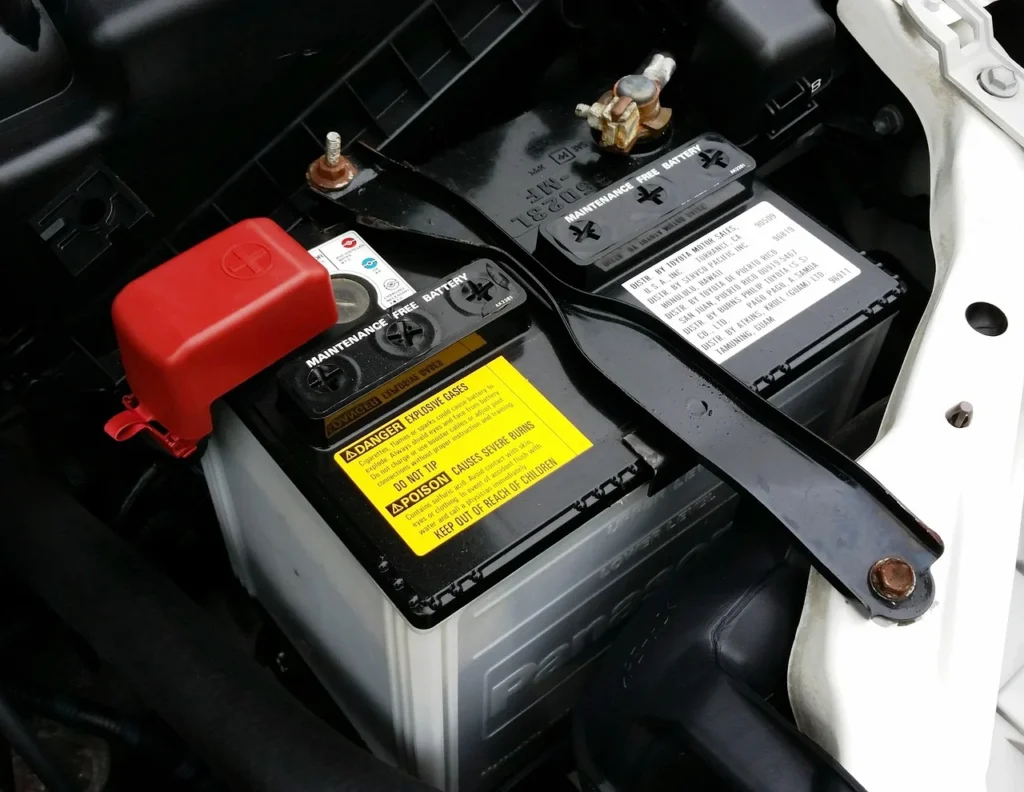
A battery that keeps going flat, especially one you’ve already jump started or replaced recently, almost always points to a charging problem rather than the battery itself. The alternator’s job is to recharge the battery while the engine runs and power the car’s electrical systems at the same time. If it’s not charging properly, the battery slowly drains every time you drive, even though the car starts and runs normally in between.
It’s a genuinely confusing fault for a lot of drivers, because a new battery seems like the obvious fix, and it does solve the problem for a week or two. Then the flat battery comes back, because the real fault, a failing alternator, was never actually addressed. Short journeys make this worse too, since a battery drained by a cold start needs a decent run to fully recharge, and a car that only ever does the school run or a five minute commute rarely gets that chance even when the alternator is working exactly as it should.
What’s Actually Causing It
A worn alternator is the most common cause, particularly one where the internal diodes or voltage regulator have started to fail. Rather than stopping outright, alternators often degrade gradually, charging just enough to get by for a while before the battery starts losing the fight. A slipping or worn alternator drive belt can cause something similar, since the alternator isn’t spinning fast enough to generate a proper charge even though it’s mechanically fine itself.
A failing starter motor can also drain a battery indirectly, by drawing excessive current each time you start the car, or by continuing to draw power briefly after the engine has started due to a sticking solenoid. A worn starter can also make itself known through a slow, laboured cranking sound just before the engine catches, which is worth mentioning to a mechanic even if the battery has already been tested and found to be fine. Beyond the charging system, a parasitic drain from a component that won’t switch off properly, an interior light, a faulty relay, or an aftermarket accessory wired in incorrectly, can flatten even a perfectly healthy battery overnight. And a battery itself can simply be reaching the end of its life, typically around four to six years, and no longer able to hold a full charge regardless of how well it’s being charged.
Cold weather makes all of these issues worse and often brings them to a head, since low temperatures reduce a battery’s effective capacity right when the engine needs more current to start. It’s why so many flat battery calls happen in the first proper cold snap of the year: a battery that was already weak all summer, coping fine on shorter journeys and warmer mornings, finally gets pushed past the point it can cope once the temperature drops and the engine needs a stronger pull to turn over.
Is It Safe to Keep Driving?
A battery that’s on its way out, or being undercharged by a failing alternator, can leave you stranded with no warning, often at the worst possible moment, like a dark car park after work or a cold driveway on a school morning. Unlike a lot of mechanical faults that give you time to plan around them, this one tends to fail suddenly: the car starts fine one morning and won’t start at all the next. If you’ve needed a jump start more than once in a short period, that’s a clear sign the fault is ongoing rather than a one-off, and it’s worth treating with some urgency.
What a Mechanic Checks
- Battery health and its ability to hold charge under load, not just whether it’s currently charged
- Alternator output voltage while the engine is running, to confirm it’s charging correctly
- Drive belt condition and tension, since a slipping belt can mimic an alternator fault
- Starter motor current draw and behaviour during start-up
- Parasitic drain testing, checking what’s still pulling power once the car is switched off and locked
When to Book vs When It Can Wait
If you’ve had one flat battery and it was clearly caused by something obvious, like headlights or an interior light left on overnight, there’s less urgency, and a simple recharge is usually all that’s needed. But if the battery keeps going flat with no obvious cause, or you’ve needed multiple jump starts, book it in rather than risk being stranded somewhere inconvenient. The AA has breakdown advice covering common battery and charging faults if you want more background on the warning signs before booking anything in.
What it typically costs to fix
A battery that’s simply reached the end of its life, usually after 4-6 years, costs £90-160 to replace and is the most common fix. A failing alternator not charging the battery properly while driving typically costs £250-450 to replace. A parasitic electrical drain, where something keeps drawing power while the car is parked, can be trickier to trace and cost varies depending on what’s found, though corroded terminals are a common and cheap culprit at £20-40 to clean.
What happens if you leave it
A battery that keeps going flat is a symptom, not a standalone fault, and jump-starting it repeatedly without finding the cause just delays a breakdown rather than preventing one. If the alternator is the actual problem, continuing to drive on a battery that’s only being partially charged risks being left stranded with no power at all, often somewhere less convenient than your driveway.
How an alternator’s voltage regulator actually works
An alternator doesn’t just generate electricity, it has to regulate the voltage it produces so the battery gets charged at a safe, consistent rate rather than being overcharged or undercharged as engine speed varies between idle and motorway revs. The voltage regulator, often built into the alternator itself on modern cars, constantly adjusts the alternator’s output to stay within a narrow target range. When a regulator starts to fail, charging can become inconsistent, sometimes still enough to just about keep up at higher revs but falling short during idling or stop-start driving, which produces exactly the gradual, hard-to-pin-down battery drain covered here.
Parasitic drains: finding what’s pulling power overnight
A parasitic drain is any component still drawing power after the car is switched off and locked, when everything should be in a low-power standby state. A boot light that doesn’t switch off, a faulty relay stuck closed, or an aftermarket dashcam or alarm wired in without a proper power management circuit are all common causes. Finding one usually involves connecting a meter between the battery and its terminal with everything switched off, then pulling fuses one at a time to see which circuit drops the draw to a normal standby level, a methodical process that takes real time but reliably narrows down the specific circuit at fault rather than guessing at components.
Battery types and why the right one matters
Not all replacement batteries are equivalent, even at the same physical size. Start-stop cars, which switch the engine off automatically at traffic lights and junctions, need an AGM or EFB battery designed to handle the far higher number of charge cycles that stop-start driving demands, rather than a standard flooded battery designed for a car that starts once and runs continuously. Fitting the wrong type to a start-stop car can cause premature battery failure and, on some models, can disable the start-stop function entirely once the car’s computer detects the battery isn’t behaving as expected, so it’s worth confirming exactly which battery type your car needs before any replacement rather than assuming standard is fine.
Why cold snaps in West Yorkshire catch weak batteries out
A battery that’s been quietly weakening all through a mild Yorkshire summer, still just about managing daily starts, often reaches the point of failure the moment the first proper cold snap arrives, since cold weather reduces a battery’s effective capacity right when the engine needs more current to turn over. This is why breakdown callouts for flat batteries spike sharply in West Yorkshire during the first hard frost of the year, it isn’t that batteries suddenly fail in large numbers, it’s that marginal batteries which coped fine through warmer months finally get pushed past the point they can manage.
How to test a battery properly at home
A simple multimeter check across the battery terminals with the engine off gives a rough indication, a healthy battery should read around 12.6 volts or higher, but this resting voltage test alone doesn’t tell you whether the battery can actually deliver current under load, which is the real test of whether it’s still fit for purpose. A battery can show a perfectly normal resting voltage and still fail within seconds of being asked to crank a cold engine, which is why a proper load test, checking voltage while the battery is under a simulated starting load, gives a far more reliable picture than a resting voltage reading alone.
Why replacing a battery without checking the alternator is a false economy
Fitting a new battery to a car with a genuinely failing alternator solves the symptom for a short period, since a fresh battery starts with a full charge regardless of whether the alternator is working properly. But if the underlying charging fault isn’t addressed, the new battery gets drawn down exactly the same way the old one was, and drivers often end up back at square one within a matter of weeks, having paid for a battery that was never actually the problem. This is why any proper battery diagnosis should always include a check of the alternator’s charging output at the same time, rather than assuming the battery alone explains a recurring flat.
What to check yourself before booking a repair
Check the battery terminals for visible corrosion, a white or greenish crusty buildup, and make sure both connections are tight, since a loose or corroded terminal can mimic a failing battery or alternator without either component actually being at fault. If you’ve fitted any aftermarket accessories recently, a dashcam, an alarm, additional lighting, think about whether the flat batteries started around the same time, since a poorly wired accessory is a genuinely common and often overlooked cause of a battery that won’t hold charge overnight.
What happens if a recurring flat battery goes unaddressed
Repeatedly jump-starting a car without finding the actual cause doesn’t just risk being stranded again, it can also gradually damage the battery itself, since deep discharges followed by a fast recharge from another vehicle’s system aren’t ideal for a battery’s long-term health compared to a steady, controlled recharge. If a failing alternator is the real cause and it isn’t addressed, the battery is essentially fighting a losing battle indefinitely, and the eventual outcome tends to be a complete loss of electrical power at an inconvenient time rather than a gradual, predictable decline you can plan around.
Getting the charging system properly diagnosed after the first or second unexplained flat battery, rather than the fourth or fifth, is the difference between a planned repair and an unplanned breakdown.
Booking a charging system check around your schedule
A proper battery and alternator check can be carried out at your home or workplace without needing a ramp or specialist workshop setup, and if a replacement part is needed, it can usually be fitted on the same visit. That means the whole process, from diagnosis to a fixed car, can often be wrapped up in one appointment that fits around your day rather than needing you to arrange separate visits for testing and repair.
If your car has start-stop technology, mention this specifically when booking, since diagnosing and fitting the correct battery type for a start-stop system properly is a slightly different job to a standard battery replacement and worth flagging in advance.
Keeping a note of exactly when and where a flat battery happened, cold morning, after a short trip, following a long period parked, helps a mechanic spot a pattern faster than a vague description of the fault when you eventually book it in.
SSK Mechanics carries out alternator and starter motor replacements at your home or workplace across Bradford and West Yorkshire, fixing the actual cause of a recurring flat battery rather than just swapping the battery again.
Source: AA breakdown advice on batteries
Frequently asked questions
Why does my battery keep going flat after I've already replaced it?
A new battery won't fix a charging problem. If the alternator isn't recharging it properly while you drive, even a brand new battery will slowly drain again.
How many jump starts is too many before I get it checked?
If you've needed more than one jump start in a short space of time with no obvious cause, treat it as an ongoing fault rather than bad luck.
Does cold weather really make batteries fail more often?
Yes, cold weather reduces a battery's effective capacity right when the engine needs more current to start, which is why weak batteries often fail in the first proper cold snap.